
Category: Law
Law
Latest

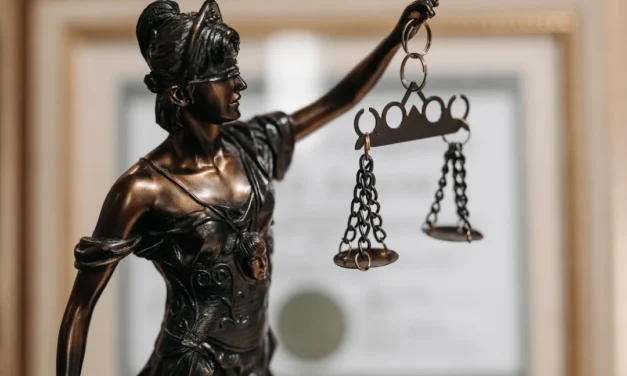
Gateways to Justice: Assessing the Fitness, Reform and Reach of English Jurisdictional Rules
The expansion of cross-border commerce has made the question of when English courts may exercise jurisdiction over foreign defendants one of the most contested issues in private international law. This paper evaluates the English jurisdictional framework in three stages.
Read More
Artificial Intelligence and Its Influence on Competition Law
Competition law aims to promote healthy competition within a country. In this research paper, the authors focus on traditional aspects of competition law, regulated by the European Commission (EC), and discuss how AI can have positive and negative implications in the region of competition.
Read More
The Energy Charter Treaty and the Fossil Fuel Phase-Out: An Obstacle to Climate Justice?
This paper investigates whether the Energy Charter Treaty (ECT) has become an obstacle to climate justice amid the global move away from fossil fuels. By analysing treaty provisions and arbitration cases, including Vattenfall v Germany and Rockhopper v Italy, this paper demonstrates how the ECT can expose states to significant financial liabilities when implementing environmental policies.
Read More
Spiliada and the Digital Age: Modernisation of the Forum Non Conveniens Test in International Commercial Litigation
The Spiliada test is central to the doctrine of forum non conveniens. This paper argues that the Spiliada test needs significant reform to establish criterion based on justice rather than geographical factors so that the doctrine aligns with the demands of 21st-century legal conflicts.
Read More
Ghosted by the Hashtag: The Invisible Voices that Haunt the #MeToo Movement
Coined by Turana Burke in 2006, the phrase ‘Me Too’ was initially meant as a symbol of inclusivity and empowerment for marginalised groups. However, this mainstream feminist movement has been critiqued for excluding key voices, individuals and groups. This paper highlights the diverse perspectives that were overlooked and the many narratives that remained in the shadows within the #MeToo movement.
Read More