Edited by Leah Nguyen Tan.
Abstract (AM)
Electric vertical takeoff and landing (eVTOL) vehicles have the potential to expedite and redefine how society commutes day-to-day, and they also have incredible prospects for first responder use. Still, if the product isn’t suited to human needs, then it will fail since it cannot accommodate its users properly. This report covers important aspects of eVTOLs that designers need to consider in order to ensure passenger interactability, safety and comfort come first when flying. The implications of the aspects covered include reducing common concerns about aerial vehicles, reducing environmental impacts, improving fuel efficiency and improving safety in aerial vehicle designs. The purpose of this research is to improve eVTOLs for people living nearby and passengers using the product. This study includes a full hierarchical task analysis (HTA), planning user interactions with the product and highlighting accessibility. Aerial taxi technology has the potential to create benefits to societies globally as long as they are designed and implemented properly to ensure that it can be integrated into daily life with minimal pushback from the public.
Keywords: eVTOLs, Urban Air Mobility, Passenger Comfort, Structural Materials, Sustainability, Inclusivity and Accessibility, Safety, Efficiency.
Abbreviation List:
| Acronym | Full Meaning |
| AC/DC | Alternating Current/Direct Current |
| ASL | American Sign Language |
| CFC | Carbon Fibre Composites |
| CFRG | Carbon Fibre Reinforced Glass |
| CFRP | Carbon Fibre Reinforced Polymers |
| CSI | Current Source Inverter |
| EASA | European Union Aviation Safety Agency |
| EV | Electric Vehicle |
| eVTOL | Electric Vertical Takeoff and Landing [vehicle] |
| FAA | Federal Aviation Administration |
| GPS | Global Positioning System |
| HHC | Higher Harmonic Control |
| HTA | Hierarchical Task Analysis |
| LFP | Lithium Iron Phosphate |
| NASA | National Aeronautics and Space Administration |
| UAV | Unmanned Air Vehicle |
| UKACC | United Kingdom Automatic Control Council |
| VSI | Voltage Source Inverter |
1. Introduction (BSG)
eVTOL aircraft are emerging as a faster, greener alternative to traditional transportation within urban areas, enabling more direct travel to and from destinations rather than relying on road infrastructure (European Union Aviation Safety Agency, 2023; Shamiyeh et al., 2022). As the name implies, it can undergo vertical take-off and landing, making eVTOL aircraft extremely efficient in terms of ground infrastructure required to operate; rather than operating on the road, they operate in the air, possibly reducing journey times when using the eVTOL aircraft while relieving pressure on road transport in tandem (FAA, 2025a; EASA, 2023; Shamiyeh et al., 2022).
Passenger experience and availability are a further point of discussion, for consumer theory states how the consumer (the passengers) will wish to maximise their utility above all else (De Donnea, 1972), which, regarding the concept of eVTOL aircraft, is in the form of both efficient travel and comfort concerning the process of travelling in an eVTOL aircraft (Edwards & Price, 2020); henceforth, optimisation for the passenger becomes just as important as the aforementioned points of discussion about the benefits of eVTOL aircraft.
It therefore becomes apparent that the concept of an expanded, globalised fleet of eVTOL aircraft across cities comes with both benefits and serious changes, which must be addressed before the implementation of eVTOL aircraft can begin (Department for Transport, 2024).
2. Aims and Objectives (IL)
Aims:
To provide insight into eVTOLs in terms of their overall design and to examine their potential for providing accessible, environmentally-friendly and passenger-friendly urban transportation.
Objectives:
- Showcase the interior and exterior designs of the eVTOLs;
- Create an HTA on how a customer can call and use an eVTOL;
- Explain the instructions to follow when boarding the aircraft, along with providing the safety instructions and disembarking the aircraft;
- Examine how the battery, fuel and other aspects of the vehicle help with the environmental friendliness of the eVTOL;
- Show the eVTOL’s ergonomics and the safety measures in place to ensure the passengers are safe at all times;
- Demonstrate the accommodating accessibility the eVTOL provides for all passengers and their uses.
3. Methodology (LNT)
To establish a comprehensive understanding of current eVTOL aircraft, this study synthesised existing academic literature, industry reports and existing prototype designs from market leaders, including Eve Air Mobility, Supernal (a subsidiary of Hyundai) and Toray. This multi-source investigation provided insight into ergonomic changes that have been made, optimal designs for passengers, possible energy sources and structural components. Using this insight, we wrote about several models of eVTOLs and fuel sources that integrate comfort, accessibility and safety. We also employed a hierarchical task analysis regarding how the passenger would interact with the eVTOL during their journey from start to finish, with the intention of removing any confusion or hesitation from the passenger when using an eVTOL.
3.1 Hierarchical Task Analysis
3.1.1 Parent One (KB)
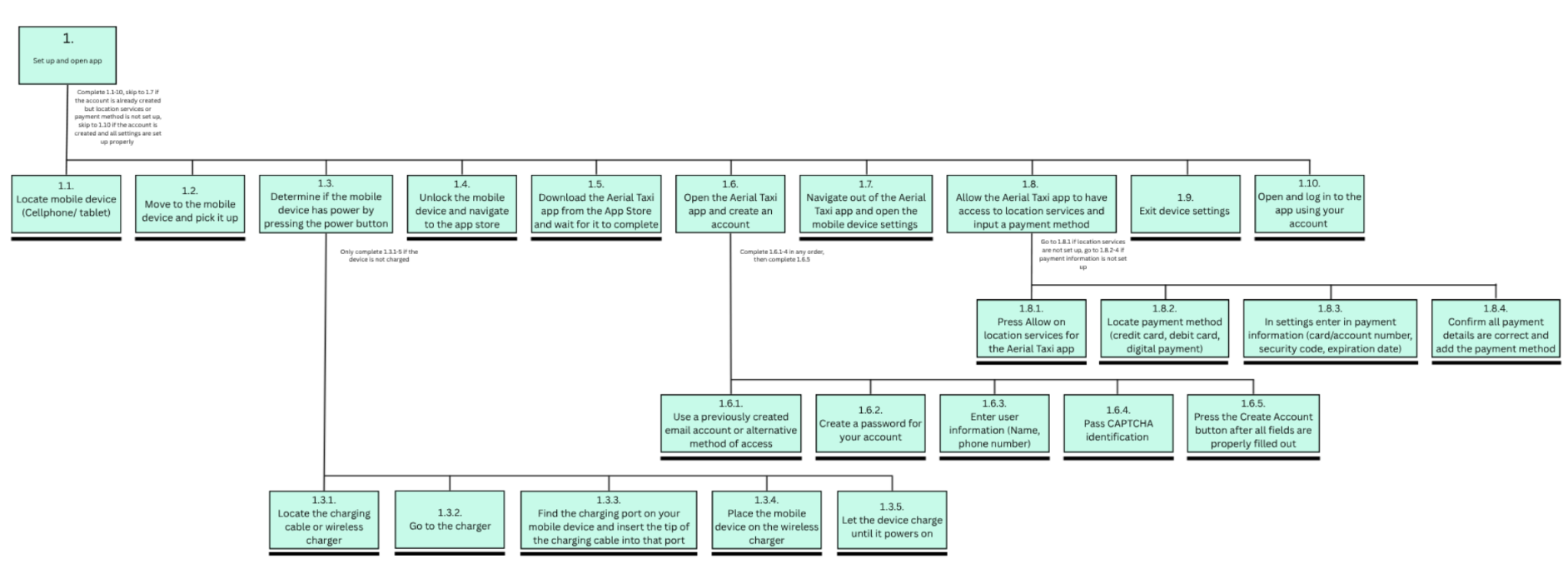
Instructing the passenger on how to set up the app and account.
3.1.2 Parent Two (BO)
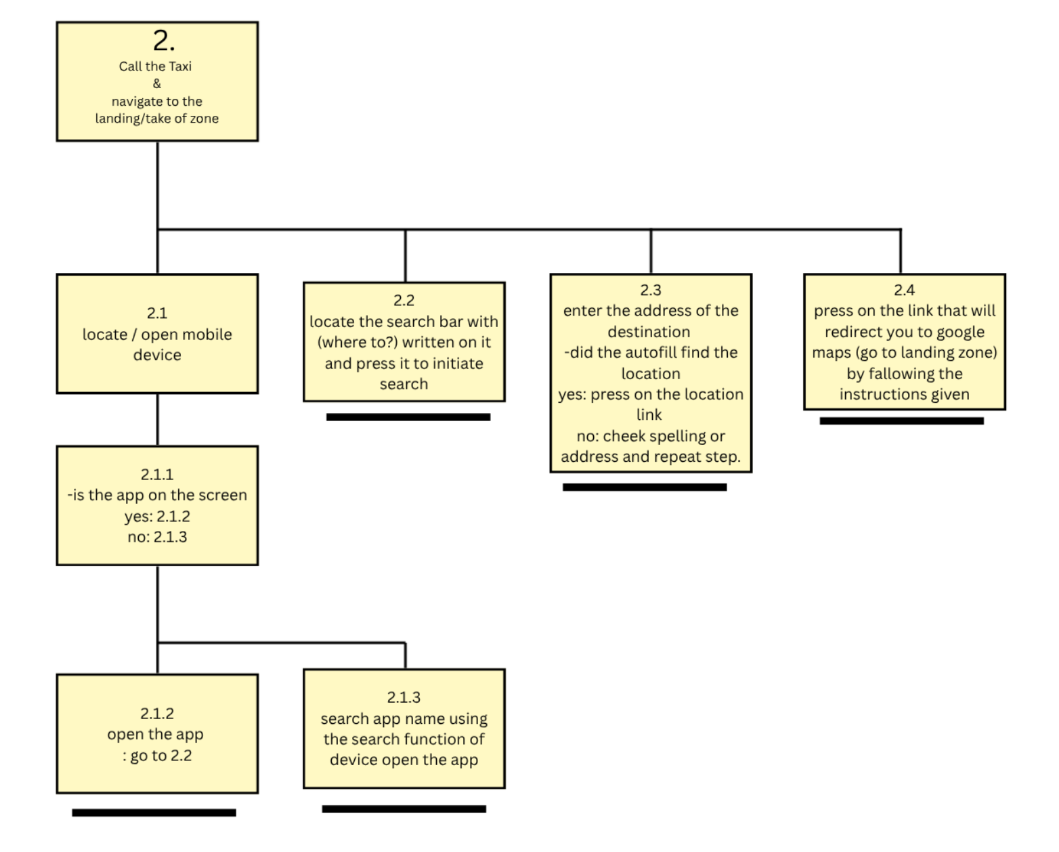
Instructing the passenger on how to call the aerial taxi and how to navigate to the pickup spot.
3.1.3 Parent Three (IL)
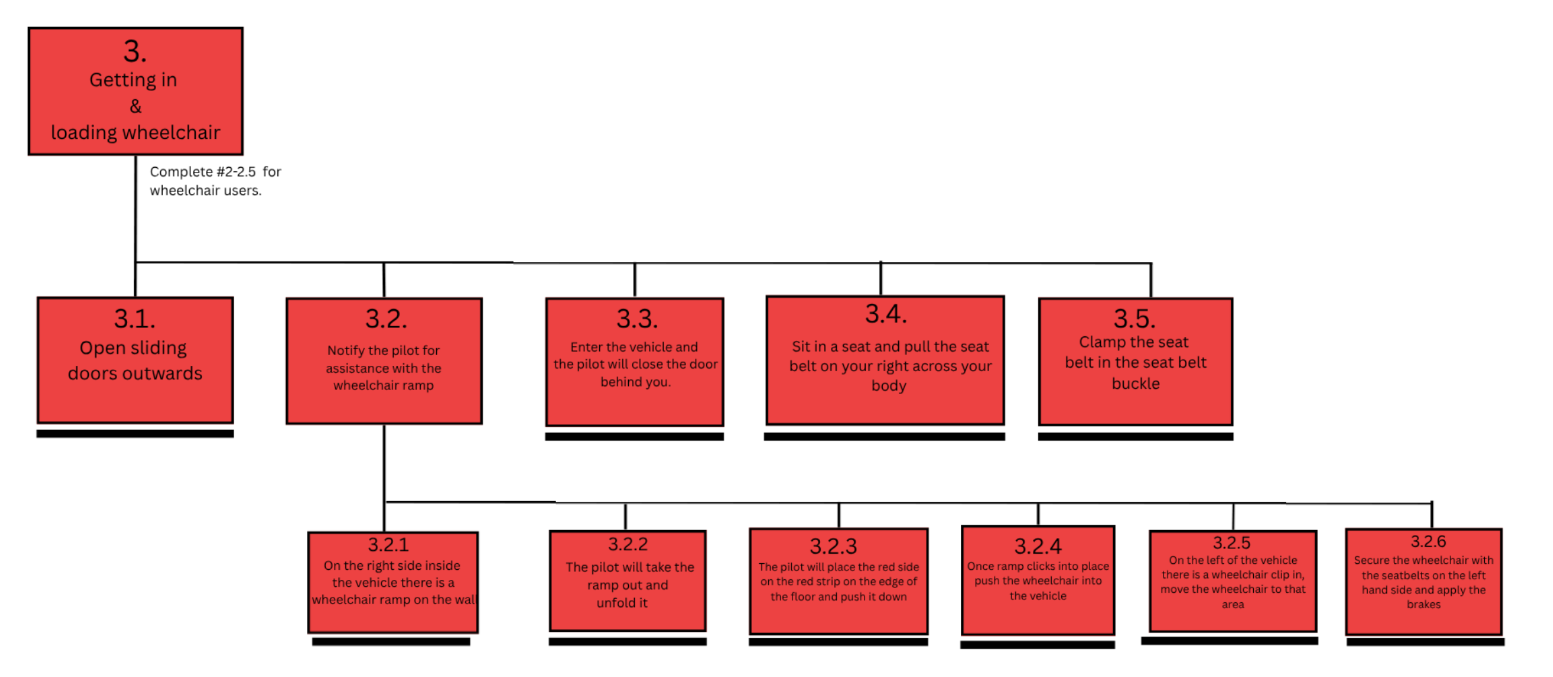
Instructing on how to board the aircraft with a wheelchair.
3.1.4 Parent Four (BSG)
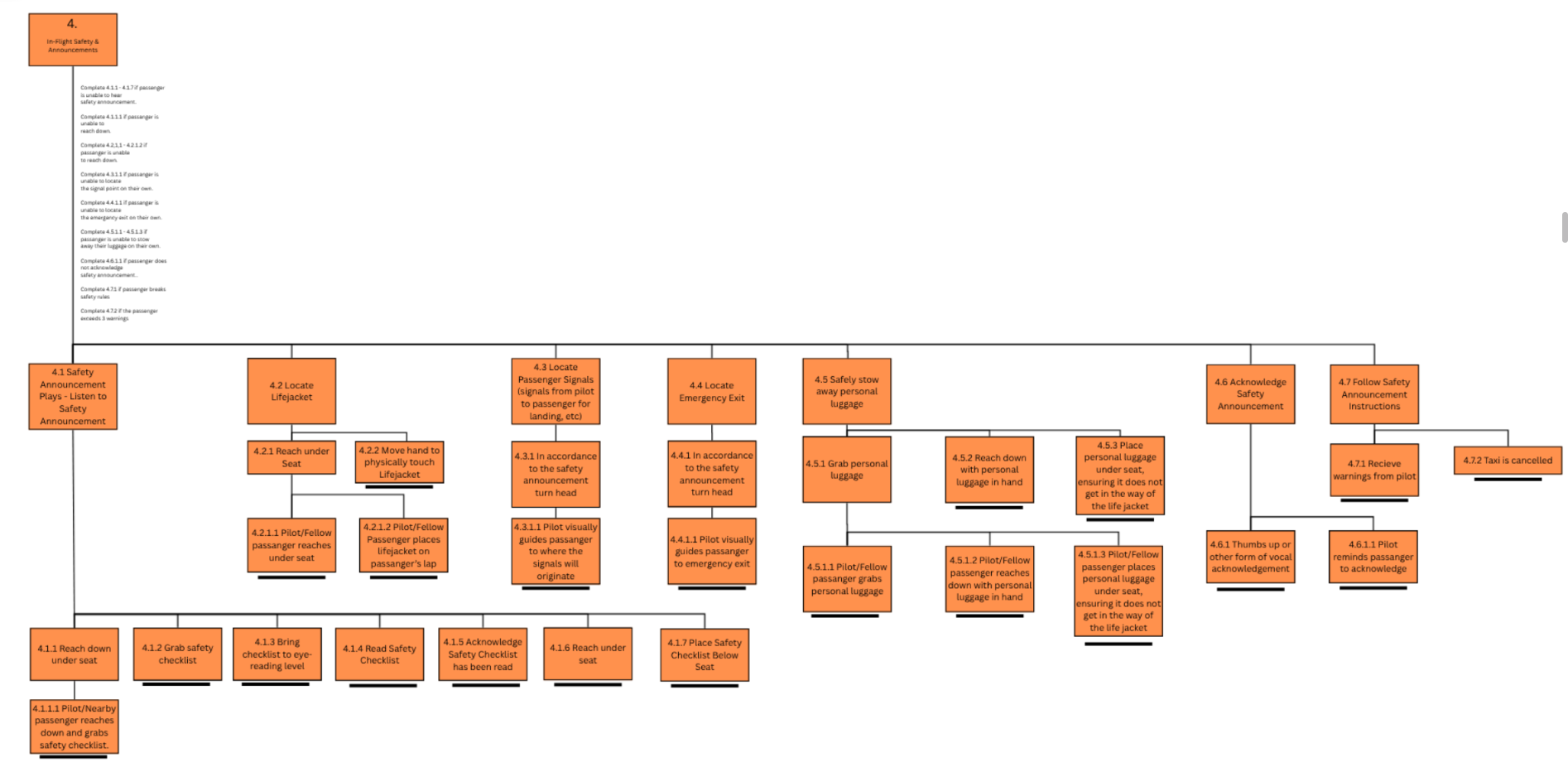
Informing passengers about in-flight safety and announcements.
3.1.5 Parent Five (SG)
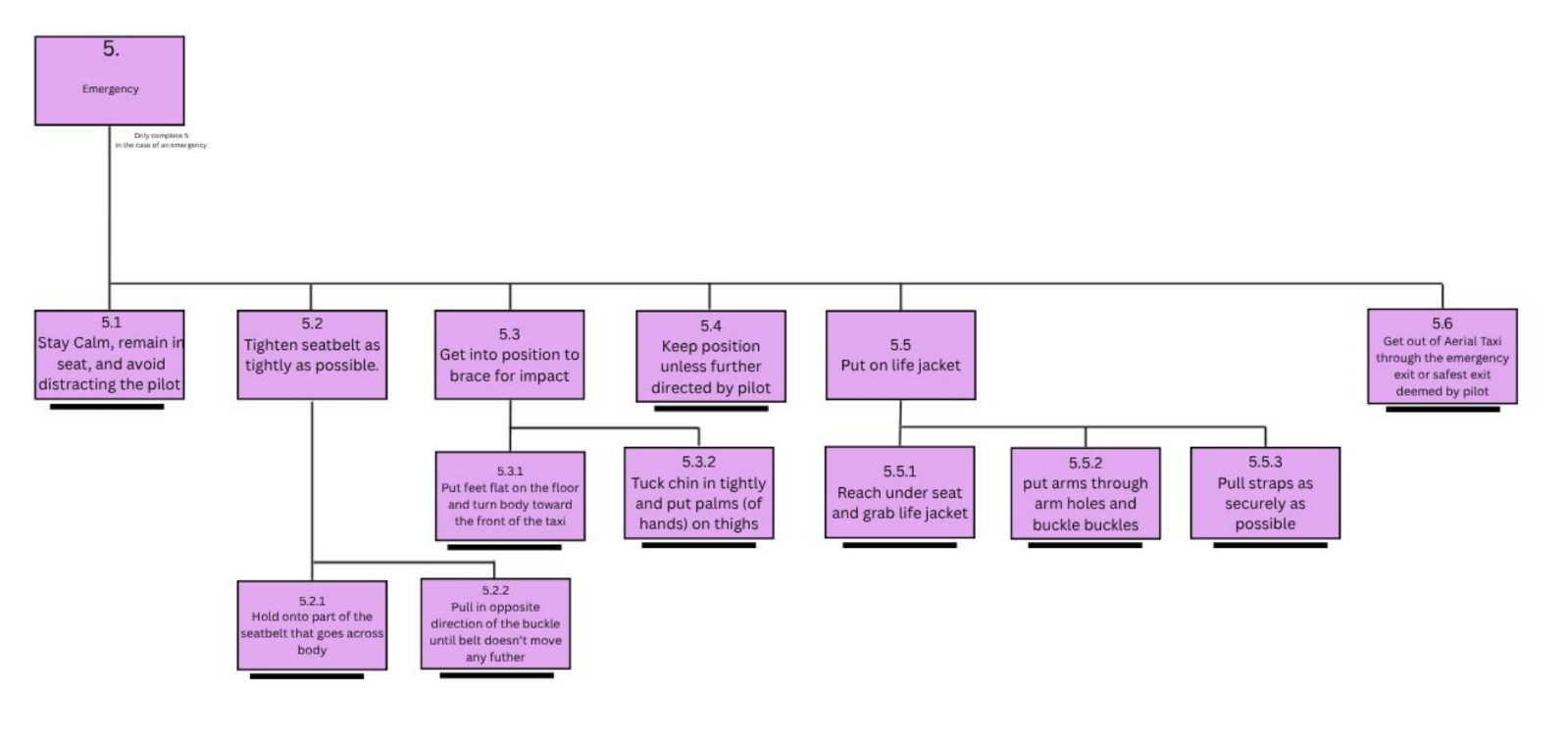
Instructions and actions the passenger must complete when an emergency occurs.
3.1.6 Parent Six (MJRR)
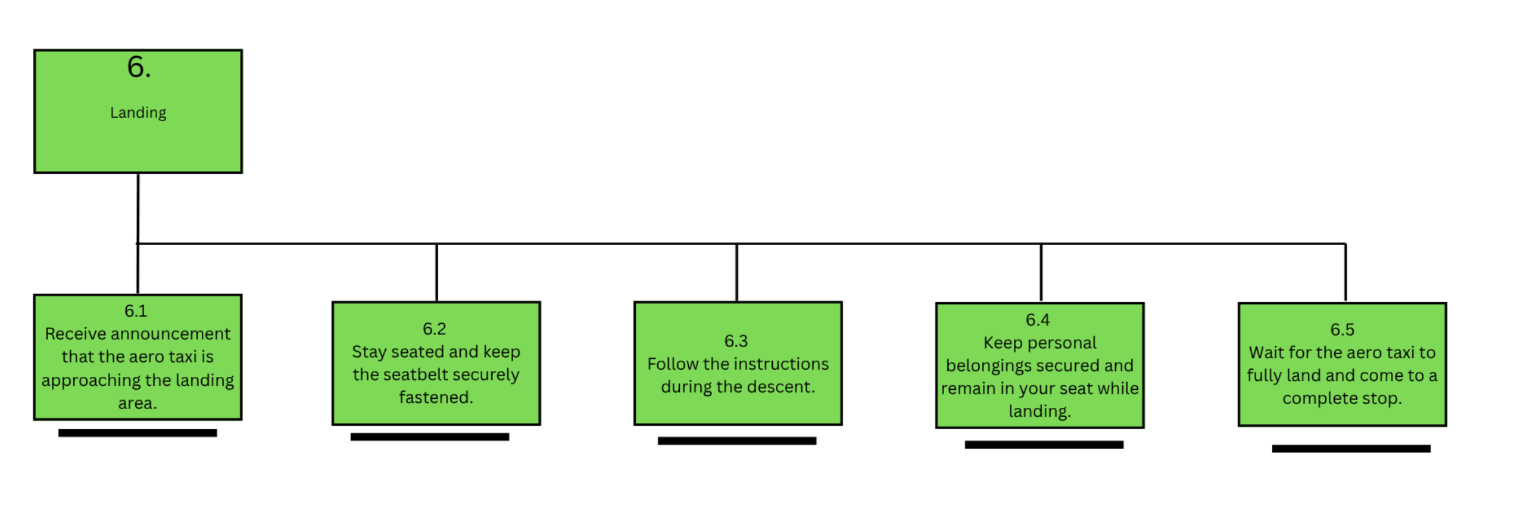
Passenger instructions regarding what to do when landing.
3.1.7 Parent Seven (LNT)
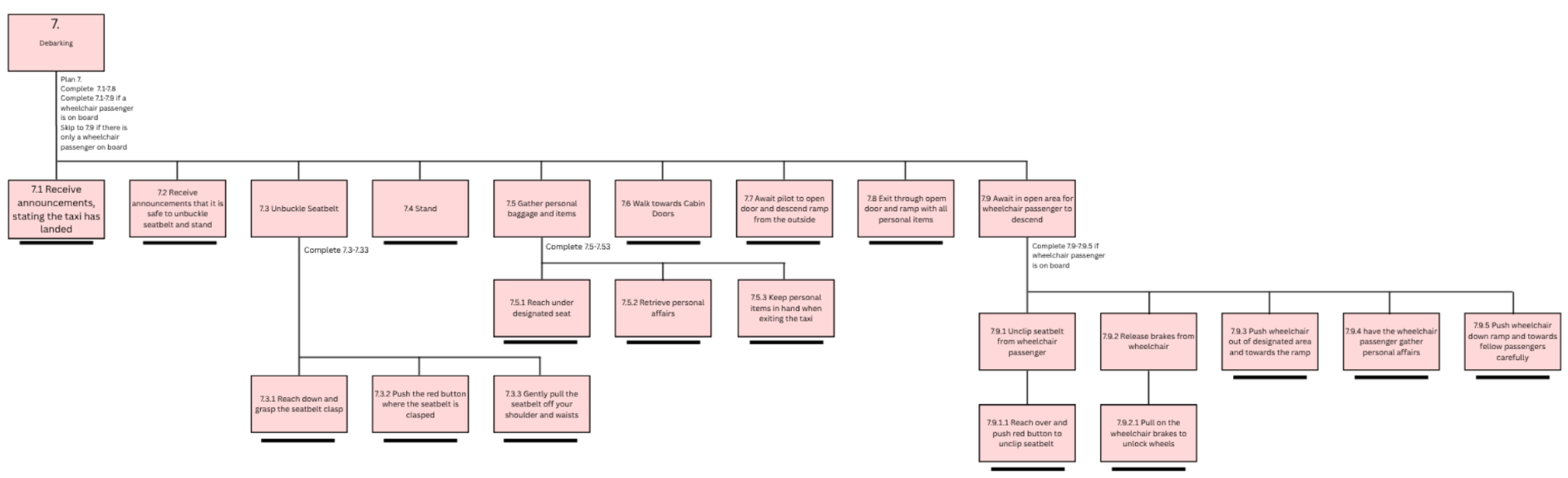
List of actions to follow for passengers and a wheelchair when debarking the aircraft.
3.1.8 Parent Eight (AM)
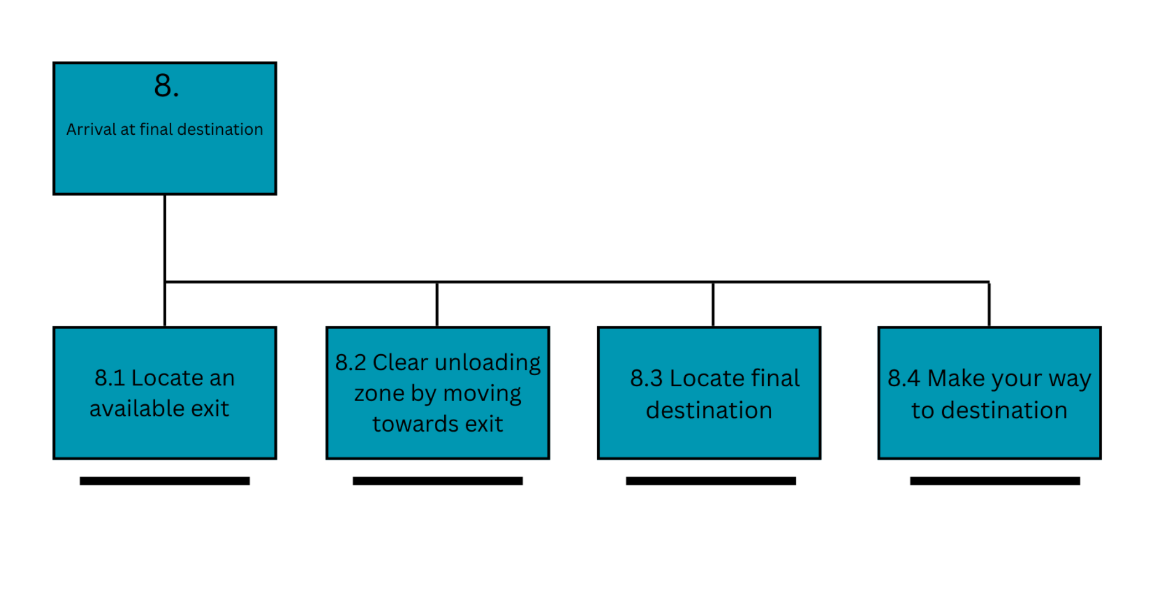
Instructions for passengers when they’ve arrived.
4. Process Development (LNT)
Designing and developing an eVTOL involves interdisciplinary factors that shape its internal and external design to ensure optimal performance regarding passenger inclusivity, safety, concerns and passenger comfort.
5. Materials (LNT)
Selecting structural and interior materials for eVTOLs is vital to safety, comfort, environmental footprint, cost and psychological trust. By combining materials engineering with user-centred design principles and keeping the passenger at the forefront of our minds, manufacturers can address key anxieties passengers may experience towards urban air mobility.
5.1 Structural Integrity and Crashworthiness
Passenger anxiety regarding structural safety in urban aviation requires materials that balance a high strength-to-weight ratio and high impact resistance, as well as materials with failsafe measures in case an accident occurs. Recent companies are designing their aircraft with CFC and CFRP; these are both durable, impact-resistant materials that absorb and dissipate impact energy around passengers and into the ground in a crash (Sarkar, 2025; Covestro, 2025). These lightweight materials will ensure the eVTOL can perform at its best for the passengers. The cabin windows along the aircraft utilise polycarbonate rather than traditional aircraft glass, a practically unbreakable and impact-resistant material, offering passengers protection in case of mid-flight hazards occurring or a crash while still being able to enjoy their view (Eve Air Mobility, 2024).
5.2 Thermal Protection and Battery Containment
Thermal runaways and fire hazards represent critical safety concerns that passengers may have towards battery-powered aircraft. CFRG is a flame-resistant, noncombustible material used to make a case that holds the eVTOL’s battery in case of thermal runaway (Pyromeral, 2024). When exposed to intense heat, this material doesn’t release smoke or harmful gases, keeping the battery protected in a fire (Pyromeral, 2024). Some eVTOL designs have adjusted and considered weather circumstances when designing, incorporating a paintable surface as the exterior that, when integrated with mesh copper, becomes lightning-strike-proof (Toray Advanced Composites, n.d.) in case of rapidly changing weather conditions, to ensure the passengers have a safe journey.
5.3 Sustainable and Circular Materials
While some passengers are concerned about emergencies, others are worried about the environmental impacts. Many companies have designed their aircraft interiors to be made of mostly recycled materials. Hyundai’s eVTOL subsidiary, Supernal, has designed recyclable alternatives to reduce its environmental footprint, from durable plant-based leather to recycled plastic fabrics (Gavine, 2022). The extensive use of CFC decreases the aircraft’s overall weight by about 50% compared to traditional metallic structures; the weight decrease minimises the amount of energy consumed (Sarkar, 2025). These small solutions significantly decrease the aircraft’s footprint and meet passengers’ concerns regarding the connection between materials and the environment.
5.4 Acoustic Insulation and Passenger Comfort
A collection of eVTOLs have used cork as a sub-floor and wall barrier material due to its acoustic insulation properties and sustainability (Eve, 2021). Due to its cellular structure, rather than blocking active sound waves, it absorbs and reduces the sound (CorkSol UK, 2022); it dampens rotor and outside noise, ensuring a quieter and more relaxing journey, meeting the passengers’ concerns and anxiety towards noises and interruptions occurring during their journey.
6. Electrical Component Optimisation (KB)
A current main complaint of electric vehicles is the long charging times and the sparsity of charging locations (Pamidimukkala et al., 2024). One main method of improving user satisfaction and success with eVTOLs is improving the energy efficiency of the vehicle. Improved energy efficiency would allow for longer voyages and minimal need to recharge or swap batteries during the flight, thereby limiting the complaints related to battery charging. In order to achieve this, multiple areas of the power chain within eVTOL devices were studied to determine where the largest improvement could be made.
6.1 Implications of Voltage Source Inverters
Voltage source inverter based power converters are an established architecture in electric-aircraft propulsion and have been investigated for eVTOL applications as a means of converting direct current electricity to alternating current electricity within their propulsion systems (Verma et al., 2023). These VSI-based systems have demonstrated high efficiency and have been extensively studied for reliability in electric-aircraft applications. However, as most electrical components do, they introduce some energy loss into the system. To optimise the energy consumption and transfer of eVTOLs, each component of the electrical system must minimise energy loss as much as physically possible.
6.1.1 Current Source Inverters Alternative
This is why introducing current source inverters as an alternative is worth investigating in in the development of eVTOL designs. Like VSIs, CSIs convert DC power to AC power for motor operation, but instead of regulating voltage, they regulate the current. Studies conducted on the efficacy of CSIs in EVs have demonstrated reductions in inverter energy loss compared to VSI systems under high-load operating conditions (Su & Ning, 2013; Su & Tang, 2011). However, these studies were conducted in EV traction applications rather than eVTOL propulsion systems, so it is not yet known whether similar reductions in energy loss would occur in an eVTOL. Data should therefore be collected on the energy loss of VSI and CSI systems under equivalent eVTOL operating conditions to determine whether CSIs could provide an energy efficiency benefit in eVTOL propulsion systems.
6.2 Pilot Interface Design
Electrical components in any vehicle must function correctly and perform their intended duty. However, they should also be designed to improve the experience of the person(s) interacting with them. In an eVTOL, pilots will likely have to monitor numerous components of the vehicle that directly interface with the electrical system alongside controlling the aircraft. Therefore, designing interfaces that minimise workload while presenting essential information clearly is an important consideration in eVTOL development. The Federal Aviation Administration recommends that the accessibility and simplicity of electronic controls, as well as the workload created by aircraft during both normal and emergency operations, be evaluated during development (FAA, 2026). So, easy-to-use interfaces should be designed and tested with real pilots to ensure the reliability, functionality and usability of the eVTOL for the pilots.
6.2.1 Implementing Changes to Pilot Interface
One idea to address this includes the creation of a main digital display of in-flight analytics that is programmed to display the essential information for each phase of the trip. In reference to this, studies are researching the number of displays and the manner in which information is presented to pilots in eVTOLs, which should be considered in this context (Chauhan et al., 2023; FAA, 2013). The findings indicate that current eVTOL interfaces often include large displays that integrate many different types of flight information rather than separately, but they have not indicated whether a larger or smaller number of displays creates a significant impact on pilot performance. Based on this, having the information displayed on the digital console or having consoles be limited to only essential information is a rational approach. In case of emergencies where the aircraft loses power, or the digital interface ceases proper function, independent backup flight instruments will still be incorporated into the pilot console and will run off of power systems similar to those of the backup systems within current aircraft. Additional features such as flight-management systems, assisted landing and takeoff software, and heads-up displays could also be effective approaches, as they can reduce pilot workload while providing real-time alerts and data directly in front of the pilot.
6.3 Electrical Warnings and Alerts
During and before flights, the pilot must be able to assess and fix any electrical system issues. It is essential that information regarding important problems with the electrical system or any feature of the vehicle that interacts with it is readily available and easily understandable to the pilot. According to FAA guidance, aerial vehicles must prevent confusing or misleading alerts, as well as avoid excessive and unnecessary warnings (FAA, 2013). Prior research has been conducted addressing the importance of alerts and excessive warnings in aerial vehicles and has demonstrated that as vehicles become more complex, the number of alerts rises, which can confuse pilots (Chappell, 2025).
6.3.1 Implementing Warnings in eVTOL Design
To address the issue of pilots receiving an excessive number of warnings in eVTOL design, the relative importance of alerts should be reviewed based on their urgency. Based on this data, it can be determined which alerts are displayed to the pilot based on the situation. These alerts should appear on the main console in their own dedicated section. Each warning or alert should also contain a recognisable icon and a very brief summary of the specific issue so that pilots of all experience levels can quickly and easily identify and understand the issue if one arises.
7. Propulsion (BSG)
While the propulsion of an eVTOL is crucial in providing thrust, allowing the vehicle to travel from its starting location to its destination, it further creates inadvertent disturbances and annoyances for not only the passengers of the eVTOL vehicle, but also pedestrians and inhabitants of areas in which the eVTOL vehicle will operate. These disturbances come in the form of noise for both the passenger and people within the operational area, alongside vibrations within the airframe specifically experienced by the passenger. Both issues will need to be solved in order to popularise the use of eVTOL aircraft. The mode of propulsion is also essential concerning redundancy, safety and cost. Optimising the mode of propulsion can result in shorter flight times, hence creating cheaper, more universally accessible flights, as the cost per flight will be reduced as the charge required for each flight also decreases. By optimising the mode of propulsion to further ensure safety and redundancy, the public’s willingness to utilise eVTOL vehicles will increase, making such vehicles more profitable.
7.1 Mitigating Vibrations
Studies conducted by NASA indicate that vibrations within the airframe of an eVTOL vehicle can become incredibly displeasing to the passenger (NASA, 2023). It has been demonstrated that a passive spring-dampening system can be implemented between the rotor motor stator and the main aircraft platform to reduce vibrations transmitted from the rotors to the main body of the aircraft. Experimental testing proved that the passive spring-dampening system can reduce peak vibrations by 28.8% in a dual-rotor unmanned drone using underactuated swashplateless rotors, demonstrating how this principle can be used within an eVTOL vehicle to reduce vibration (Yu et al., 2024). While the aircraft tested was a conventional dual-rotor small UAV using underactuated swashplateless rotors, the principle of implementing spring-dampening between the rotor motor stator and the main aircraft platform has been proven to work in mitigating vibrations nonetheless, and so some form of a spring-dampening system shall be utilised to achieve this, improving passenger satisfaction.
7.2 Mitigating Noise
Unlike vibrations, audible noise as a form of disturbance is experienced by both the passengers and people within the operational areas of the eVTOL, making noise mitigation crucial in both customer and residential satisfaction.
7.2.1 Propulsion Design
In conventional helicopters, the blades create pressure differences between the top and the bottom of the blade as it produces lift, creating tip vortices and rapid pressure changes, creating pressure waves in the air that are interpreted as sound by humans. This, however, can be dramatically mitigated via the use of toroidal-shaped propellers, in which the looped-blade design reduces the strength of tip vortices produced, resulting in more minuscule pressure fluctuations within the air. The idea of using toroidal propellers has been demonstrated to reduce sound produced by propellers by 14% at 1 metre away from the source (Wei et al., 2024). Henceforth, the implementation of toroidal propellers rather than conventional blades shall be used to reduce noise experienced by both the passenger and anyone else within the operational area of the eVTOL. Furthermore, the implementation of larger propellers to produce the same lift while reducing propeller tip speed has been demonstrated to generally reduce noise produced by the propellers during flight (Johnson & Silva, 2022). We will therefore proceed with utilising relatively larger propellers in order to reduce the propeller tip speed, and therefore reduce noise pollution within both the cabin and the operational environment.
7.3 Ensuring Redundancy
To address passenger fears and ensure safety, the propulsion of the eVTOL must be specifically chosen to ensure redundancy in the case of a rotor failure. In the case of a rotor failure, a multirotor is preferred as it offers alternative combinations of thrust produced at the same moment, therefore preserving control even when a rotor has failed. The UKACC International Conference on Control demonstrated how an eight-rotor (octorotor) UAV was the most redundant multirotor option with regard to the number of rotors used (Yamamoto et al., 2012). It was found that an octorotor UAV can maintain control when up to four rotors have experienced a failure by creating alternate thrust variations in the remaining rotors, demonstrating the redundancy of any octorotor air vehicle. Therefore, to both maximise redundancy and improve passenger safety in the case of a rotor failure, the eVTOL shall be equipped with eight rotors to sustain control even amidst multiple rotor failures.
7.4 Power Efficiency
As a means to reduce the price of a single eVTOL flight, configuring the propulsion is essential, for if the efficiency of the propulsion is maximised, the cost per flight is minimised, as less is spent recharging the eVTOL vehicle after every flight, making this product more accessible to the public. The use of toroidal propellers has been observed to increase the thrust coefficient of a UAV by up to 187% (Wei et al., 2024), further supporting the idea of using toroidal propellers. By increasing the thrust coefficient using toroidal propellers, the same power input will yield a larger thrust output in comparison to conventional propeller blades, allowing the eVTOL to either:
- Reduce flight times (and therefore power consumption) via travelling at a faster cruise speed; or
- Reduce the power input required to produce the same thrust as a conventional propeller blade.
Both of which will reduce the power consumed by the eVTOL, and so the cost of recharging the battery will be lowered, allowing the cost per flight to become cheaper, making the eVTOL more affordable.
7.5 Decreasing Travel Time
Tilt-rotor aircraft are capable of rotating their rotors to transition between vertical and horizontal flight, such as that of the V-22 Osprey. NASA demonstrated how tilt-rotors, in comparison to reference NASA vehicles, could achieve speeds 43-93% greater than their counterparts, reducing mission times by up to 24-42% (NASA, 2023). Applying this logic to the discussed eVTOL vehicle, using a tilt-rotor mechanism can allow the eVTOL vehicle to achieve faster speeds and therefore reduce operation times, reducing power consumption and the cost to recharge the battery, further making the eVTOL cheaper per flight with regard to the customer.
8. Battery (BO)
Like all vehicles, this aerial taxi needs a source of energy, and our proposed solution to this energy need must meet multiple needs and requirements.
- Must carry enough energy to power the system for five hours without refuelling. This is essential as these taxis will be operating all day without stops and with minimal refuelling to ensure every passenger can complete their journey without issue.
- Batteries must not combust if struck, damaged, bent or pierced (Ouyang et al., 2019; Zhang et al., 2023). This is important, as if there is any risk of these batteries detonating/combusting, it would be a huge safety hazard, as chemical fires caused by batteries are extremely difficult to put out and usually just have to be waited out (Ouyang et al., 2019).
- Must minimise the emissions (Tiwari et al., 2024; Hoelzen et al., 2022; Adler & Martins, 2023; Zheng et al., 2023; Wang et al., 2026). This is important as passengers have concerns about whether it’s environmentally friendly and a viable replacement for traditional means of transport (or a viable add-on to existing transport). Passengers will be more inclined and enthusiastic towards using it, knowing there have been changes made to accommodate their concerns.
- A fast way of refuelling: waiting for a battery to charge would take too long and be inefficient for passengers in a rush (Tiwari et al., 2024; Hoelzen et al., 2022; Wang et al., 2026).
To accomplish this, it was decided that an electrical system would be the most effective way to meet these criteria. However, a system called the harvester will be implemented. The harvester is a small-scale turboshaft engine that runs on hydrogen to generate electricity. This way, recharging would only take as long as putting liquid hydrogen inside the fuel tank. The benefit of using hydrogen instead of traditional fuels is that the result of combustion with hydrogen is water vapour, which, although a greenhouse gas, is less harmful than any emitted by the combustion of standard fossil fuels and can ensure minimal wait time between passengers (Adler & Martins, 2023; Tiwari et al., 2024; Wang et al., 2026).
8.1 Safety Regulations
To also comply with safety standards and make sure passenger safety is our priority, lithium-iron phosphate batteries are used, which are more resistant to being punctured, bent or overcharged. Another advantage is their higher cycle count, which means that they can be charged to 100% capacity and discharged 1,000-10,000 times, which is significantly larger than lithium-ion’s 500-1,000 (Zhang et al., 2023; Beck, 2019). They also use more available resources and impact the environment less when being produced, helping to ease passenger’s worries about it negatively impacting our environment (Zheng et al., 2023).
8.2 Minimising Noise Related to the Engine
The turboshaft engine will be connected to a regenerator/heat exchanger, which is a concept that was used by the Chrysler Turbine Car (Chrysler Corporation, 1957; Xiao et al., 2017). This system is an interpretation of a normal jet engine, but instead of having all the components arranged transversely, it has the compressor(s) on the sides of the combustion chamber. The larger “wet zone” of the combined turbines and the curves that the exhaust has to take slow down the exhaust. The spinning of the turbines is used to compress the incoming air, acting as the compressor of a traditional turbojet/shaft. The reason for this choice is to minimise the amount of noise produced while also harvesting all the energy out of the fuel. Another reason for having a harvester is that there is a psychological connection in humans between flight and the noise of an engine. As it is the oldest method of achieving flight, the absence of engine noise would make the majority of customers more comfortable; it is also a signal that everything is functioning the way it is intended to.
8.3 Downsides Related to Engine Choice
The harvester also has a downside: the energy density (lithium-ion) is higher at 150/200 Wh/kg versus lithium iron phosphate at 90/120 Wh/kg (Beck, 2019). This means that the eVTOL will need more of them to achieve the same capacity. Having both a battery and a generator on board ensures that even in the case of a catastrophic failure of the engine or batteries, there will be enough power to make a safe landing. If the aircraft has received enough damage that both systems have failed, it will automatically initiate the emergency landing.
9. Energy Cost and Efficiencies (AM)
Costs for new technologies are always high, leading to high manufacturing and research costs and even higher prices for the consumer. Currently, this product is only really viable for medical and very high-end transportation since rotor technologies aren’t even close to the efficiencies of slower ground-based transportation. Over the course of a medical documentation of 1784 transfers, the helicopter-based travel was around 17 times the cost over any distance, with the cost of airborne transport almost doubling from 17km to 67km ($8,539 to $15,277). However, the ground-based transport took much more time, especially noticeable at longer distances, but even with the time increase, the prices were far lower in the same 17km to 67km range ($672 to $874). The paper didn’t bring up the percentage of costs of on-flight medications and equipment if those factors played a role (Lichtenberger et al., 2025).
9.1 Platform Efficiencies
As shown above, the difference in cost because of different technologies plays a huge role in the total cost and therefore the price per ride of the aerial taxi, but even among aerial-based transportation, as mentioned in propulsion, different numbers of blades change the total cost-effectiveness as well, mostly between a quadcopter drone style and a single-blade helicopter. Rez (2018) shows that the efficiency of a small four-blade Parrot drone has a value of 41, whereas some multi-blade helicopters, such as large two-bladed military helicopters even weighing much more, have efficiency scores of 10.8 and 10.9, respectively; some smaller helicopters were also listed with values of around 19.6 and 15.4 for efficiencies. Even though the smaller single-bladed helicopters were less efficient than the large helicopters, the numbers are still more than two times smaller at most. Rez (2018) mentions a small delivery drone could use around 130 times more energy to deliver a 2.5kg package than a small delivery truck, and a plane of the same mass as the drone could use only three times the energy costs. If the aerial taxi design could take influence from the plane, costs could be minimised enough to allow for cheap travel, with in-flight costs being low enough to allow for eVTOL technology solely for early flight and using a plane design while travelling before slowly landing again.
9.2 Commercial Scaling and Cost Optimisation
If costs could be minimised to the level of three times less than a small delivery truck, the costs for people to utilise the aircraft decrease, allowing for a larger market and fixed-price markups leading to larger profits for the company, allowing for more money to go back into research and development of even more cost-effective technology. Admittedly, in tight spaces such as cities, winged or even single-bladed designs could be nightmarish, especially for scaling efforts of the taxi fleet, as the manoeuvrability would significantly decrease compared to a quadcopter-like design, but for a primary or early run, a more efficient, less manoeuvrable vehicle could be a good start, and proof of concept for further, more mobile designs as product scaling occurs.
10. Environmental Impacts (MJRR)
10.1 Battery Production and Resource Extraction
Current eVTOL aircraft rely on lithium-ion batteries that require materials such as lithium, cobalt and nickel. The extraction and processing of these materials can contribute to habitat destruction, water contamination and increased carbon emissions during manufacturing (Cossu, 2025; Khavarian & Kockelman, 2023).
10.2 Energy Consumption and Electrical Efficiency
Although eVTOL aircraft produce little to no direct emissions during flight, they require significant amounts of electricity for operation and charging. Current designs primarily use VSIs, which introduce energy losses during power conversion. Future research into CSIs may help improve efficiency and reduce overall energy consumption.
10.3 Noise Pollution
While eVTOL aircraft are considerably quieter than conventional helicopters, repeated takeoffs, landings and hover operations may still affect nearby communities. Excessive noise can reduce quality of life, disturb wildlife and create public resistance to urban air mobility systems (NASA, 2022; Schiller, 2023).
10.4 Vibration and Community Disturbance
Rotor systems generate vibration that contributes to noise and passenger discomfort. Technologies such as HHC and IBC have demonstrated significant reductions in vibration and noise, helping reduce the environmental impact of urban flight operations.
10.5 Sustainable Materials
Material selection can significantly influence environmental performance. Carbon-fibre composites reduce aircraft weight, which lowers energy consumption during flight. Additionally, recycled carbon fibre, plant-based leather and cork insulation can reduce resource consumption while improving cabin comfort and acoustic performance.
10.6 Renewable Energy Integration
The environmental benefits of eVTOL aircraft depend heavily on the electricity used for charging. Charging infrastructure powered by fossil-fuel-based electrical grids may still produce indirect greenhouse gas emissions. Integrating renewable sources such as solar and wind power can significantly reduce the carbon footprint of eVTOL operations.
10.7 Battery Disposal and Recycling
As batteries reach the end of their operational life, proper disposal and recycling become essential. Without effective recycling programmes, battery waste can create long-term environmental concerns. Expanding battery recycling infrastructure could reduce the demand for newly mined materials and improve the sustainability of eVTOL systems.
11. Safety (SG)
This section will cover the safety aspect of eVTOLs. Safety is one of the most important user requirements and must come in an accessible form for all passengers.
11.1 Seatbelts
Instead of diagonal seatbelts, where there is both a strap across the lap and the chest, most commercial airplanes only have lap seatbelts. The purpose of the lap seatbelt is to keep passengers secure during turbulence or acceleration. Although the diagonal seatbelt would keep passengers more secure because it can secure the upper body better, it would be more expensive and less aerodynamic because of the extra weight caused by the shoulder belt’s anchoring spot on the necessary bulkier seats (Chan, n.d.). Automobiles, on the other hand, usually have diagonal seatbelts. This is because of the security of the upper body that is necessary for the safety of passengers who are more likely to experience sudden acceleration and/or to be in a crash than plane passengers (FAA, 2025b).
Overall, the diagonal seatbelts seem to be a better fit for eVTOLs since passengers are more likely to experience moments of sudden acceleration that are more similar to cars or buses than commercial planes. The eVTOLs would also not have as many seats as commercial planes do, and so, the added weight from the bulkier seats and other extra weight from the shoulder belt’s mechanism would not hinder the aerodynamics of the vehicle as much.
11.2 Emergency Exits
In the case of an emergency, passengers, for their safety, will have to evacuate the vehicle in an efficient and timely manner. “Pushout windows” are a common exit for helicopters that sometimes count as emergency exits (under guidelines from government agencies like the FAA). Although they are simply used by putting enough force on the inner surface to detach the window from the fuselage, there isn’t quantification of how much force it takes. This amount of force would also be different depending on the emergency (for example, underwater it may take more force than on land) (National Highway Traffic Safety Administration, n.d.).
For passengers on eVTOLs, who aren’t trained professionals and may be unable to exert enough force, push-out windows would most likely not be the best emergency exit. This is because the amount of force required to open the exit might be too much, or they may struggle to get out of the relatively small exit if they have a disability.
11.3 Propeller Ducts
Propeller ducts are used in vehicles that optimise high-efficiency propellers and minimise noise pollution (Li et al., 2026), which are both user requirements for eVTOLs. Propeller noise can often be an issue because the propeller has to produce enough force but stay relatively quiet for the comfort of the passengers inside and also civilians in urban environments.
12. Inclusive Design and Accessibility (LNT)
User-centred design requires eVTOLs to accommodate every passenger and promote inclusivity, whether the incoming passenger uses a wheelchair, is deaf, is blind or has mobility restrictions. Every kind of passenger should feel welcomed and as if the aircraft was custom-made to their needs.
12.1 Wheelchair Accommodation
Multiple eVTOL manufacturers and companies have several different interior designs, some with the passenger in mind and others with accessibility. One aircraft incorporates wider access ways for smoother boarding and disembarking for all kinds of passengers, including those with mobility aids (Crystal Cabin Award, 2023). Many have included a collection of fixed and foldable seats in the aircraft that can be folded to accommodate a wheelchair and ensure no damage occurs to the wheelchair (Crystal Cabin Award, 2023).
12.2 Multi-Sensory Communication Systems
To incorporate full inclusivity, the design of the eVTOL needs to ensure ingress, the journey and egress are smooth and provide accessible communication throughout. A few aerial taxi models have included touchscreens with in-flight and safety announcements, with ASL picture-in-picture and closed captions; the safety briefing also comes with cards written in Braille for blind passengers (Sight Tech Global, 2023). This model also provides the passenger with constant contact with the ground crew monitoring their flight and a call button in case the passenger has any questions or would like updates throughout the trip (Sight Tech Global, 2023).
12.3 Companion and Caretaker Integration
Most public transportation, street regulations and structural aspects have made changes to accommodate people with disabilities, but a lot of them never thought of their caretakers. Less than 1% of disabled Americans, 500,000 people, are teamed with service dogs and have reported an increase of 97% in quality of life thanks to their service animal (Singleton, 2023). A model of eVTOLs has considered the caretakers and made structural changes, ensuring there’s enough space on board for a service animal and the step into the aircraft isn’t too high that it makes boarding difficult for the service animal (Sight Tech Global, 2023).
13. Results and Discussions (MJRR)
When integrating the individual user-centred design choices into a unified eVTOL architecture, the resulting urban air mobility system successfully balances structural resilience, environmental sustainability, high safety standards and economic accessibility.
13.1 Synergy of Materials and Structural Safety
The primary frame utilises CFRP and CFC, which are stronger than steel yet significantly lighter than aluminum. In the event of a crash, this material absorbs and dissipates impact energy away from passengers.
Cabins feature impact-resistant polycarbonate windows to protect against low-altitude hazards like bird strikes, while batteries are housed in non-combustible CFRG cases that withstand thermal runaways without releasing toxic smoke.
13.2 Propulsion and Acoustic Integration
The vehicle is equipped with an octo-rotor configuration, a configuration featuring a high redundancy capable of maintaining flight control even if multiple rotors experience failure.
Replacing conventional blades with toroidal-shaped propellers reduces noise production by 14% at one metre while increasing the thrust coefficient by up to 187%, reducing noise pollution experienced by both passengers and residents of the operational areas, all while generating more thrust produced by the propellers, creating faster, cheaper flights.
13.3 Energy, Electrical and Environmental Efficiency
To solve the challenge of long charging times and battery combustion risks, the eVTOL combines a hydrogen-powered turboshaft generator with LFP batteries. LFP batteries cannot combust when punctured and offer an extended cycle count (1,000–10,000 cycles), while hydrogen combustion produces only harmless water vapor.
Transitioning from VSIs to CSIs minimises electrical energy losses by up to 18% during aggressive flight schedules, maximising overall range.
13.4 Inclusive Design and Accessibility
To ensure urban air mobility is available to everyone rather than serving exclusively as a luxury, the cabin features wide entry points, configurable/folding seats for wheelchair accessibility and pilot-assisted ramps.
In-flight safety briefings and instructions are displayed via touchscreens featuring ASL, closed captions and safety cards written in Braille. Furthermore, acoustic insulation materials like cork sub-floors and wall barriers dampen rotor noise to create a comfortable environment for all passengers.
Improved digital displays and consoles for the pilots will be used, which display warnings or any other essential information for the pilot’s easy access.
14. Limitations (KB)
Despite the findings of this study, it faced multiple limitations. Primarily, many of the conclusions from this study are theoretical or conceptual and have yet to be tested in real-world environments. While this may limit the accuracy of the conclusions, this study still provides a solid basis and direction for future research to expand through operational trials. Additionally, the researchers in this study attempted to predict the response and reaction from the general public to the suggested eVTOL design to ensure a human-centred thought process in its conception; however, it is difficult to predict the exact reactions that will be had by all of the diverse subsets of individuals that the implementation of this type of vehicle would impact. Therefore, there may still be some features of the eVTOL vehicles that need further improvement before an implementation such as this one is approved.
15. Conclusion (SG)
Aerial taxis can give passengers a better experience than traditional methods of transportation by providing a more comfortable and reliable ride. By focusing on the user requirements, which include safety, comfort and accessibility, eVTOLs can optimise for all passengers’ experiences. eVTOLs also optimise their environmental impact by minimising their noise pollution and, by flying instead of relying on roads, minimising both extra fuel consumption from flying more direct routes and the need to support the construction of new roads, which involves the destruction of ecosystems. Some limitations to eVTOLs include the high pricing (at least in the beginning) and the ability to navigate dense cities because of their size. Although there is limited testing for eVTOLs, there will be more changes to current designs to overcome challenges in the future.
References (KB)
Adler, E. J., & Martins, J. R. R. A. (2023). Hydrogen-powered aircraft: Fundamental concepts, key technologies, and environmental impacts. Progress in Aerospace Sciences, 141, 100922.
Beck, A. (2019, September 20). Lithium iron phosphate vs. lithium-ion: Differences and advantages. Epec. https://blog.epectec.com/lithium-iron-phosphate-vs-lithium-ion-differences-and-advantages
Chan, H. (n.d.). Buckle up: The history of aviation safety belt policy. Federal Aviation Administration. https://www.faa.gov/media/20816
Chappell, S. L. (2025). Flightcrew alerting: History, research, regulation, and successes. Transportation Research Procedia, 88, 144–148.
Chauhan, B. B., Chaparro Osman, M., Carmody, K., & Carroll, M. (2023, January 19). Advanced air mobility human factors considerations for current eVTOL pilot interfaces [Presentation]. National Training Aircraft Symposium (NTAS). Florida Institute of Technology. https://repository.fit.edu/aero_faculty/39/
Chrysler Corporation. (1957). Chrysler Turbine Car. https://www.turbinecar.com/sia/sia57.htm
CorkSol UK. (2022, November 18). Cork sound insulation – A quick & easy guide. CorkSol UK. https://corksoluk.com/help-articles/cork-sound-insulation-a-quick-easy-guide/
Cossu, I. (2025). Development of a life cycle assessment model for eVTOL aircraft [Master’s thesis, Politecnico di Torino]. WebThesis. https://webthesis.biblio.polito.it/36798/
Covestro. (2025). Innovative materials taking advanced air mobility to new heights. Covestro. https://solutions.covestro.com/en/highlights/articles/stories/2025/innovative-materials-for-eVTOLs
Crystal Cabin Award. (2023, April 21). These eVTOL cabin concepts aim for new heights in 2023. https://www.crystal-cabin-award.com/stories/these-eVTOL-cabin-concepts-aim-for-new-heights-in-2023
De Donnea, F. X. (1972). Consumer behaviour, transport mode choice and value of time: Some micro-economic models. Regional and Urban Economics, 1(4), 355–382.
Department for Transport. (2024). Future of Flight action plan. GOV.UK. https://www.gov.uk/government/publications/future-of-flight-action-plan
Edwards, T., & Price, G. (2020). eVTOL passenger acceptance(NASA/CR-2020-220460). NASA. https://ntrs.nasa.gov/citations/20200000532
European Union Aviation Safety Agency. (n.d.). Air transport by VTOL-capable aircraft. https://www.easa.europa.eu/en/domains/drones-air-mobility/drones-air-mobility-landscape/air-transport-vtol-capable-aircraft
Eve Air Mobility. (2024, June 5). Eve names suppliers for eVTOL windows, doors and fuselage components. https://ir.eveairmobility.com/news-events/press-releases/detail/71/eve-names-suppliers-for-eVTOL-windows-doors-and-fuselage
Eve, U. (2021, October 14). A glimpse at Eve’s eVTOL cabin and aircraft design. Vertical Magazine. https://verticalmag.com/news/glimpse-at-eves-eVTOL-cabin-aircraft-design/
Federal Aviation Administration. (2013, November). Human factors considerations in the design and evaluation of flight deck displays and controls: Chapter 10. Workload. U.S. Department of Transportation.
Federal Aviation Administration. (2023). FAA issues implementation plan outlining steps to usher in advanced air mobility. U.S. Department of Transportation. https://www.faa.gov/newsroom/faa-issues-implementation-plan-outlining-steps-usher-advanced-air-mobility
Federal Aviation Administration. (2025a). Advanced air mobility infrastructure. U.S. Department of Transportation. https://www.faa.gov/airports/new_entrants/aam_infrastructure
Federal Aviation Administration. (2025b). Safety: In the air. U.S. Department of Transportation. https://www.faa.gov/safety/air
Federal Aviation Administration. (2026, April 9). Technical discipline: Flight deck human factors. U.S. Department of Transportation. https://www.faa.gov/aircraft/air_cert/step/disciplines/flight_deck_human_factors
Gavine, A. (2022, June 29). Hyundai unveils eVTOL cabin design. Aircraft Interiors International. https://www.aircraftinteriorsinternational.com/news/hyundai-unveils-eVTOL-cabin-design.html
Hoelzen, J., Silberhorn, D., Zill, T., Bensmann, B., & Hanke-Rauschenbach, R. (2021). Hydrogen-powered aviation and its reliance on green hydrogen infrastructure: Review and research gaps. International Journal of Hydrogen Energy.
Johnson, W., & Silva, C. (2022). NASA concept vehicles and the engineering of advanced air mobility aircraft. The Aeronautical Journal, 126(1295), 59–91.
Khavarian, K., & Kockelman, K. M. (2024). Life-cycle analysis of electric vertical take-off and landing vehicles. Transportation Planning and Technology, 47(8), 1227–1242.
Kumar, K. T. P., Suriakala, R., Kularajasingam, J., Mini, C. N., & Vijayamol, K. T. (2025). Urban air mobility: A comprehensive literature review on the growth of air taxis and drone delivery systems. International Journal of Economic Practices and Theories.
Li, Z., Cao, X., Qin, H., Yin, C., & Xu, S. (2026). Structural optimization and experimental measurement of ducted propellers. Ocean Engineering.
Lichtenberger, P. M., Peer, M. F., Lindtner, R. A., Schneider, F., Wallner, B., & Wagner, M. (2025). Helicopter vs. ground-based transfer for emergency interhospital transportation: A time and cost-efficiency analysis across varying transfer distances. Injury, 56(7), 112359.
Molinaro, F., & Fioriti, M. (2026). Life cycle assessment model for eVTOL aircraft in preliminary design: Application within the COLOSSUS project. CEAS Aeronautical Journal.
National Aeronautics and Space Administration. (2022, June 27). NASA’s Advanced Air Mobility mission researches noise. https://www.nasa.gov/centers-and-facilities/armstrong/nasas-advanced-air-mobility-mission-researches-noise/
National Aeronautics and Space Administration. (2023). Advanced Air Mobility: Environmental impact (noise and emissions) [Presentation]. NASA Technical Reports Server. https://ntrs.nasa.gov/citations/20230012372
National Alliance for Caregiving. (2025). Caregiving in the U.S. 2025. https://www.caregiving.org/research/caregiving-in-the-us/
National Highway Traffic Safety Administration. (n.d.). Seat belts. U.S. Department of Transportation. https://www.nhtsa.gov/vehicle-safety/seat-belts
Ouyang, D., Chen, M., Huang, Q., Weng, J., Wang, Z., & Wang, J. (2019). A review on the thermal hazards of the lithium-ion battery and the corresponding countermeasures. Applied Sciences, 9(12), 2483.
Pamidimukkala, A., Kermanshachi, S., Rosenberger, J. M., & Hladik, G. (2024). Barriers and motivators to the adoption of electric vehicles: A global review. Green Energy and Intelligent Transportation, 3(2), 100153.
Pyromeral. (2024, May 27). Pyromeral Systems advances battery safety for eVTOLs with ceramic composite materials. https://pyromeral.com/pyromeral-systems-advances-battery-safety-for-eVTOLs-with-ceramic-composite-materials/
Sarkar, S. (2025). Application of carbon fiber composite materials in the development of eVTOL. Scientific Bulletin of Flight Academy, Section Pedagogical Sciences.
Schiller, N. (2023). Advanced Air Mobility: Environmental impact (noise and emissions) [Presentation]. NASA Technical Reports Server. https://ntrs.nasa.gov/citations/20230012372
Shamiyeh, M., Rothfeld, R., & Antoniou, C. (2022). Environmental impact analysis of on-demand urban air mobility: A case study of the Tampa Bay Area. Transportation Research Part D: Transport and Environment, 110, 103438.
Sight Tech Global. (2023, December 6). Wisk: The people’s autonomous (and accessible!) air taxi. https://sighttechglobal.com/session/wisk-the-peoples-autonomous-and-accessible-air-taxi/
Singleton, J. K. (2023). Benefits of being teamed with a service dog for individuals living with visible and invisible disabilities. Healthcare, 11(22), 2987.
Su, G. J., & Ning, P. (2013). Loss modeling and comparison of VSI and RB-IGBT based CSI in traction drive applications. In 2013 IEEE Transportation Electrification Conference and Expo: Components, Systems, and Power Electronics—From Technology to Business and Public Policy.
Su, G. J., & Tang, L. (2011). Current source inverter-based traction drive for EV battery charging applications. In 2011 IEEE Vehicle Power and Propulsion Conference.
Tiwari, S., Pekris, M. J., & Doherty, J. J. (2024). A review of liquid hydrogen aircraft and propulsion technologies. International Journal of Hydrogen Energy, 57, 1174–1196.
Toray Advanced Composites. (n.d.). Lightweight material solutions for Advanced Air Mobility. https://www.toraytac.com/markets/aerospace/Urban-Air-Mobility
Transport for London. (2026). Licensing information. https://tfl.gov.uk/info-for/taxis-and-private-hire/licensing/licensing-information
Verma, A., Singh, A., Anand Kumar, K., Saket, R. K., & Khan, B. (2023). Reliability analysis of multilevel and matrix converters used in more electric aircraft. IET Electrical Systems in Transportation, 13(2), e12078.
Wei, W., Ma, Y., Wei, S., Wang, D., Guo, M., & Yan, Q. (2024). Analysis and evaluation of aerodynamic noise characteristics of toroidal propellers. Drones, 8(12), 753.
Yamamoto, I., Whidborne, J. F., & Marks, A. (2012). Control allocation for fault-tolerant control of a VTOL octorotor. In UKACC International Conference on Control 2012 (pp. 357–362).
Zhang, G. (2023). Lithium iron phosphate and layered transition metal oxide cathode for power batteries: Attenuation mechanisms and modification strategies. Materials, 16(17), 5769.
Zheng, P., Young, D., Yang, T., Xiao, Y., & Li, Z. (2023). Powering battery sustainability: A review of the recent progress and evolving challenges in recycling lithium-ion batteries. Frontiers in Sustainable Resource Management, 2, 1127001.