Supervised by Liam Obuobie.
Edited by Siddhan Shyam and Hok Sum Chan.
Abstract [HS]
eVTOLs as a form of transport are being introduced in various cities and regions. By avoiding heavy traffic on fixed roads and paths on the ground, eVTOLs offer a much more rapid and convenient form of commute, though complete application as transport vehicles has yet to develop in major urban areas. This report goes through the development process of using eVTOLs in urban cities to ensure not only safety and reliability of aerial taxis, but also the adaptability and comfort of passengers, drivers and the general public to make urban aerial taxis a mainstream transport option. Given the lack of widespread practical implementation of eVTOLs as transportation vehicles in urban areas, the specific resources and research for developing a complete and detailed infrastructure design for aerial vehicles would have to be sourced from an array of existing materials and papers, including modern aviation laws and regulations, eVTOL designs, flight systems, air-traffic control systems etc. Besides focusing on the operational systems of the vehicle, human factors are also a significant consideration when implementing aerial vehicles in cities to not only provide a robust and safe service for people but to also adapt it as a mainstream choice of transport in urban areas. Overall, this paper dives into both human and system concerns to propose a trustworthy and practical usage of eVTOLs in urban areas.
1. INTRODUCTION [SS]
The growing problem of urbanisation and population growth exerts pressure on transportation systems, causing traffic jams, increasing travel time and raising the need for effective solutions. Electric Vertical Take-Off and Landing (eVTOL) aircraft can address some of these issues, designed to overcome the limitations of existing transportation by being able to take off and land vertically, eliminating the need for runways.
Understanding human factors related to eVTOLs can help create an effective design for an aerial taxi. This study focuses on examining eVTOL aircraft as an aerial taxi and analyses human factors associated with such a design to determine considerations for future electric aircraft design. Focusing on the user experience alongside the technical aspects allows us to explore a much wider research area. This research will focus on issues including the overall user experience, integrating the human systems as a key factor in the design of an eVTOL as an aerial taxi in urban environments, and how a comfortable, safe and user-integrated aerial taxi would function in urban environments.
2. AIMS AND OBJECTIVES [HS]
This study aims to address concerns regarding the operations of aerial taxis in urban areas to design an eVTOL to meet the requirements of human factors. Main considerations for user experience include usability, ergonomics, user centred design, accessibility concerns, ethical aspects, sustainability and performance. Through implementing designs and regulations of current commercial aerial vehicles, such as battery design, structural material choices, propeller designs, air-traffic laws, the paper proposes a design for eVTOLs to create a practical, more optimal choice of transportation for citizens to gain the acceptance and trust of the general public in implementing aerial vehicles as a form of urban transport.
3. METHODOLOGY [HS]
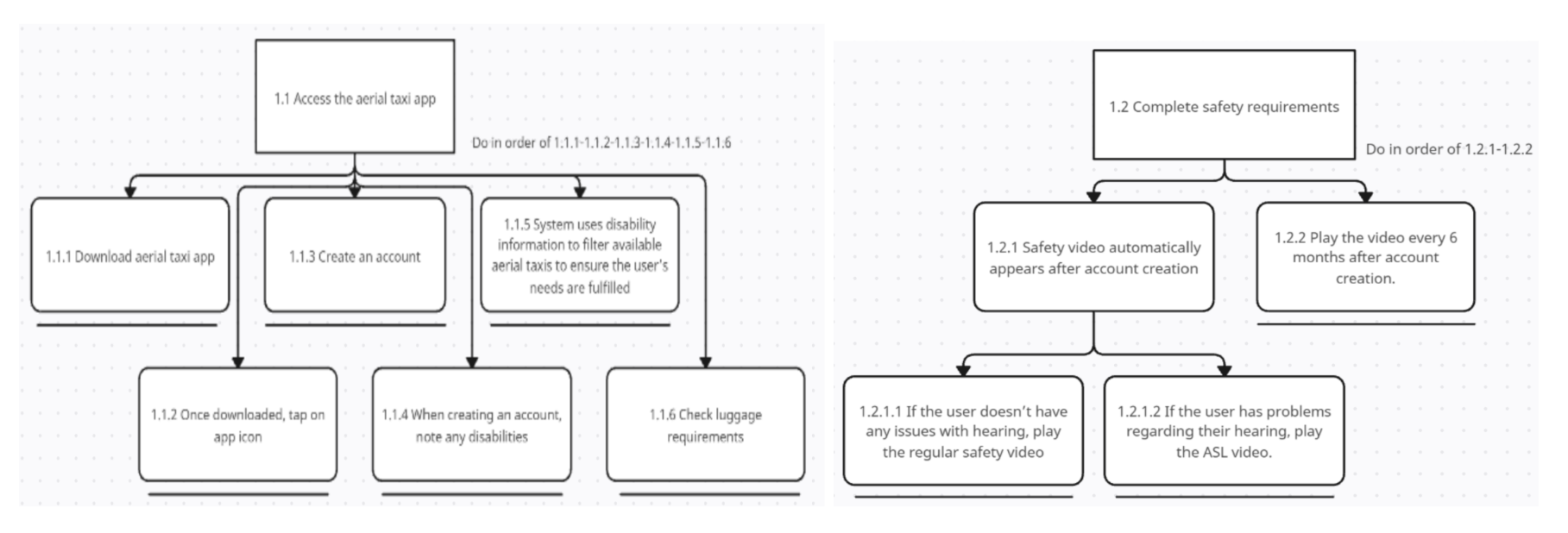
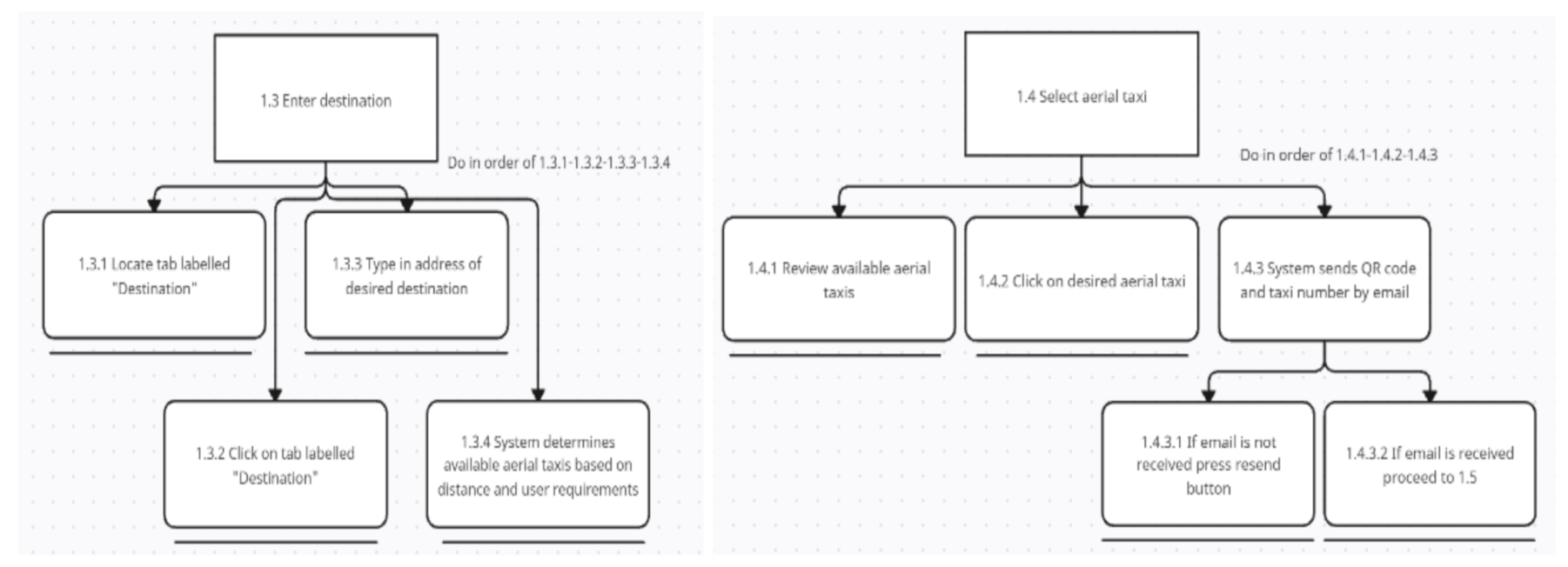
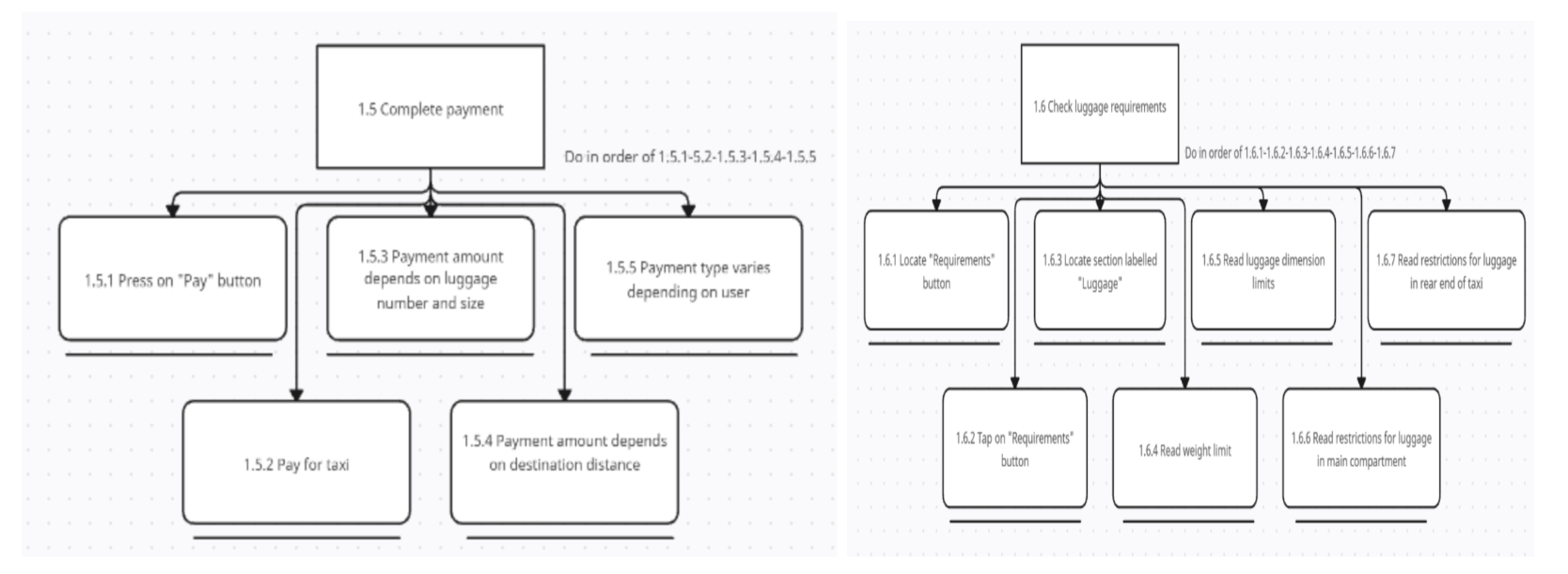
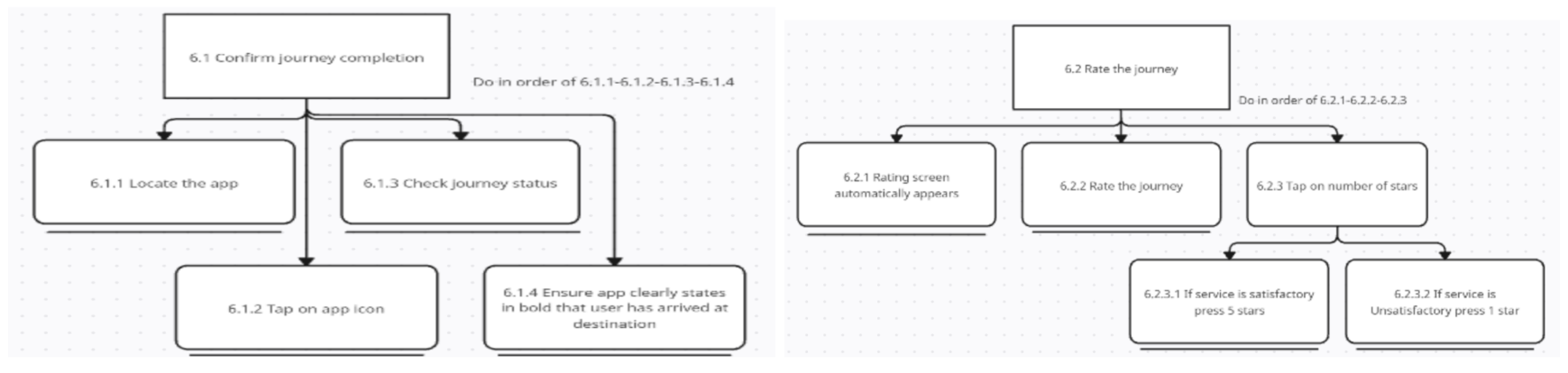
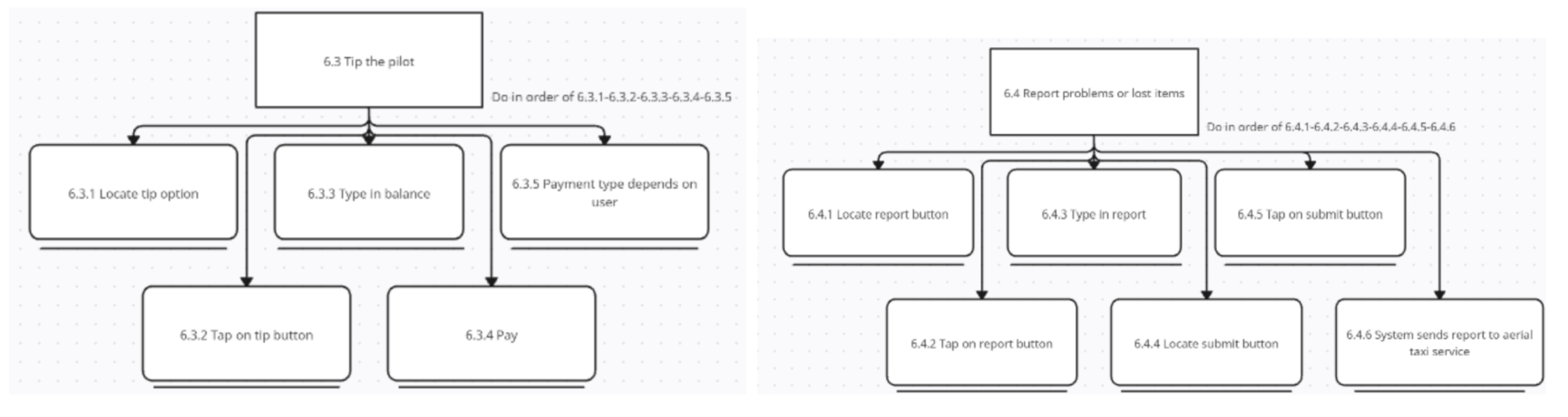
Throughout the design process of the eVTOL, scholarly and academic materials, current transportation services, commercial aerial transportation companies and current aviation laws and regulations were analysed. Examples of companies include AROW Global, Uber and Transport for London, providing relevant information about general concerns regarding public transport and different limitations of aerial services. Academic papers, such as those by Dreslin, also provided insights about human factors inside eVTOLs when designing interior cabins. Global agencies, such as the European Union Aviation Safety Agency (EASA) and the Federal Aviation Administration (FAA), have drafted safety and environmental regulations for aerial operations which have also contributed to different design considerations. A hierarchical task analysis (HTA) table was also drafted to base the development process off of the procedure of the passenger using the service, including before, during and after the travel. Finally, conceptual designs using computer-aided design (CAD) were created and compared to address physical limitations of designs and addressing user requirements, again to reach a more optimal design.
4. HIERARCHICAL TASK ANALYSIS [SS, HS, ML, KK, YL, AF, MH] [EDITED BY KK]
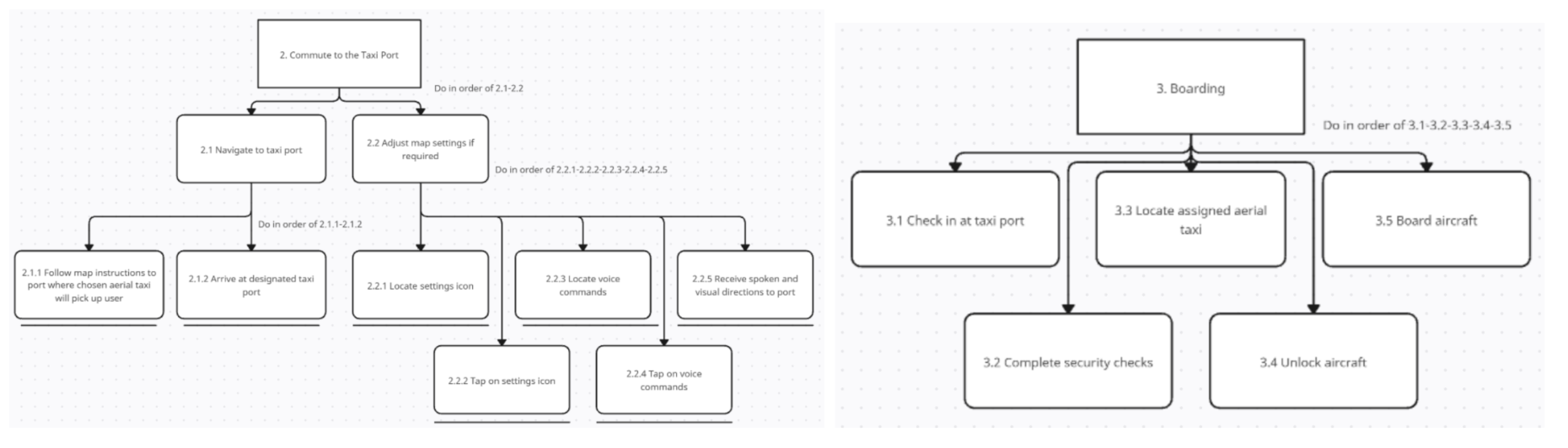
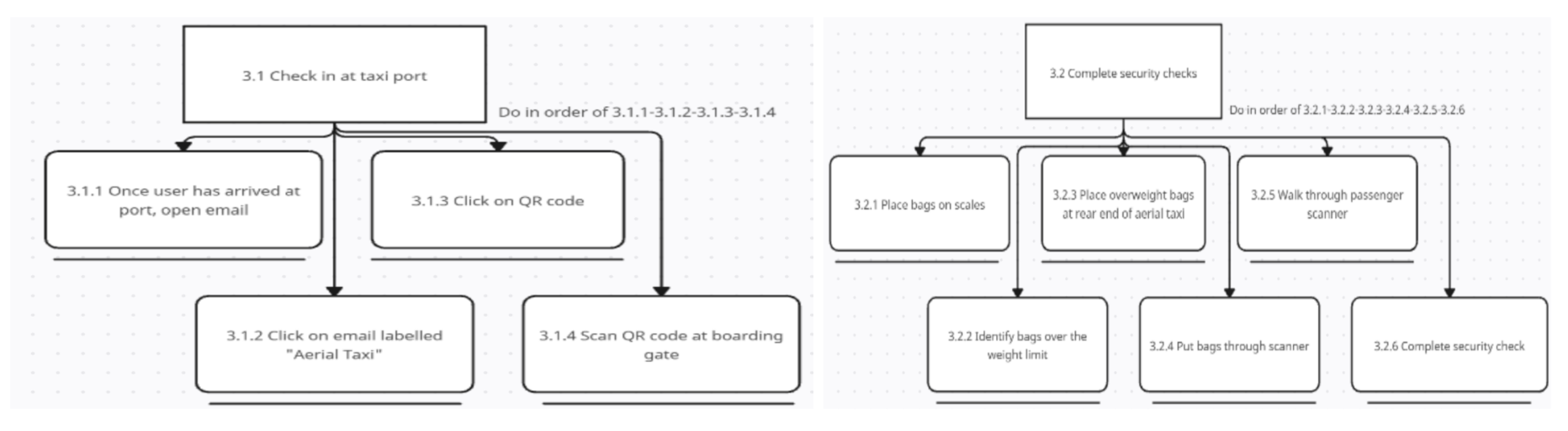
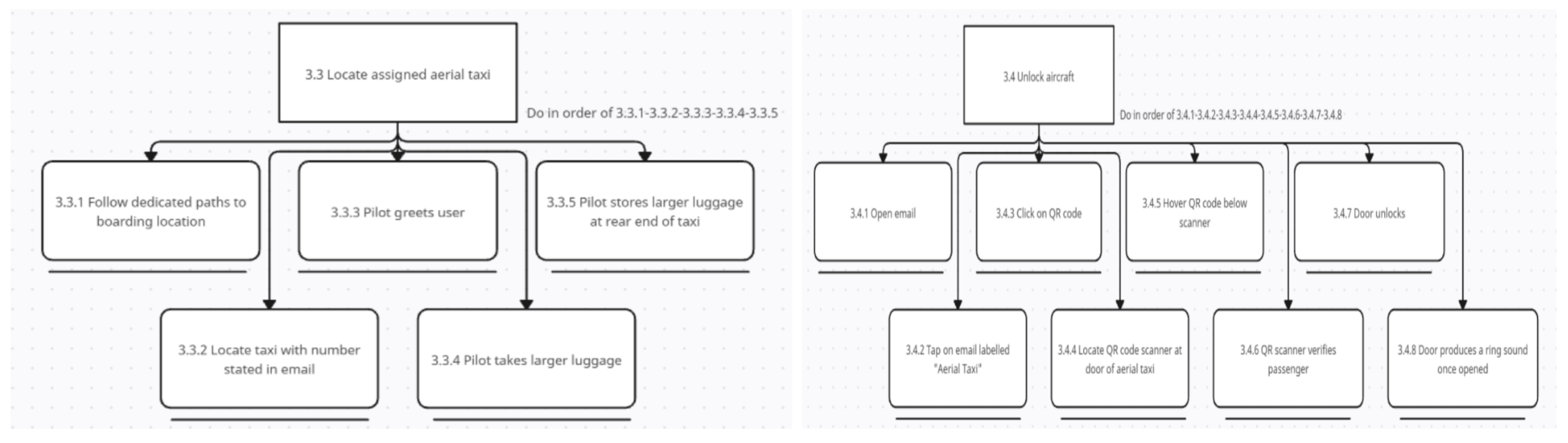
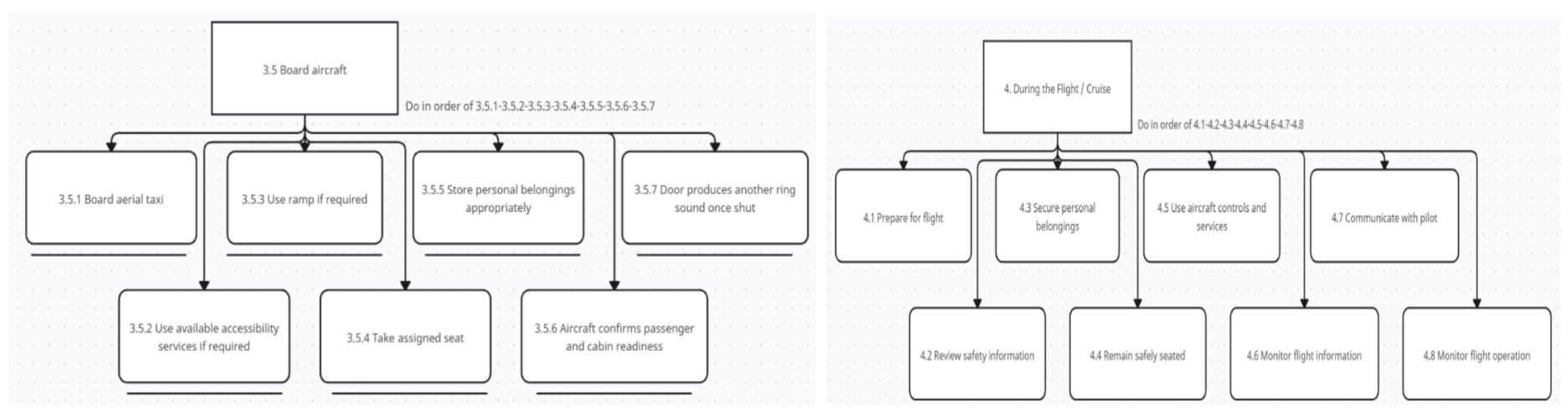
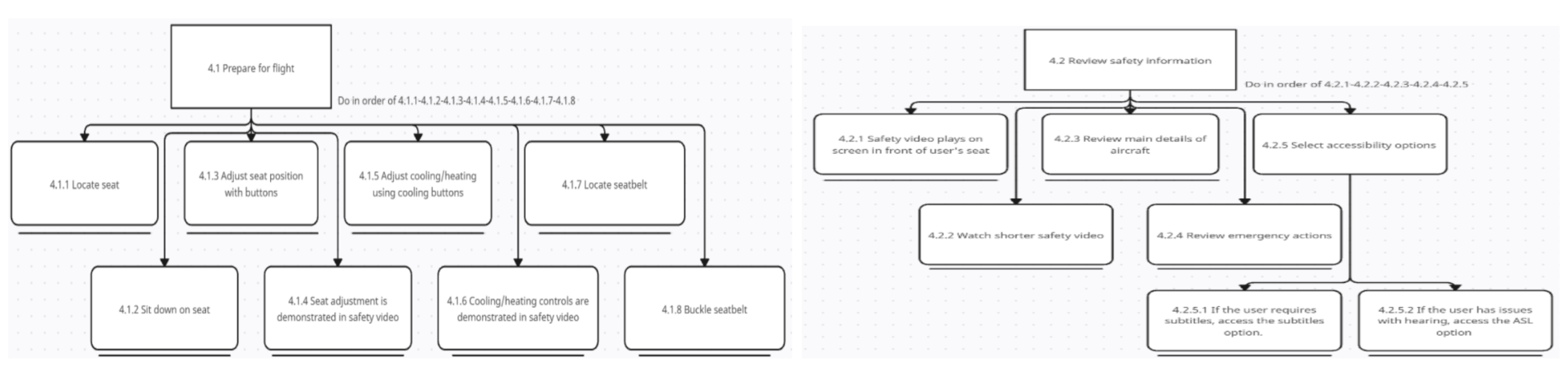
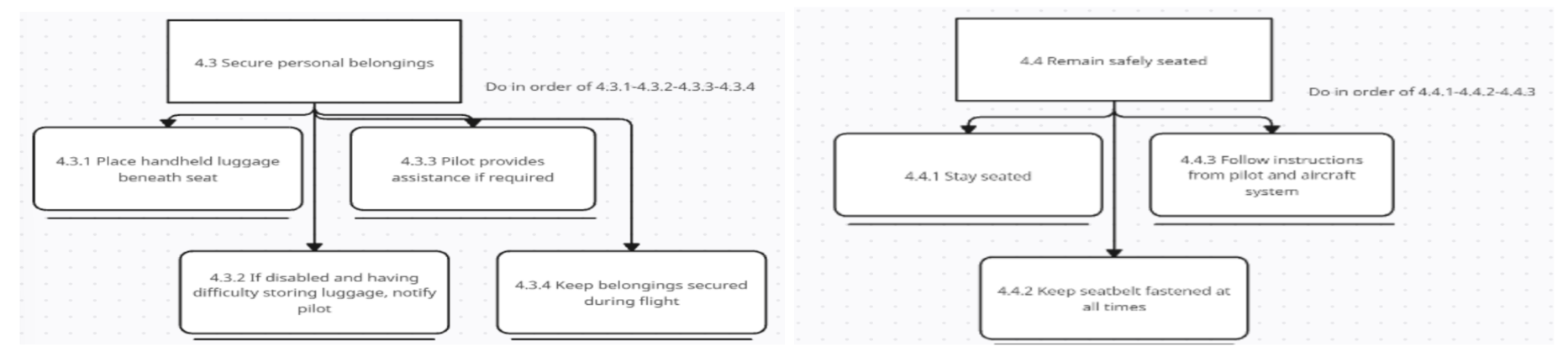
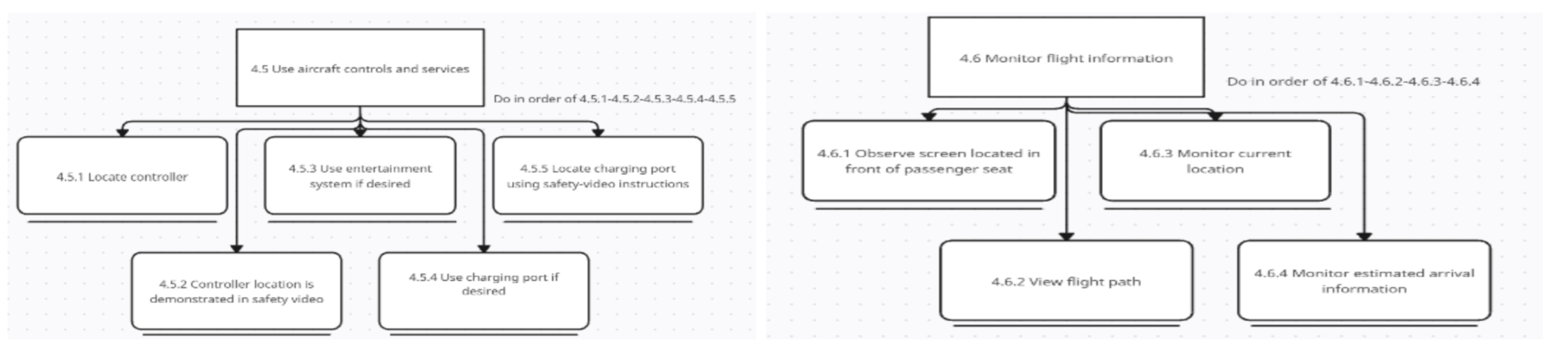
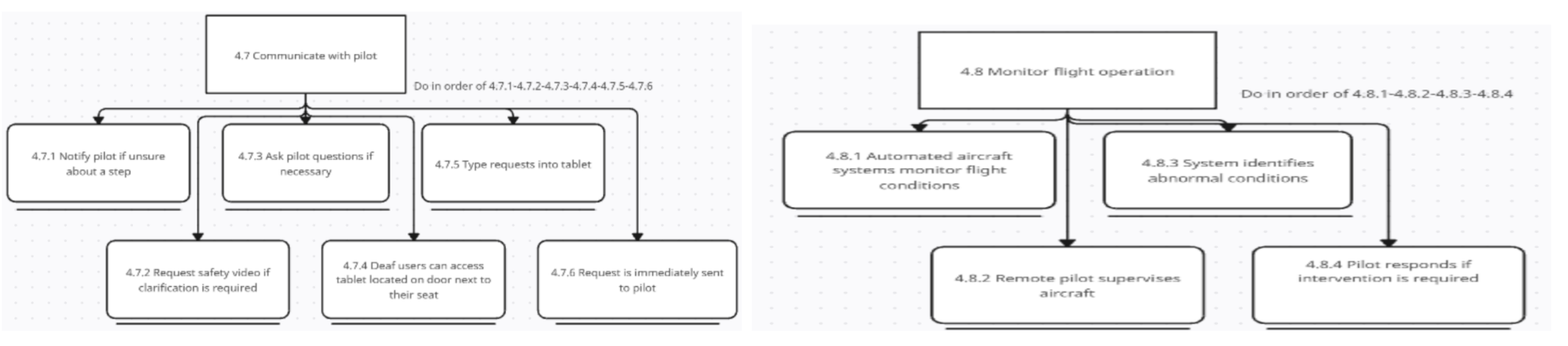
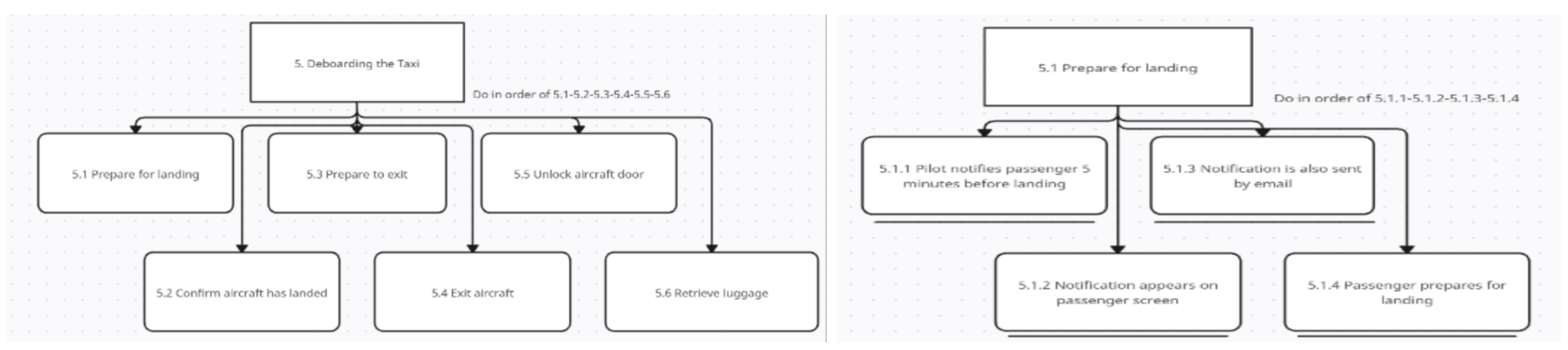
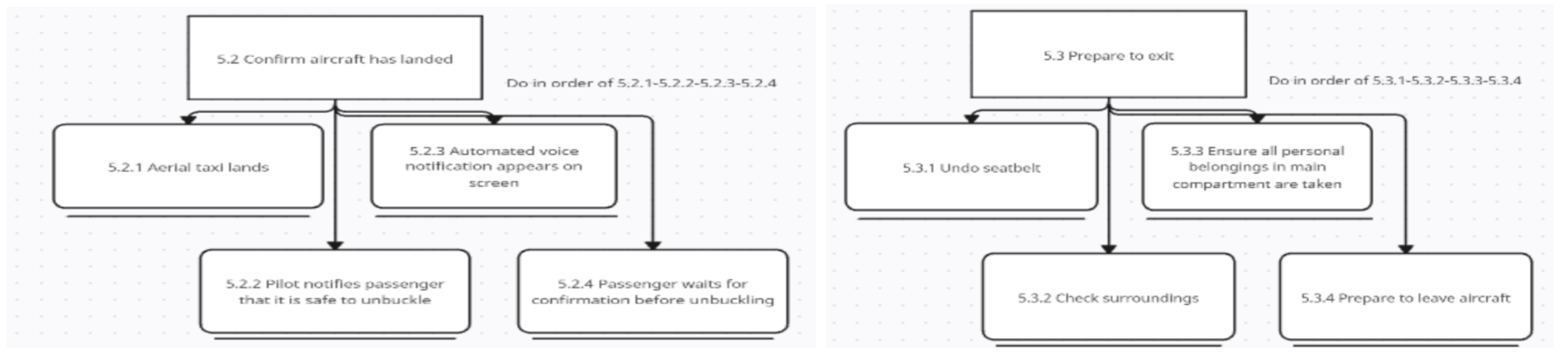
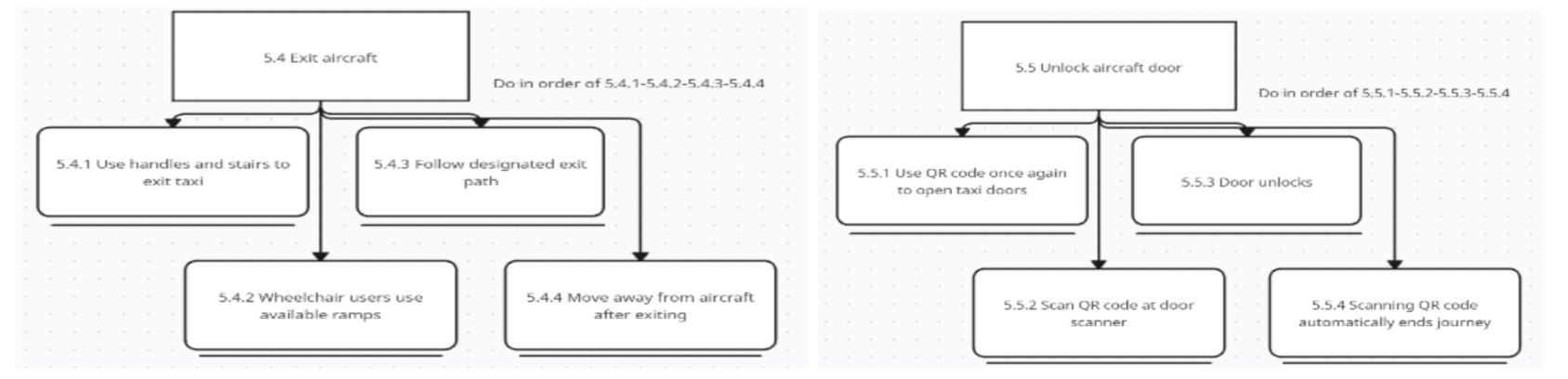
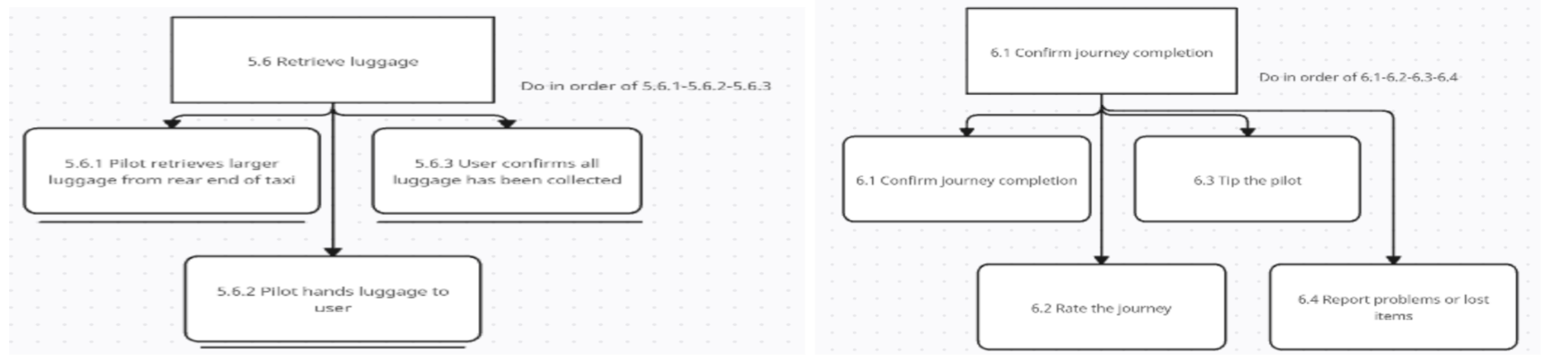
5. HUMAN-SYSTEM DESIGN CONSIDERATIONS [HS, YL, SW, KK]
5.1 Accessibility and inclusivity [HS]
Accessibility and inclusivity is an imperative aspect to consider. Considerations in designs include disabilities and impairment, gender, age, culture and exclusion, ensuring a comfortable, tailored and safe experience for passengers.
5.1.1 SENSORY ACCESSIBILITY
Passengers with sensory disabilities require external assistance to match their requirements in using aerial taxis, especially app interface, navigating and boarding the taxi, and during the in-flight process. To assist users with visual impairments, completely interactive audio guides in apps will be used, paired with illuminated tactile footpaths and tactile maps with braille in stations [1] ensuring safety and ease of use. For users with audio impairments, clear, concise interfaces will be adopted, following a “less is more” design philosophy to provide easy navigation through the app. Stations will be implemented with Bluetooth Auracast transmitters [18], providing real-time station broadcasts directly transmitted to users with Auracast compatible hearing aids and cochlear implants, providing clear and instant updates to all passengers. Overhead monitors and notifications through the app will also be used. Monitors with adjustable volume and brightness will provide passengers with announcements during flight.
5.1.2 PHYSICAL ACCESSIBILITY
Taxi stations and taxis must be accessible to the physically disabled. Common problems include difficulties in using station services and boarding of vehicles. To combat this, station gates and vehicles should be wide enough to accommodate wheelchair users. Pre-booking of services will be available through the app. Anti-skidding ramps, level boarding platforms, stair lifts and priority boarding paths [24] [41] are essential and should be all externally provided in stations to minimise the total weight of aircrafts. Wheelchairs will be provided for users as well in stations [29], with trained personnel to provide additional services. General rolled curb designs should be used in passenger unloading areas. Low-profile counters and bag-scales [36] should also be used for users with strength impairments and disabilities.
5.1.3 COGNITIVE ACCESSIBILITY
Pre-booking of services will be available on the app to request specific cognitive needs. Trained staff and volunteers will help with navigating boarding procedures. Curtains, adjustable lighting and noise-cancelling speakers will be used in taxis to further enhance the comfort of passengers during flight. Sensory rooms would be provided in stations for passengers with ASD or other cognitive disabilities. Overhead illuminated navigation signs with clear wordings and pictograms will improve navigation for dyslexic individuals.
5.1.4 GENDER CONSIDERATIONS
Verbal and sexual harassment is an underlying issue in public transport, especially towards female passengers [50]. Taking an approach from AROW Global [4], clear polymer separation barriers will be installed to provide safety and privacy for both passengers and driver, preventing physical interference for both. Dashcams paired with interior cameras will be installed to monitor taxis from control centres and to protect the rights of drivers and passengers.
5.1.5 AGE CONSIDERATIONS
The eVTOL service aims to serve people of all ages in urban areas, including children, adults and the elderly. Child seats or infant seat belt options will be provided during reservation in the app for infants up to 24 months [19]. For elderly passengers, mobility aids, staff assistance and priority paths will be available in stations [6], during boarding and deboarding, paired with physical accessibility services when needed.
5.1.6 CULTURAL CONSIDERATIONS
The design of eVTOLs and their stations must also fit the needs of different user cultures, expectations and religious practices. App, station and taxi interfaces will have multilingual options to provide information and announcements translated both visually and audibly. Real-time translation options in service booths and taxis would also be made available to make instant requests or concerns. Common practices found in international airports such as dedicated prayer rooms, quiet areas and designated changing rooms [28] will also be installed in stations to meet the needs of various passengers. Signage in stations and taxis will be paired with internationally recognisable symbols and pictograms to make navigation easier for a more diverse group of users.
5.1.7 EXCLUSION CONCERNS
Concerns of exclusion in most public transport are commonly found, some of which will be focused on are pet exclusions, hygienic issues and digital exclusion.
5.1.7.1 Pets
For pet owners, common concerns in public transport are allergies, unpredictable behaviour, bites and injuries etc. Common rules for pet owners should be put in place, taking measures from Transport for London services [58], such as mandatory leashes on dogs and suitable containers for small animals.
5.1.7.2 Hygiene
Ill passengers should also receive aerial taxi services, but measures should be taken to ensure the hygiene quality in vehicles. Plastic barriers as mentioned would be installed to prevent transmission of germs and diseases. Passengers could be subject to a cleaning fee [53] if a mess is caused inside the eVTOL depending on the severity, with proof from the driver via photo. Drivers also reserve the right to refuse service to passengers who may pose a health hazard. Stations should provide basic necessities for hygiene, such as hand sanitisers and surgical face masks.
5.1.7.3 Digital
Digital exclusion exists in those less familiar with modern digital designs. Simple, straightforward designs [9] should be adapted when designing the app to ease the experience of users (continuing in Section 5.2).
5.1.7.4 Illnesses
Aerial travelling can lead to many physical discomforts and illnesses. Examples that will be focused on include motion sickness, ear and sinus barotrauma, dehydration and dryness, deep vein thrombosis and medical emergencies [10].
Motion sickness: Passengers often report to have motion sickness during vehicle movement. Sensory cues such as light signals, audio broadcasts and vibration systems [46] will be installed in vehicles at a controlled intensity to alert passengers of situational changes while not being disruptive.
Ear and sinus barotrauma: Discomfort in ears and sinuses is common during rapid change of altitude inside vehicles. A 300-500 feet per minute ascent and descent rate [25] should be followed to allow enough time for passengers’ bodies to adapt to altitude and pressure changes.
Dehydration and dryness: The ventilation system inside aerial vehicles is designed to compress, then heat up the air from outside of the cabin to maintain room temperature at high altitudes. As a result, passengers suffer from dehydration and dryness. Therefore, humidity levels inside cabins should be kept around 25-30% [56] to prevent this.
Deep vein thrombosis: Insufficient and fixed movement inside aerial taxis can cause blood to pool in lower limb areas [54], leading to slower circulation and an increased chance of blood clots. Cramped, upright and locked seating should consequently be avoided, allowing passengers to adjust suitable angles for seats and have sufficient leg room between 68.1-70.1cm [47].
Medical emergencies: Medical emergencies in-flight is a serious concern in aerial taxis. Due to the limited cabin environment, immediate assistance by the driver is not a viable option. A medical kit would still be provided in the cabin for self-assistance or by companions. Emergency buttons and alerts would be given to passengers as well to notify drivers of any emergencies to conduct emergency landings. AEDs and oxygen tanks should be provided at taxi stations to meet the needs of medical emergencies.
5.2 User-centred app design [YL]
5.2.1 USER REQUIREMENTS AND PASSENGER JOURNEY
Most users have not experienced eVTOLs before, and requirements of different urban travel scenarios vary; in addition, vertical take-off and vertiports as new infrastructure in cities do not have the spatial intuition of airports and subway stations, making it difficult to navigate eVTOL stations. Before using taxi services, users should be given a VR simulation experience to “experience” flying once, so that the needs collected are legible. For different urban scenarios, the priority of functions should be designed separately; for first-time passengers, provide step-by-step wayfinding guidance, while for repeat passengers, simplify to one-click direct process to compensate for the difficulties caused by the cognitive gap of vertiports.
5.2.2 APP DESIGN AND USABILITY
Urban air travel is not an isolated system, it should be integrated into the existing city transport network including subways, ride-hailing service and shared bikes etc. If the reservation / navigation functions of the app are designed in isolation from the general urban travel scenario, passengers may encounter difficulties in the “last mile” connection. Scenario-based visualisation, booking, navigation and interface design should be developed within realistic urban travel scenarios rather than as an isolated flight-booking screen, ensuring the app connects seamlessly with ground transport.
5.2.3 TRUST AND ACCESSIBILITY
Passenger groups in the city are highly heterogeneous. Senior citizens and physically disabled people are particularly prone to difficulties dealing with complex menus, small fonts and precise clicking. Many apps fail to adequately consider age or ability differences during design; at the same time, urban residents generally have a low level of acceptance of air taxis, influenced by perceived usefulness and ease of use. Apps should incorporate accessibility features (keyboard/alternative input devices, large touch targets, adjustable font size, adequate color contrast etc.) to lower the usage threshold for senior citizens and disabled users; at the same time, displaying transparent information like real-time routes, ETAs and flight status will enhance overall acceptance of users.
5.3 Interior design considerations [KK]
5.3.1 HISTORICAL RELATION BETWEEN VEHICLE INTERIOR AND CUSTOMERS
There is no doubt that the introduction of aerial taxis will spark doubt and uncertainty in the beginning stages regarding safety. When creating the new vehicle, interior design will be vital in providing users with a sense of safety and comfort in a journey that is unfamiliar and potentially nerve-racking.
During the initial introduction of motor cars in the early 1900s, the automobile was perceived as something new and risky. Due to the lack of proper protection from the outside, drivers were exposed to rain, snow, wind, dust, dirt and cold temperatures. Later in the 1920s, when enclosed cars became popular, the closed body was more expensive and had safety concerns, but buyers had a sense of protection and comfort. A historical table from the National Automobile Chamber of Commerce shows an approximate 72% rise from 1919-1927 in production, and with an eightfold increase in market share. This highlights the importance of vehicle interior when it comes to providing a sense of security and luxury to customers who are introduced to a whole new transportation experience [65] [51].
5.3.2 THE BALANCE BETWEEN COMFORT AND PROFIT
Although customer comfort and satisfaction is vital in the successful integration of aerial taxis into society, it is also important to consider profit. At a typical airline, a 14% reduction in maintenance cost will result in only a one percentage point improvement in the airline’s profit margin. For short-distance, on-time performance is more important; for long-haul flights, the comfort and service play the most important roles for aircrafts. Individual passengers never make a choice to pay more for comfort. Studies by Springer Nature Link suggest that U.S. airlines from 2002-2022 have increased aircraft density from 151 seats to 178 seats, while decreasing seat size from 89cm to 78cm for seat pitch and 46cm to 43cm for seat width, showing how airlines are willing to sacrifice comfort for the potential to generate additional revenue.
When it comes to eVTOLs, comfort is not simply an expense. At the introductory stages of the aerial taxi, sacrificing passenger capacity will be a necessity for a smooth introduction to the new vehicle. In a study for Norwegian airline passengers, approximately half reported some level of apprehension during flight. The study also found that 4.5% had cancelled at least one flight due to flight anxiety. Having a thoughtful interior design that creates comfort will bring a sense of control, familiarity and perceived safety resulting in an increased willingness to use the taxi. A 1974 study supports this claim, showing that comfort ratings and willingness to fly are correlated:
- Very comfortable: 67% were eager to fly again and another 33% had no doubt they would fly again.
- Comfortable: 20% were eager and 74% had no doubt, meaning a combined 94% had no doubt or were eager to fly again.
- Neutral: 8% were eager and 73% had no doubt = 81% positive toward flying again.
- Uncomfortable: 3% were eager and 49% had no doubt = 52% positive.
- Very uncomfortable: only 3% were eager and 13% had no doubt = 16% positive, while 23% said they would never fly again.
Overall, to maintain economic efficiency while ensuring passenger comfort and retention, the eVTOL should initially prioritise passenger comfort before gradually shifting towards optimising seat efficiency, while reducing costs. As the vehicle becomes more socially accepted, the seating configuration can evolve to accommodate a larger passenger capacity [48][49].
5.3.3 DIFFERENCE IN COMFORT
The definition of comfort differs depending on the customer being served, so the following aims would need to be considered:
- A universally comfortable design;
- Overall satisfaction over individual satisfaction;
- Serving passenger demographic and their specific range of comfort.
Studies show that newer aircraft are regarded significantly better with respect to comfort than older ones [63]. Factors include: nice entry; spacious seating; no obstacles, no pressure; no stress on the body; good view from the cockpit; variation in posture possible; good form; and cushioning of the seat.
5.3.4 CONCEPTUAL IDEAL INTERIORS
Considering the incorporation of 1-3 passengers with a physically present pilot, a 3 + 1 flexible configuration could be an ideal option. The pilot will be positioned in the forefront like an actual taxi. The cabin will include three seats with one being removable/foldable, serving as an option for passengers with disabilities.
As previously mentioned, the seats will be designed with comfort and a sense of security in mind, having been inspired by lightweight automotive touring seats, racing bucket seats and premium aircraft seats. Features such as contoured backrests, adjustable headrests and adjustable recliners will be incorporated. The materials for the seats will be differentiated depending on the different layers it will be using. Durable upholstery with high-durability synthetic leather will provide protection from countless cleanings and the many passengers it will carry. Below that layer will be a comfort foam with different density depending on the area. Comfort layers will be softer and the structural/support layers will be denser, allowing passengers to get better comfort without making the entire cushion extremely thick. Following the two layers will be a lightweight frame, which attaches the seat to the aircraft. This lightweight frame’s material will be carbon-fibre, chosen for its excellent strength-to-weight potential and lightweight nature. Armrests will be multifunctional with controls for air conditioning temperatures, light and a panic button.
There will be a screen on the ceiling of the front section of the passenger cabin that provides details regarding the aircraft and safety instructions. Windows will be large, creating an open, bright and spacious environment for the passengers. Noise reduction will be achieved through multiple layers of padding and acoustic systems, starting from the aircraft structure, vibration isolation, acoustic insulation, interior panel and then to the passenger cabin. Surfaces of the interior will avoid exposure of hard plastic or metal around the passengers, having soft-touch armrests, cushioned side panels, rounded edges and smooth floor transitions. The floor would be flat with slip resistance, avoiding raised thresholds, narrow passages and obstructions for the accessible passenger position. For interior lighting, there would be indirect ambient lighting, which creates a more comfortable atmosphere, while also avoiding excessive glare.
Overall, these design choices aim to create a safe, accessible and comfortable cabin that combines ergonomic seating, soft durable materials, and noise and vibration reduction with a calming environment to provide a pleasant journey for the passengers.
5.4 Ethical aspects and public reception of eVTOL air taxis [SW]
The development of eVTOL air taxis raises several ethical issues that need to be considered before they are introduced widely. Although eVTOLs could provide faster transportation and help reduce road congestion, there are concerns surrounding safety, environmental impact, affordability, privacy and public acceptance [3].
5.4.1 SAFETY
Safety is one of the main concerns surrounding eVTOL air taxis. Since they are designed to operate over cities, a crash could affect both passengers and people on the ground. There are also risks associated with technical failures, battery systems and the complexity of operating aircraft in urban environments. Research into future eVTOL safety has identified emerging risks and the need for appropriate safety measures and regulation.
Public acceptance is also strongly connected to safety. If people do not trust the aircraft or believe that the risks are too high, they may be unwilling to use them. Therefore, eVTOL manufacturers and operators have a responsibility to ensure that aircraft are thoroughly tested to meet appropriate safety standards.
5.4.2 ENVIRONMENTAL IMPACT
eVTOLs use electric propulsion, meaning they do not produce direct exhaust emissions during flight. However, they are not completely free from environmental impacts. The overall environmental impact depends on factors such as battery production, aircraft manufacturing, battery disposal and the source of electricity used to charge the aircraft. Research has shown that the environmental benefits of eVTOLs can vary depending on how they are operated and powered.
Noise is another environmental concern. Although eVTOLs are expected to be quieter than helicopters, they will still produce noise during take-off, landing and flight. If large numbers of aircraft operate over residential areas, this could affect people’s quality of life. Noise has therefore been identified as an important factor when considering the sustainability and acceptance of urban air mobility.
5.4.3 ACCESSIBILITY AND INEQUALITY
The cost of eVTOL air taxis could create another ethical issue. Since the technology and infrastructure are expensive to develop and operate, air taxis may initially be too expensive for many people. This could result in eVTOLs becoming mainly a form of transport for wealthier passengers. This raises the question of who actually benefits from the technology. If wealthy passengers receive faster transportation while local communities experience noise or other disadvantages, the pros and cons may not be distributed fairly. Social inequality has therefore been identified as one of the ethical issues that should be considered when developing UAM systems [3].
5.4.4 PRIVACY
Privacy is also an important consideration. eVTOL systems may use GPS, cameras and other sensors to operate safely. These systems could collect information about passengers, aircraft locations and the surrounding environment. This creates questions about who owns the data, who can access it and how it can be used. Clear policies would be needed to make sure that passenger and location data is handled responsibly to prevent abuse.
5.4.5 REGULATION AND RESPONSIBILITY
Clear regulations will be required before eVTOL air taxis can operate widely in cities. These regulations would need to cover areas such as aircraft certification, flight routes, emergency procedures and airspace management. Responsibility is another issue, particularly as eVTOLs become more automated. If an autonomous aircraft crashes, it may be difficult to determine whether the manufacturer, software developer or operator is responsible. Effective regulation is therefore important for establishing clear safety requirements and determining responsibility when accidents occur.
5.4.6 PUBLIC RECEPTION
Public opinion towards eVTOL air taxis is currently mixed. People may be interested in the technology because it could reduce journey times and avoid road traffic. However, safety and noise are two major concerns. Research into public acceptance has found that perceived safety, environmental concerns and the personal and social benefits of Uurban air mobility can all influence people’s willingness to accept the technology. People are also more likely to accept eVTOLs if they trust the technology and believe that it is properly regulated. If air taxis are seen as something only wealthy people can afford, this could also reduce public support.
5.4.7 OVERALL ETHICAL DEBATE
There are clear arguments both for and against the development of eVTOL air taxis. They could provide faster transportation, reduce road congestion and potentially reduce environmental impacts. They could also create employment opportunities in engineering, maintenance and aviation. However, these benefits need to be balanced against safety risks, environmental concerns, inequality, privacy and the effect on local communities. The main ethical question is therefore not simply whether eVTOLs are good or bad, but whether their benefits outweigh the concerns. Overall, the ethical success of eVTOL air taxis will depend on how they are introduced. Safety, environmental impact, affordability, privacy and public acceptance should all be considered alongside the development of the technology.
5.5 Safety systems [HS]
5.5.1 SECURITY INSIDE AERIAL TAXIS
Security requirements for passengers are necessary to ensure a safe journey in aerial taxis, focusing on luggage requirements, information safety and boarding verifications.
5.5.1.1 Luggage requirements
Luggage requirements will be put in use in eVTOLs during the travelling process to prevent hazards and ensure a safe environment inside the vehicle. Regulations of luggage will be based on commercial airlines and traditional aerial transport companies, such as soft-sided luggage following weight restrictions [31], with oversized luggage options for customers available through the app. Luggage restrictions will follow the general policies of airlines prohibiting dangerous goods and hazardous materials [22], with certain exceptions such as allowing lithium batteries and small personal mobility devices stored in designated areas inside the taxi.
5.5.1.2 Help and emergency buttons
Help and emergency buttons will be installed inside eVTOLs which can be used to alert the driver and station operators in case of emergencies, then station operators will decide on upcoming actions such as emergency landings or manual control.
5.5.2 SECURITY CONCERNS OUTSIDE AERIAL TAXIS
Besides ensuring safety and security for passengers and drivers during the travelling process, the verification and boarding processes are also addressed to ensure smooth and efficient preparation and evaluation for the ride.
5.5.2.1 Safety screenings for drivers
Drivers will go through mandatory safety screenings and skill evaluations every year to keep them up to standard, with ongoing background checks for criminal offences. Drivers will also have a public profile on the app for customers to leave reviews and comments. To ensure the rights of drivers, an appeal system would be open for drivers paired with video recording in taxi cabins.
5.5.2.2 Requirements for passengers
Passengers will be required by law to provide their personal information when creating a profile for using aerial taxi services. Tracing, linkage and verification of identity against breeder documents, machine readable travel documents (MRTDs), including e-passports (e.g., driver’s licenses, ID cards), passenger name records etc. will be required when signing up for aerial taxi services [32]. Passengers will be required to watch a safety video regarding the use of aerial taxis every six months, and during their first time using the aerial taxi service. Mandatory security checks will be conducted at boarding stations via metal detectors and X-ray machines. Customers can verify their bookings through one-time use codes provided via SMS.
5.5.3 SAFETY SYSTEMS FOR DRIVERS DURING OPERATION
Built-in systems for drivers include speed limitation systems, automatic braking systems, seat belts, AI-assisted navigation, driver monitoring system and suggested procedure system, and haptic feedback to drivers. All autopilot functions can be disconnected in case of an emergency, taken over by operators in control centres or by the pilot, depending on the situation.
6. RESULTS AND DISCUSSION [KK, SS]
6.1 Inclusivity features in interior [KK]
Considering possible passengers with disabilities, the aerial taxi will feature an accessible passenger seat. Being removable and foldable, the seat will allow passengers with disabilities affecting their legs to have a comfortable and secure trip to their destination. When the seat is removed, wheelchair straps will be available, which will be carefully strapped with the support of the assigned pilot. The seat is located at the back of the aircraft, where luggages and cargo are stored, allowing non-ambulatory passengers easy storage and access to medical equipment. For visually-impaired passengers, the padding of the interior walls will prevent any external harm. The speaker on the back of the cabin will play bird chirping sounds, assisting on the navigation to the designated seat. Detailed instruction will be played through the speakers, informing where tools are located and providing instructions on safety procedures and fastening the seatbelt. The buttons on the armrests will feature braille labels indicating the purpose of each button. The safety video playing on the aircraft screen will have an ASL interpreter communicate the exact same instruction a hearing individual would hear.
6.2 Visual representation options for humam systems design considerations [SS]
Several methods can be used for visually representing the eVTOL taxi, including engineering drawings, physical models, CAD and CAM. Engineering drawings can show scale and design, but not how passengers and the plane work together. Physical prototypes allow people to see and touch designs, however making changes takes time and the model might not look exactly like the final product. CAM is mostly about manufacturing the plane, so it is not the way to analyse the use of eVTOLs. CAD, on the other hand, creates 3D views that show both how the plane is built and how people use it.
For an eVTOL taxi, CAD lets the designer see seat positions, door locations and how the interior is used, allowing changes to be tried out on the computer before production. Therefore, CAD was chosen for this research to show the eVTOL design. The discussion led to the development of specific design elements such as the foldable accessible seat, wheelchair‑securement system, braille‑enabled controls, ASL‑supported safety displays and audio‑based spatial cues, forming a complete human‑centred interior solution for the eVTOL.
7. EVTOL DESIGN AND OPTIMISATION [SS, ML, MH, AF]
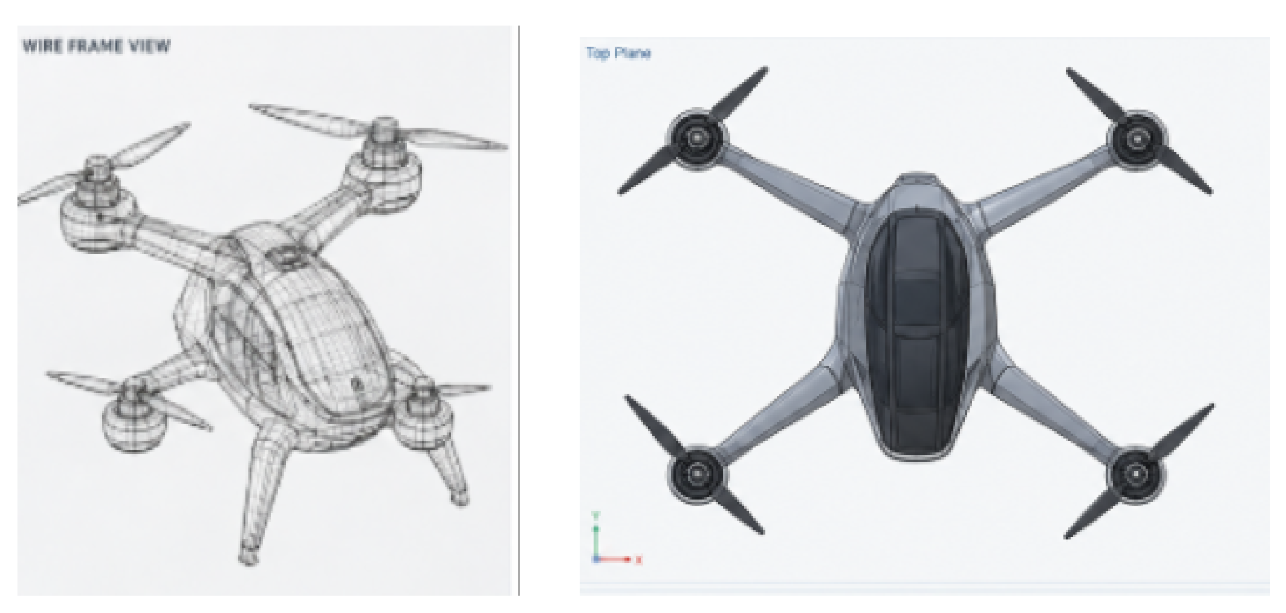
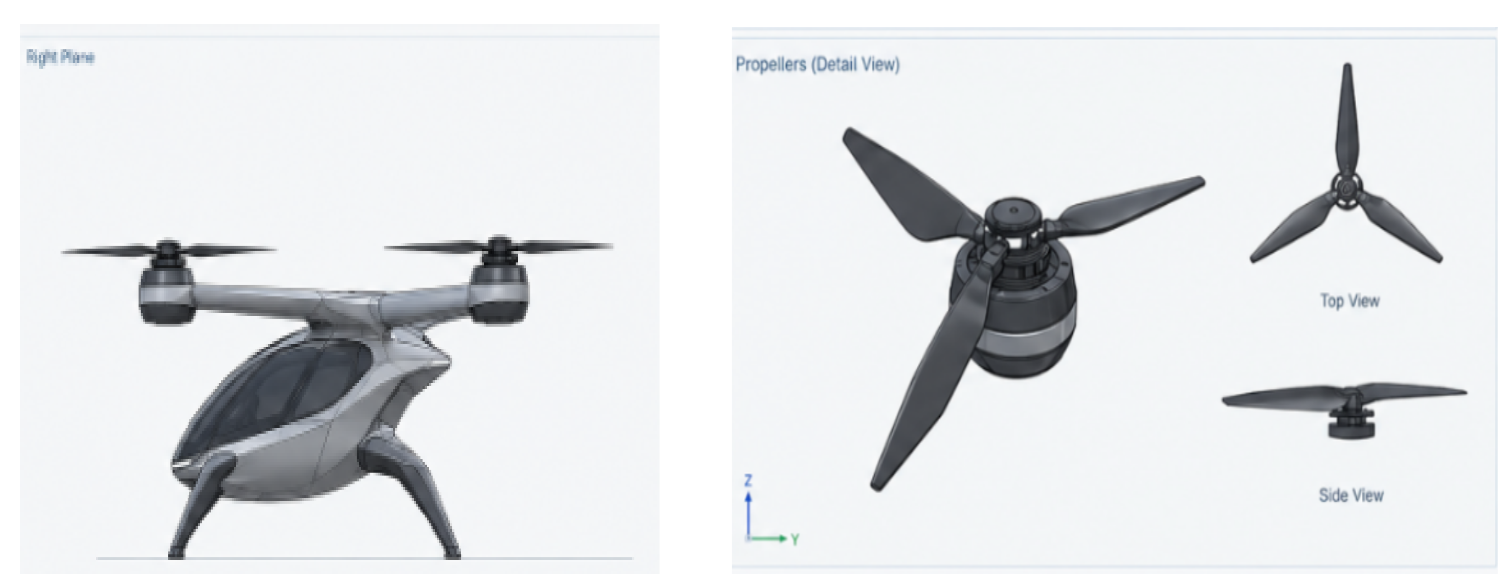
Figure 1. Concept eVTOL computer aided designed prototype [SS].
7.1 Brief overview of eVTOL concept design [SS]
The design of the eVTOL will undoubtedly be a paramount factor in determining the efficacy and sustainability of aerial taxis, as well as how well the eVTOL caters to a specific user’s needs, and most importantly how an eVTOL would operate in real-world circumstances, such as crowded cities or heavy air traffic. Without a doubt, the design must be aerodynamic and energy-efficient, however the propulsion technologies needed must be there to match this new level of efficiency, as well as advanced batteries to cater to newer models of eVTOLs. This section explores these very technologies and how a conceptual eVTOL could be used and designed using specific materials and techniques, incorporating all of the human-system integration systems mentioned previously.
7.2 Incorporation of human systems design consideration in concept design of eVTOL [SS]
Based on the results and discussion, the following human systems consideration features will be installed to maximise user experience and inclusivity, each with a visual representation.
7.2.1 ACCESSIBILITY FEATURES
The eVTOL incorporates a removable and foldable accessible passenger seat to support individuals with mobility impairments. Wheelchair straps and dedicated medical‑equipment storage ensure safe and comfortable travel for passengers who rely on assistive devices.
7.2.2 SUPPORT FOR VISUALLY-IMPAIRED PASSENGERS
Soft interior padding is used throughout the cabin to reduce the risk of injury for visually-impaired passengers. Natural bird‑chirping audio cues help guide them intuitively through the interior space.
7.2.3 MULTISENSORY SAFETY COMMUNICATION
Audible safety instructions ensure that essential information is accessible even without visual displays. Braille labels on armrest buttons allow visually impaired passengers to operate seat functions independently.
7.2.4 SUPPORT FOR HEARING-IMPAIRED PASSENGERS
An ASL interpreter displayed on cabin screens ensures that safety briefings are accessible to hearing‑impaired passengers. Visual alerts complement audio announcements to create a fully inclusive communication system.
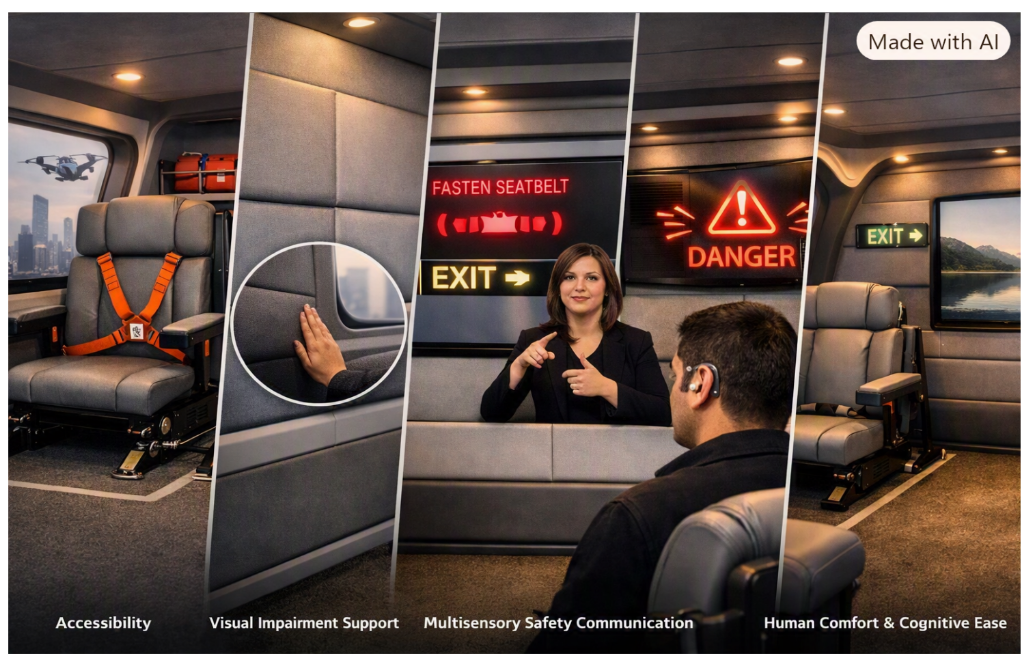
Figure 2. An AI-generated photo showing supports for accessibility.
7.3 Choice of structural materials [SS]
The structure of an eVTOL taxi must be strong, lightweight and durable. Reducing mass is key to improving range and efficiency. Carbon-fibre-reinforced polymer (CFRP) is expected to play a role because it offers a high strength-to-weight ratio and can be formed into complex shapes needed for aerodynamic designs, ideally for parts like the fuselage, wings and rotor systems.
Aluminium alloys are also suitable for areas where light weight, good strength and lower cost matter. Titanium alloys work well in high-stress zones such as motor mounts, landing gear joints and structural connections due to their strength, resistance to fatigue and ability to resist corrosion. Inside the aircraft using materials and composite panels helps cut down the weight of the cabin.
Composites do come with higher manufacturing and inspection costs compared to traditional metals. eVTOL designers need to balance weight, strength, safety, cost and efficiency to manufacture parts. Combining carbon-fibre composites, aluminium alloys and titanium offers a suitable mix for passenger eVTOLs. This combination keeps the aircraft light while staying structurally sound enough for commercial flights.
7.4 Required thrust-to-weight and power-to-weight ratios [SS]
For an eVTOL aerial taxi, thrust-to-weight ratio (T/W) and power-to-weight ratio (P/W) are important measures of performance because the aircraft must generate enough thrust to lift its own weight, passengers and batteries. During hover, the total rotor thrust must at least equal the aircraft’s weight, meaning a theoretical T/W ratio of 1.0 is required simply to remain stationary. In practice, an eVTOL needs a higher ratio, typically around 1.2-1.5, to provide sufficient performance for take-off, manoeuvring and safe operation if a propulsion unit becomes unavailable.
7.5 Aerodynamics [AF]
Aerodynamics are particularly important in our eVTOL design because the aircraft has to fly in several different ways. Unlike a normal aircraft, an eVTOL needs to take off and land vertically, hover in the air, transition into forward flight and then cruise efficiently.
7.5.1 VERTICAL TAKE OFF
During take-off, the eVTOL uses its rotors to produce upward thrust. The rotors push air downwards, creating an upward force that lifts the aircraft from the ground. At this stage, the aircraft has very little forward speed, so the wings do not produce much lift. The main focus is making sure the rotors can produce enough thrust to lift the aircraft and keep it stable.
7.5.2 HOVER
After taking off, the aircraft can enter a hover. In this phase, the aircraft stays at roughly the same position and altitude. The rotors need to produce enough thrust to balance the aircraft’s weight. If the thrust is increased, the aircraft rises, while reducing thrust allows it to descend. The airflow from the rotors is also important because the rotors create a downward airflow, known as rotor wake.
7.5.3 TRANSITION
Transition happens when the eVTOL changes from vertical flight into forward flight. This is one of the most challenging parts of the flight because the aircraft is changing from mainly rotor-generated lift to greater wing-generated lift. As the aircraft gains forward speed, airflow over the wings increases and the wings begin producing more lift. At the same time, the direction and amount of rotor thrust may change. The aircraft also experiences increasing drag and changing airflow around the fuselage and wings. Therefore, the aircraft needs to remain stable and controllable throughout the transition.
7.5.4 FORWARD FLIGHT
Once the eVTOL reaches forward flight, the wings become much more important for generating lift. During cruise, the goal is to generate enough lift while keeping drag as low as possible. This allows the aircraft to travel more efficiently and reduces the amount of energy required.
7.5.5 VERTICAL LANDING
For landing, the aircraft needs to slow down and return to vertical flight. As the forward speed decreases, the wings produce less lift. The rotors control the aircraft’s descent until it reaches the ground. Just like take-off, stability is important because the aircraft needs to maintain a controlled attitude while descending.
7.6 Propulsion system [ML]
Thrust is generated by a set of distributed motors, each fed by its own power inverter that converts DC from the battery pack into the variable-frequency AC needed to set that rotor’s speed independently of the others. During hover and climb, the motors run near peak torque to supply the vertical lift required for takeoff and landing; once the wing begins carrying load in forward flight, several rotors throttle back in step, cutting the electrical draw on the battery as cruise efficiency takes over from brute lift.
A liquid-cooling loop runs through the motor windings and inverter electronics in parallel, removing the heat this high-current operation produces so torque output does not have to be curtailed to stay within thermal limits. Power delivery from the battery is continuously metred against real-time cell temperature and voltage, throttling output when needed to stay inside the safe operating envelope established through scaled flight testing, which protects cell life across repeated hover-heavy duty cycles (drawing on the architecture described in Miao et al., 2025).
7.6.1 TILTING PROPELLORS
All propulsors in this design are identical, dual-role units: a propeller and motor mounted on an electromechanical tilt mechanism that rotates the entire assembly between a vertical orientation for hover and a horizontal orientation for cruise. In hover, the units behave collectively like a multirotor, generating vertical thrust to support weight and using differential thrust for attitude control; during transition, the tilt actuators rotate all units together (or in a coordinated, slightly staggered sequence) while the wing begins to generate lift, until the propellers reach the fully horizontal cruise position.
7.6.2 ELECTRIC MOTORS
Each propeller is powered by independent electric motors, usually a permanent-magnet synchronous motor due to its high power-to-weight ratio. Most motors are directly connected to the propeller, reducing weight, mechanical wear and possible failure points. Each motor must operate effectively during both hover and cruise, providing high torque at lower speeds during hover and lower torque at higher speeds during cruise. The motors are mounted on moving nacelles, requiring power and cooling systems to pass through the tilt joints. Cooling systems are essential to prevent overheating, especially during high-power operations such as hover and climbing.
7.7 Control systems [ML]
Rather than switching between separate gain-scheduled controllers, the system runs a single non-linear controller across hover, transition and cruise to maintain stability continuously as control authority shifts from rotor thrust to aerosurfaces. Because distributed electric propulsion supplies more rotor effectors than a given manoeuvre strictly requires, control allocation is used as an active resource: thrust is redistributed in real time to reduce structural loading in normal flight and reconfigures automatically to preserve safe hover and climb if a rotor fails. A predictive guidance layer sits above this, tracking nearby traffic and geofenced boundaries to hold a collision-free path autonomously, with onboard monitoring intended to catch spoofing or intrusion attempts before they reach the flight-control commands [53].
7.8 Power [MH]
As the development of aerial taxis progresses, the power component of the aerial taxi must also sufficiently supply energy to aerial taxis, ensuring maximum efficiency. The eVTOL must have an applicable range, maintain low risks to the pilot and passenger during use and be able to maintain, as well as alter, its height and altitude when required. These factors all depend on power used within the eVTOL.
7.8.1 FUEL VS BATTERIES
Both fuel and batteries are widely used in transport, with battery-powered vehicles becoming common due to concerns about climate change. Batteries offer opportunities for aerial taxis but are significantly heavier than fuel, with batteries potentially weighing 300-600 kg compared with around 30-50 kg of fuel, making vertical takeoff more difficult. Greater energy demands also increase heat production, creating potential safety risks from battery overheating. However, batteries are more efficient, converting around 80-90% of their energy into motion compared with only 20-30% for fuel-powered vehicles. Fuel-powered vehicles generally offer greater range and much faster refuelling, reducing concerns about insufficient power during a journey. Therefore, current battery technology may be most suitable for short-distance aerial taxi journeys within compact urban areas.
Both fuel and battery powered vehicles hold many negatives. Research shows that lithium ion batteries produce high amounts of EV emissions: e.g., the Tesla model 3 creates between 2.5 and 1.6 metric tons of CO2. Furthermore, building a new EV can produce around 80% more emissions at 10-16 metric tons of CO2 than building a gas-powered car, with the average emission released when building a gas-powered car being 6-9 metric tonnes. Despite this, most emissions are released when charging the battery, likely coming from burning fossil fuels [38].
However, gasoline cars emit more than 350g of CO2 per mile driven over their lifetimes. The hybrid and plug-in hybrid versions, meanwhile, emit around 260g per mile of carbon dioxide, while fully battery-electric vehicles emit 200g. Furthermore, despite EVs tending to have a shorter range, a study found that they remained 15% better in emission miles compared to a hybrid, much better than a gas car where the EV had 90,000 driving miles in comparison to 180,000 of the gas and hybrid car [38].
7.8.2 BATTERIES IN VEHICLES
Currently lithium ion batteries are the main type of power source for cars. This is due to their sustained lifespan and the materials used within the battery. Despite this, discarding lithium ion batteries can lead to pollution. To combat such problems surrounding lithium ion batteries, new batteries are being developed, including hydrogen cell batteries and solid state batteries.
7.8.3 FUTURE SCOPE FOR THE POWER SYSTEM
As research into power systems for aerial taxis continues to be conducted, it is vital that conceptual power systems meet eVTOL requirements to be installed in these vehicles. The power system must conform with standards including: being environmentally friendly; having a long lifespan; having a relatively low weight; being compact; and being as efficient as possible.
7.8.4 MAXIMISING THE BATTERY POWER CONSUMPTION EFFICIENCY
Whilst lithium ion batteries are still used, it is necessary to maximise the lifespan and range for these lithium ion batteries. In order to maximise the efficiency of the battery, energy consumption predictions could be carried out. Prediction factors include: altitude density; aircraft design; airspeed; and collision avoidance programs.
The energy consumption prediction uses machine learning to predict energy consumption, as well as assess risk using conditional value-at-risk metrics (CVaR). This prediction model will ensure that the aerial taxi will have sufficient battery for the given journey. Using CVaR can also help to minimise safety risks by predicting energy usage in-flight, different weather conditions etc. An alternative way to conserve energy in batteries is through energy-efficient path planning. A study was carried out by studying city scale wind patterns and calculating the best route to reduce battery consumption, maximising battery efficiency.
7.8.5 HYDROGEN FUEL CELLS
Hydrogen fuel cells seem to be a promising alternative power source. Hydrogen fuel cells have the capacity to provide the aerial taxi with lightweight, highly efficient power, with current batteries not having sufficient capacity or high enough energy densities to supply adequate power to lightweight aerial vehicles, making them more environmentally friendly than standard batteries. The fuel cell must be designed so that energy consumption is minimal while maintaining sufficient range, maximising the efficiency of the battery and benefitting longer distances. The power of fuel cells must also be high enough to accommodate for additional energy needed for take-off.
7.8.6 SOLID STATE BATTERIES
Another alternative to lithium ion batteries is solid state batteries. Solid state batteries are environmentally friendly and have a greater energy density than the standard lithium ion batteries. Energy density measures how much energy a brewery stores per unit of weight. Typical eVTOL batteries have an energy density of 250-300 Wh/kg compared to 400-500 Wh/kg for solid state batteries, a 63.64% increase. This would roughly double eVTOL range without increasing aircraft weight, making them highly efficient and applicable for longer range flights. Current eVTOLs can fly from roughly 19 miles for short hop urban multicopters to 250 miles for longer range. Solid state batteries tend to be more environmentally friendly than typical lithium ion batteries due to the fact that less material is mined, reducing greenhouse gas emissions.
Solid state batteries use solid material instead of liquid or gel to conduct ions between the electrodes and lack a separator between such electrodes. The ions can move quicker through the solid electrolyte between electrodes, allowing for a faster charging time. Furthermore, during rapid charging cycles, solid state batteries pose a lower hazard because they do not use flammable electrolytes found in typical lithium ion batteries. This highly reduces the risk of thermal runaways and fires as well as allowing the battery to have better thermal stability. A solid state battery will have a typical cycle life of 3000-5000 charge cycles, a 166.67% increase from the 1000-2000 charge cycles a standard lithium-ion battery has. Therefore the battery would have to be replaced less frequently.
8. LIMITATIONS [HS]
One of the most pressing limitations in the writing of this paper was the lack of practical operational testing in urban areas and feedback from the general public, limiting the tangible concerns and needs that can be viewed in development. Moreover, detailed law and regulatory policies have yet to be developed. Consequently, most of the constraints would have to be adapted from existing ones which may conflict with each other. Finally, there is the limitation of time and resources, hindering the evaluation of physical products and the process of trial and error.
9. CONCLUSION [AF]
In conclusion, eVTOLs have a lot of potential as aerial taxis in cities, making travelling faster and helping people avoid problems caused by busy roads. However, creating a robust aerial taxi system is not just about making an aircraft fly. There are many things that need to be integrated, such as aerodynamics, propulsion, stability, energy use, safety, automation and passenger comfort. We also learnt that considering the people using and operating the system are just as important as the aircraft itself. Aspects like vertiports, boarding, communication and how passengers interact with the technology will all need to be considered.
Overall, we believe eVTOLs could become a useful part of future transportation, but there are still many challenges to be solved. Future research could focus on making flights safer and more efficient, improving the aircraft, and finding better ways to connect eVTOLs with existing transportation in cities.
Bibliography
1. AccessAble, ‘Legal requirements – Tactile Guide Paths’, AccessAble Hong Kong.
2. Adelstein, B.D. (2019). Air vehicle factors affecting occupant health, comfort, and productivity. NASA Technical Reports Server.
3. AlZhobi, G., Al Janedi, A. & Balakrishan, D. (2026) ‘Analyzing Public Acceptance and Ethical Governance for Urban Air Mobility (UAM) Services in Cognitive Cities’, Transportation Research Procedia, 96, pp. 804–811.
4. AROW Global, ‘AROWGuard Driver Protection Systems’, AROW Global. Available at: https://arowglobal.com/mass-transit/arowguard-bus-driver-protection-system/
5. Brown, S. (2021) ‘Machine learning, explained’, MIT Sloan, 21 April 2021. Available at: https://mitsloan.mit.edu/ideas-made-to-matter/machine-learning-explained
6. Cathay Pacific, ‘Elderly Passengers’, Cathay Pacific. Available at: https://www.cathaypacific.com/cx/en_HK/prepare-trip/help-for-passengers/elderly-passengers.html
7. Zhao, C., Yang, Y., Cheng, Z. et al. (2026) ‘Recent advancements and challenges for eVTOL aircraft aerodynamic noise in Urban Air Mobility’, Progress in Aerospace Sciences, 161, 101184.
8. Akash, A., Raj, V.S.J., Sushmitha, R. et al. (2022) Design and analysis of VTOL operated intercity electrical vehicle for Urban Air Mobility. Electronics, 11(1), 20.
9. Díaz-Bossini, J.M. & Moreno, L. (2014) Accessibility to mobile interfaces for older people. Procedia computer science, 27, pp.57-66.
10. DeHart, R.L. (2003) Health issues of air travel. Annual review of public health, 24(1), pp.133-151.
11. Diehl Aviation, ‘Adaptive User Routing System’, Diehl Aviation. Available at: https://www.diehl.com/aviation-highlights/en/cabin-highlights/adaptive-user-routing-system/
12. Dinius, D. (2021, December 7). Electric propulsion technologies. National Aeronautics and Space Administration. Available at: https://www.nasa.gov/centers-and-facilities/armstrong/electric-propulsion-technologies/
13. Dober, ‘Electric Vehicle Cooling Systems’, Dober. Available at: https://www.dober.com/electric-vehicle-cooling-systems
14. Dreslin, B.D., Falanga, M.C., Ngam, J.M. et al. (2024) Up in the Air: A Human Factors Approach to Enhancing eVTOL Passenger Experience, Embry-Riddle Aeronautical University. Available at: https://commons.erau.edu/ntas/2024/poster/21/
15. Edwards, T. (2019). eVTOL passenger experience final report. NASA Technical Reports Server.
16. Edwards, T., & Price, G. (2020). eVTOL passenger acceptance. NASA Technical Reports Server.
17. Ekeberg, Ø., Fauske, B. & Berg-Hansen, B, (2014) ‘Norwegian airline passengers are not more afraid of flying after the terror act of September 11. The flight anxiety, however, is significantly attributed to acts of terrorism’, Scandinavian Journal of Psychology, 55.5, pp. 464–468.
18. European Commission, ‘Audio accessibility of rail stations’, AccessibleEU. Available at: https://accessible-eu-centre.ec.europa.eu/audio-accessibility-rail-stations-0_en
19. European Union Aviation Safety Agency, ‘Flying with Children’, EASA. Available at: https://www.easa.europa.eu/en/light/topics/flying-children-0
20. Liang, F., Wang, Q., He, J. & Tong, R. (2026) ‘Toward future flight safety of electric vertical takeoff and landing aircraft: Applying black swan to safety risk assessment of emerging technologies’, Reliability Engineering & System Safety, 276, 112878.
21. Federal Aviation Administration. (2025). Advanced air mobility infrastructure. U.S. Department of Transportation. Available at: https://www.faa.gov/airports/new_entrants/aam_infrastructure
22. Federal Aviation Administration, ‘PackSafe’, Federal Aviation Administration. Available at: https://www.faa.gov/hazmat/packsafe
23. Federal Aviation Administration, ‘FAA Statement on eVTOL Aircraft Certification’, 10 June 2024, Federal Aviation Administration. Available at: https://www.faa.gov/newsroom/faa-statement-evtol-aircraft-certification
24. Government of Canada (2019). Accessible Transportation for Persons with Disabilities Regulations. Available at: https://laws-lois.justice.gc.ca/eng/regulations/SOR-2019-244/index.html
25. Gradwell, D. & Rainford, D. eds. (2016) Ernsting’s Aviation and Space Medicine 5E. CRC Press.
26. Li, X., Dang, A. & Chen, M. (2025) ‘Green, safe, and Cost-Effective? An integrated structural analysis of public acceptance of urban air mobility’, Transport Policy, 173, 103795.
27. Hatzakis, T., Alčiauskaitė, L. & König, A. (2024) The needs and requirements of people with disabilities for frequent movement in cities: insights from qualitative and quantitative data of the TRIPS project. Urban Science, 8(1), p.12.
28. Hong Kong International Airport, ‘Prayer Rooms’, Hong Kong International Airport. Available at: https://www.hongkongairport.com/en/passenger-guide/airport-facilities-services/prayer-rooms
29. Hong Kong International Airport, ‘Special Needs Access’, Hong Kong International Airport. Available at: https://www.hongkongairport.com/en/passenger-guide/airport-facilities-services/special-needs-access
30. Interesting Engineering, ‘Flying Car Turns to Solid-State Batteries for Takeoff’, Interesting Engineering. Available at: https://interestingengineering.com/energy/flying-car-turns-to-solid-state-batteries-for-takeoff
31. Helistar, ‘Airbus H135’, Helistar. Available at: https://www.helistar.eu/fleet/airbus-h135/
32. International Civil Aviation Organization, ‘ICAO TRIP’, International Civil Aviation Organization. Available at: https://www.icao.int/icao-trip
33. Joshi, A., Mishra, D.K., Singh, R., Zhang, J. & Ding, Y. (2025) ‘A comprehensive review of solid-state batteries’, Applied Energy, 386, article 125546.
34. Kalakou, S., Ferreira, T. & Almeida, H. (2026) ‘What affects acceptance of Urban Air Mobility services?’, Transportation Research Procedia, 95, pp. 920–927.
35. Liang, F., Wang, Q., He, J. & Tong, R. (2026) ‘Toward future flight safety of electric vertical takeoff and landing aircraft: Applying black swan to safety risk assessment of emerging technologies’, Reliability Engineering & System Safety, 276, 112878.
36. Mead & Hunt, ‘Beyond ADA: An Airport Case Study Toward Universal Design’, 31 July 2024, Mead & Hunt. Available at: https://meadhunt.com/airport-universal-design/
37. Miao, Y., Fan, X., Li, D., Sun, W., Huang, L., Hao, S., Fang, H., Qu, R. & You, Y. (2025) Research advances in electrical propulsion systems for electric vertical take-off and landing aircrafts: a comprehensive review. Acta Aeronautica et Astronautica Sinica, 46(22).
38. MIT Climate Portal, ‘Are electric vehicles definitely better for the climate than gas-powered cars?’, MIT Climate. Available at: https://climate.mit.edu/ask-mit/are-electric-vehicles-definitely-better-climate-gas-powered-cars
39. Liu, M. et al., (2026) ‘Adopting electric vertical takeoff and landing aircraft for green transport transformation’, Fundamental Research, 6.4, pp. 2621–2633.
40. Moeve, ‘Green Hydrogen in Spain: Transition and Decarbonization’, Moeve. Available at: https://www.moeveglobal.com/en/planet-energy/green-energy/green-hydrogen-spain-transition-decarbonization
41. Monteiro, R.D.G. (2018). Design of a Boarding Step for a Helicopter. Available at: https://repositorio.ipl.pt/entities/publication/a7ebbdf6-b018-44b6-b50c-82fbc52512ea
42. NASA, ‘Electric Propulsion Technologies’, NASA. Available at: https://www.nasa.gov/centers-and-facilities/armstrong/electric-propulsion-technologies/
43. NASA Glenn Research Center, ‘Thrust-to-Weight Ratio’, NASA. Available at: https://www1.grc.nasa.gov/beginners-guide-to-aeronautics/thrust-to-weight-ratio/
44. NASA (2024). Human Systems Integration & Engineering: HSI & E Design Influence. Available at: https://www.incose.org/hsi-2024/
45. National Aeronautics and Space Administration. (n.d.). Thrust to weight ratio. NASA Glenn Research Center. Available at: https://www1.grc.nasa.gov/beginners-guide-to-aeronautics/thrust-to-weight-ratio/
46. Pereira, E., Macedo, H., Lisboa, I.C., Sousa, E., Machado, D., Silva, E., Coelho, V., Arezes, P. and Costa, N. (2024) Motion sickness countermeasures for autonomous driving: Trends and future directions. Transportation Engineering, 15, p.100220.
47. Porta, J., Saco-Ledo, G. and Cabañas, M.D. (2019) The ergonomics of airplane seats: The problem with economy class. International Journal of Industrial Ergonomics, 69, pp.90-95.
48. Rathod, J. (2026) ‘Seat Densification: A Revenue Optimization Strategy in Commercial Aviation’, Create@State, Arkansas State University. Available at: https://arch.astate.edu/evn-createstate/2026/posters/3/
49. Richards, L. & Jacobson, I.D. (1974) ‘Ride Quality Evaluation 1: Questionnaire Studies of Airline Passenger Comfort’, Ergonomics, 18.2, pp. 123–142.
50. Sil, A., Chowdhury, S. & Thoreau, R. (2024) Challenges and barriers for gender-inclusive public transport policies and practice in Delhi, India. Case Studies on Transport Policy, 16, 101201.
51. Smithsonian National Museum of American History, ‘Technological Choices’, America on the Move. Available at: https://americanhistory.si.edu/explore/exhibitions/america-on-the-move
52. Soutis, C. (2005). Fibre reinforced composites in aircraft construction. Progress in Aerospace Sciences, 41(2), 143–151.
53. Su, J., Huang, H., Zhang, H., Wang, Y. & Wang, F. (2024) eVTOL performance analysis: a review from control perspectives. IEEE Transactions on Intelligent Vehicles, 9(5).
54. Suadicani, P., Hannerz, H., Bach, E. & Gyntelberg, F. (2012) ‘Jobs encompassing prolonged sitting in cramped positions and risk of venous thromboembolism: cohort study’, JRSM Short Reports, 3.2, article 8.
55. Sun, X., Wang, Y. & Wang, X. (2026) Investigation on the vortical interference between typical rotor configurations and a tilting wing in an electric vertical take-off and landing aircraft. Physics of Fluids, 38(4).
56. Toftum, J. & Fanger, P.O. (1999). Air humidity requirements for human comfort. ASHRAE transactions, 105, p.641.
57. Transport Department, Hong Kong, ‘Persons with Disabilities’, Transport Department. Available at: https://www.td.gov.hk/en/road_safety/road_users_code/index/chapter_2_for_pedestrians/persons_with_disabilities/index.html
58. Transport for London, ‘Pets on Public Transport’, TfL. Available at: https://tfl.gov.uk/travel-information/your-safety-and-security/pets-on-public-transport
59. Uber, ‘Uber Driver Cleaning Fee Policy’, Uber Help. Available at: https://help.uber.com/en/riders/article/uber-driver-cleaning-fee-policy?nodeId=2dba264f-edb9-4ae7-8186-68dd399874f0
60. University of Delaware Center for Composite Materials. (n.d.). Urban air mobility and eVTOL structures—ULI program. University of Delaware. Available at: https://ccm.udel.edu/project/urban-air-mobility-and-evtol-structures-uli-program/
61. U.S. Access Board. Study on the Feasibility of Wheelchair Securement Systems on Aircraft. Available at: https://www.access-board.gov/news/2021/09/15/trb-issues-report-on-the-feasibility-of-wheelchair-securement-systems-on-passenger-aircraft/
62. U.S. Department of Transportation (2013). Seat Strapping of Passenger Wheelchairs in the Aircraft Cabin. Available at: https://www.transportation.gov/airconsumer/seat-strapping-wheelchairs-2013-pdf
63. Vink, P. (2019) ‘The ergonomics of airplane seats: The problem with economy class’, International Journal of Industrial Ergonomics, 69, pp. 90–95.
64. Kalakou, S., Ferreira, T. & Almeida, H. (2026) ‘What affects acceptance of Urban Air Mobility services?’, Transportation Research Procedia, 95, pp. 920–927.
65. ‘When Cities Treated Cars as Dangerous Intruders’, MIT Press Reader. Available at: https://thereader.mitpress.mit.edu/when-cities-treated-cars-as-dangerous-intruders/