
Abstract
This research article evaluates the question: to what extent has the IMF’s conditionality impacted fiscal and monetary policies in developing African nations during the post-pandemic era? The paper begins by introducing fiscal and monetary policies – primary macroeconomic tools – and the expansionary or contractionary mechanisms used by each governing authority to influence economic growth and stability. These policies, although theoretically effective, have trade-offs in real-world contexts, including budget deficits, balance-of-payment crises, the “crowding out” effect, pressure on financial institutions and more, which tend to occur when policies are used superfluously and immoderately. The research paper takes these foundational concepts, considers the pragmatic outcomes and examines a globally influencing factor that can manipulate policy adjustment and in turn economic output: IMF conditionality. IMF conditionality is the set of cumulative policy reform stipulations imposed by the International Monetary Fund (IMF) on a borrowing country to receive financial assistance. This IMF operation is a pivotal mechanism in shaping developing African nations’ economies, especially in today’s global economic landscape in which countries such as Zambia, Kenya and Egypt have limited access to fiscal flexibility and monetary liquidity. Therefore, the significance of this research paper is not just to conclude whether the IMF’s conditionality has an impact on developing African nation economies or not, but rather to measure the extent of the conditionality impacts on government and central bank policies – interpreting both positive and negative outcomes.
1. Introduction
1.1 Macroeconomic Principles
When a sovereign nation faces economic hardship, what actions might its governing authority take to re-stabilise its economy and social stability? Economies are measured by numerous factors including metrics such as gross domestic product (GDP), consumer price index (CPI) and broader macroeconomic observations, such as foreign direct investment, employment rate (%), classical cycle and more. However, when an economy experiences various kinds of difficulties such as poverty, inflation or currency devaluation, one of the components that influences change is how a government or central bank responds (Chen, 2026). Government and central bank intervention (the levels of which may vary depending on each country’s economic strategy) is a critical factor in shaping economic activity. To expand on this further, it is important to understand what policies the two distinct institutions utilise.
Governments employ fiscal policy, which controls how the government’s budget gets distributed and how tax policies are reformed to fund expenditures (Flynn, 2019; Horton & El-Ganainy, n.d). Governments leverage their policies to balance economic output, and there are two ways in which this is done: expansionary and contractionary fiscal policy. Expansionary fiscal policy is applied when an economy is facing a downturn or recession, and the government aims at boosting economic activity over a period of time. Expansionary tools include increased budget spending (deficit or total spending) – where governments allocate increased funds which could be put towards projects such as subsidisation, infrastructure or social welfare, in turn generating more cash flow, employment opportunities and economic activity – or reducing taxation to keep more capital within the hands of the population, in turn promoting consumption and investment, “boosting” the economy (Hayes, 2025). Conversely, when an economy grows significantly, prices rise and demand increases faster than resources can be produced, which can lead to an economy overheating. To counter this, governments implement contractionary fiscal policy, in which they reduce spending and/or raise taxes to extract liquidity out of the economy, decreasing demand and stabilising prices. One type of contractionary policy is fiscal consolidation (austerity), where the government reduces expenditures for the long-term objective of reducing budget deficit and sovereign debt (Hayes, 2025).
Additionally, to ensure the stability of a country’s macroeconomic conditions, central banks utilise monetary policy, which, similar to fiscal strategies, influences expansionary or contractionary outcomes, whereas policies imposed by central banks utilise different mechanisms (Friedman, 2000). Expansionary monetary policy is applied when an economy experiences a slump or recession, whereby interest rates are decreased to promote borrowing and business activity. In severe crises, quantitative easing (QE) – a type of expansionary monetary policy – is applied, where central banks purchase government bonds and securities to inject large sums of liquidity into financial systems, stimulating economic growth (Investopedia, 2026). Contrastingly, when aggregate demand increases excessively, central banks implement contractionary monetary policy, increasing interest rates, therefore discouraging borrowing and slowing down inflation. In certain cases, central banks will carry out quantitative tightening (QT), where they reduce financial liquidity in the economy by reducing their number of bonds or allowing their securities to expire without renewed investment (Investopedia, 2025).
However, although fiscal and monetary policies provide a thorough structural framework for economic recovery, they are not always effective in practical applications and may offer trade-offs. For instance, if a government implements expansionary policy during times of weak growth, the economy may experience increased aggregate demand, consumption and development; however, excessive expenditures may have a significant toll on budget deficits, which could make balance-of-payment or national debt issues even more severe, or perhaps cause a “crowding out” effect, in which the government’s intervention could interrupt private-sector growth and business activity (Horton & El-Ganainy, n.d). Moreover, an example for monetary policy trade-off could be when central banks tighten policies and increase interest rates, while the aim is to cool the economy, surged borrowing prices could decrease the value of other existing assets held by banks, placing stress on financial institutions and in turn harming economic output (Bouis et al., 2025). Especially in developing countries that are more vulnerable to economic instability, ineffective fiscal and monetary policy can have severe consequences on economic growth, and it is in such times of crisis that they may turn to the International Monetary Fund (IMF) for assistance in areas such as emergency financing, structural reform or macroeconomic support.
1.2 The IMF, Its Role and Conditionality
The International Monetary Fund has a critical role in global economic stability and financial development, as their refined operations have had a widespread impact on national crises and global-scale issues dating as far back as its official establishment in 1945 (Kenton, 2026).
The IMF is an intergovernmental organisation consisting of 191 member states, and it serves as one of the mainstays of upholding global financial stability and economic growth; moreover, the IMF’s formal charter, the Articles of Agreement, clearly outlines the main purposes of the IMF, including promoting international trade and monetary cooperation, facilitating multilateral payments to regulate global exchange and deterring economic policies that would harm social stability (International Monetary Fund, 2020; OANDA, 2025). To achieve their mission, the IMF employs three fundamental operations: economic surveillance, capacity development and financial assistance. The IMF provides financial assistance to countries facing economic crises such as balance of payment complications, illiquid financial institutions or excessive fiscal deficits (International Monetary Fund, 2025). In most cases, to be eligible to receive financial assistance from the IMF, borrowing countries must agree to certain conditions, including policy adjustments, to achieve positive macroeconomic outcomes and in turn support repayment, and so, the cumulative demands tied to policy reform is formally referred to as IMF conditionality (International Monetary Fund, 2025).
2. Literature Review
IMF programmes implement policy reforms on borrowing countries to enhance macroeconomic stability, however, the ramifications of these policy changes remain controversial. Ko, Lee and Leung (2025) discuss the impacts of conditionality across 167 countries between 1980 and 2019, and found that it has a correlation to social unrest in short-term outcomes, while having a weaker association with political destabilisation. The literature highlights the complex relationships between financial assistance, conditionality and political instability, distinguishing political instability into three separate concepts: social unrest, elite instability and regime destabilisation. The distinction of political instability into different categories is important, since previous literature treated it broadly and used composite measuring techniques, thus not observing each individual aspect driving economic crises. The study proposes one of two predictions why IMF conditionality may propose economic hardship, in turn harming populations and exacerbating grievances. When conditionality is implemented into an economic system, short-term financing and stability may be disrupted in order to reallocate development for long-term outcomes. Such a strategy could cause fluctuating prices, declined employment and insufficient resources, causing volatile economic movement. Therefore, the relationship between policy reform, economic output and political instability is a major component in the IMF’s financial assistance and conditionality operations, since the demands required to achieve macroeconomic recovery utilise – directly or indirectly – fiscal and monetary policy, in which expenditures, taxation and interest rates all contribute a critical influencing factor over the concepts discussed throughout the selected source. These conditionality impacts are especially important in developing African nations, in which economies face severe economic challenges, reach significant levels of public debt and have limited access to fiscal flexibility.
These prominent economic hardships are proven by Tricontinental (2025), a research institution, that states that developing African nations’ total debt surged to four times as much as it was in 2004, reaching $11.4 trillion in 2023. Amongst numerous reasons, this is due to high borrowing costs from financial institutions, including the IMF, in turn solidifying African nations’ prolonged debt spiral. It is described that austerity measures limit state capacity – the amount of control governments have over fiscal expenditures and policy manipulation – in turn “eroding” economies even further.
Overall, the first study by Ko, Lee and Leung effectively examines the political economic consequences of conditionality on political instability through the analysis of the three distinguishable benchmarks. However, while the research focus is thorough and details macroeconomic conditions, certain gaps in the information persist. The article covers a broad period of time which does not enter the post-pandemic landscape, does not address the implications of fiscal and monetary policies directly but rather indirectly, and does not specifically touch upon African countries and their respective economies and outcomes. Furthermore, Tricontinental’s article supports the contextual knowledge of this research paper by focusing on IMF’s conditionality and its engagement in developing African nations, in addition to providing economically meaningful statistics and results. However, it strictly focuses on the negative consequences of conditionality, omits certain fiscal policy implementations and entirely neglects central bank impacts and responses, in turn filling in a minority of blanks, while pertaining certain gaps that this research paper seeks to fill.
3. Methodology
This paper utilises a mixture of both qualitative and quantitative research, as it contains theoretical and applicable economic information, such as Keynesian economic concepts, macroeconomic topics (fiscal and monetary policy), real-world applications (existing IMF initiatives) and more, in addition to statistical, metric-based evidence that was used to analyse economic trends and outcomes, such as fiscal year budgets, debt-to-GDP ratios, graphs from official IMF releases including expenditure statistics and more.
For the case study section, each case study was written with the following structure in place: the country’s economic stance before IMF intervention, the IMF’s conditionality agreements and then the “afterwards” impact on fiscal and monetary policy and how it impacted the country’s macroeconomic conditions – with both positive and negative outcomes discussed.
Source mediums utilised include organisation websites, such as IMF website pages, articles containing contextual or analytical information, digital books or PDFs (for example, the IMF charter, country reports, etc.), and any type of source deemed reliable found on Google Scholar (see source evaluation below to understand which sources were deemed reliable).
I. Types of Sources
– Primary sources include articles from the IMF, government websites and other directly-involved organisations that took part in the topics discussed.
– Secondary sources include a wide range of articles and analyses obtained from both regular search engine and Google Scholar.
– Tertiary sources include encyclopedias such as Investopedia, where they were used for definitions, context and foundational concepts.
II. Source Evaluation and Criteria
Sources used in the paper were selected based on credibility and relevance factors highlighted below:
– Credibility: Written by a trustworthy author or organisation. Sources with no author mentioned and implausible organisations were excluded.
– Relevance: Relevant information directly involved with the research question and topics discussed. Sources containing irrelevant information were excluded.
– Accuracy: Sources were fact-checked and compared with other existing information online (lateral reading) to ensure factual and legitimate information. Certain sources proven to be inaccurate were dismissed.
– Dated information: All sources used are up-to-date, with the exception of a PDF article, which although was published in the year 2000, was written by a credible author and was used only to obtain definitive terms that are still valid in present-day economics, and the IMF charter, which was established in 1944 and used from the 2020 release.
Writers wishing to utilise similar source evaluation breakdown for their sources should be able to determine reliability based on the following criteria – OPCVL: Origin (author, publisher, date, primary, secondary or tertiary source); Purpose (book, article, website, etc., the question the source aims to answer and its intended audience); Content (source information, factuality, relevance); Values and Limitations, by observing the weighted qualities of O, P and C.
4. Case Studies
4.1 Zambia
Zambia had been facing financial troubles and high public debts for many years, putting a lot of strain on the country’s economy as well as the financial position of the government (IMF, 2022). The government had been experiencing budget deficits coupled with heavy dependence on borrowing, resulting in high public debt and costs associated with servicing the debt (IMF, 2022). With the increase in the amount of government finances spent on the repayment of the debt, there were limited funds for other expenditures of the government (IMF, 2022). The outbreak of the COVID-19 disease made the situation worse, where economic activities declined and businesses were adversely affected, causing further losses in government revenues while requiring additional expenses from the government (IMF, 2022). One of the most impactful events the country experienced was Zambia’s sovereign debt default in 2020. This made it much harder for the country to keep up with debt repayments and have access to further financing. Because of this, Zambia needed debt restructuring as well as international financial support to help stabilise the economy and deal with its sovereign debt issues, which is where the IMF stepped in (IMF, 2022).
In August 2022, the IMF approved a 38-month Extended Credit Facility (ECF) for Zambia. The programme provided Zambia with financial assistance while supporting reforms to restore fiscal and debt sustainability (IMF, 2022).
The IMF programme greatly influenced Zambia to make changes to both its fiscal and monetary policies. Firstly, conditionality agreements regarding fiscal policy required the government to reduce expenditures to be able to achieve fiscal consolidation while also working to increase its revenue overall. This helped improve the primary balance from a deficit of 5.8% of GDP on a commitment basis in 2021, with the IMF projecting a surplus of 3.3% by 2025. The government also removed fuel subsidies as well as strengthened revenue administration to improve the amount of revenue being collected. Additionally, social spending was increased to help protect vulnerable households from the effects of the economic adjustments (IMF, 2023a; IMF, 2023b).
On the monetary policy side, interest rate was increased from 9.0% to 9.25% in February 2023, and then to 9.5% in May 2023. Zambia also maintained exchange-rate flexibility allowing the exchange rate to adjust more freely. To further improve the economy, a new inflation target of 6-8% was set to help keep inflation under control (IMF, 2023a).
The 2022 IMF programme supported Zambia in dealing with some of its most pressing post-COVID-19 challenges, such as excessively high debt and low investor confidence. Its principal long-term effect was to reinforce restructuring and some of the financial incentives on the government, helping to provide a greater standard of stability within the economy and to add to Zambia’s international appeal for potential foreign and local investors. The programme also stimulated many reforms aimed at improving the business environment, reducing corruption and making government spending more sustainable. Such changes could support investment and growth in sectors such as mining and agriculture. The reform programme did, however, have some negative effects on Zambia’s economy in the short term, such as on households that were impacted by the restrictive nature of the government’s expenditure, the elimination of generalised subsidies and reduced government expenditure (IMF, 2023a; IMF, 2023b; IMF, 2023c). Overall, the IMF programme supported reforms that could contribute long-term economic growth, but to continue to have a growing economy, Zambia must continue to implement the reforms and invest in areas such as education and healthcare (IMF, 2023c).
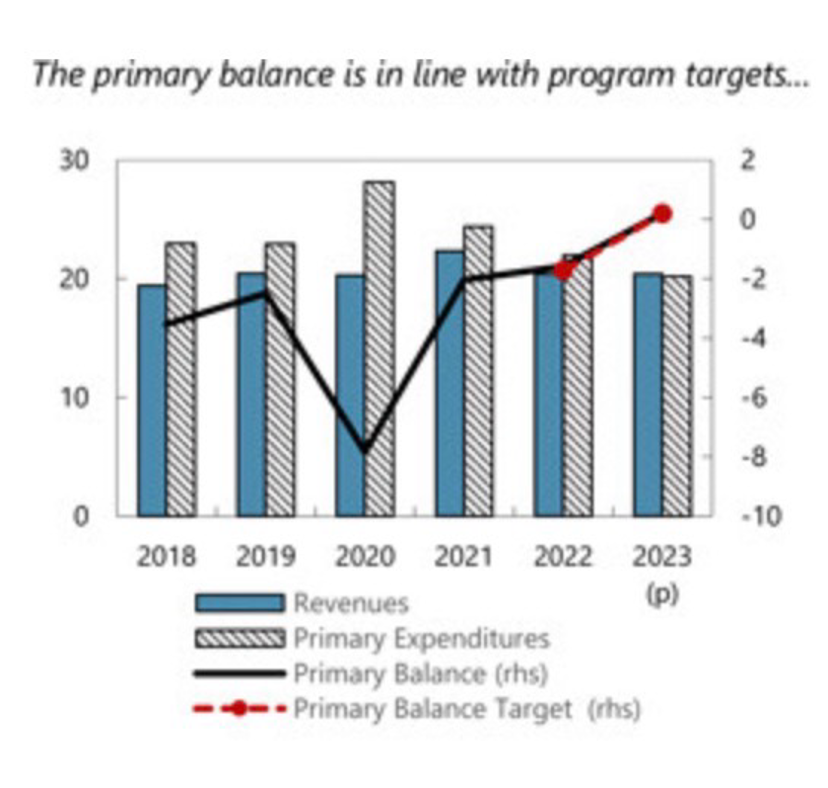
Figure 1. Zambia’s primary balance and programme targets, 2018–2023 (% of GDP). Adapted from International Monetary Fund (2023b).
Figure 1 represents the fiscal developments in Zambia for the period between 2018 and 2023. On the y-axis, it compares the primary balance figures with the target set by the country’s IMF-supported programme. According to the graph, Zambia recorded primary deficits in the earlier years, followed by an improvement in the primary balance in the later years. The graph indicates that despite the country’s revenues remaining more or less stable, the main expenditure accounted for a higher percentage of the GDP. However, since 2021, there has been an improvement in the figures, with the line depicting the path of the primary balance coming closer to the target line and even surpassing it in 2023. This demonstrates that the gap between the actual figures and the targeted ones has improved significantly in the last two years, and the government of Zambia managed to bring the figures closer to the targeted level. In the context of the situation, this graph can represent how the IMF conditionality principle took impact on the fiscal policies in Zambia. The changes that occurred since 2021 and especially since 2022 show that the government of Zambia understands the necessity of fiscal consolidation and is taking measures to ensure that the country’s fiscal policies align with the IMF’s requirements. Despite the COVID-19-related difficulties, the government managed to improve its fiscal position, as shown in the graph. Nonetheless, it is impossible to state with a high degree of certainty that it could not be achieved without the IMF conditionality principle. Nevertheless, it took a significant part in determining the actions taken by the government of Zambia in dealing with the fiscal crisis.
4.2 Kenya
Moreover, Kenya required assistance from the IMF as the country faced many economic crises during the post-pandemic period. The challenging international economic environment made it hard for the government to secure the necessary financing, given that external funding was harder to come by and the revenue from taxes fell short of expectations. It put further strain on the government’s finances, as the government had less financing at its disposal and had to deal with tougher financial conditions (IMF, 2023d). Furthermore, Kenya was dealing with a high cost of living, rising inflation and pressure on its exchange rate, with the Kenyan shilling continuing to depreciate. Additionally, the country had been hit by a severe drought, which reduced economic activity and increased food insecurity furthermore. These problems put more pressure on the government and made it more difficult to manage its budgeting while trying to continue with important development programmes. As a result, the governing authorities of Kenya sought after increased IMF support to help manage the economic crises, strengthen confidence in the economy and put public debt on a more sustainable downward path (IMF, 2023d).
In July 2023, the IMF gave Kenya around US $415.4 million through its EFF/ECF programme. It also approved an additional US $551.4 million through the Resilience and Sustainability Facility (RSF), providing Kenya with a total of approximately US $966.8 million in IMF support at that time (IMF, 2023e).
In addition to the financial assistance, conditionality terms influenced the government into tightening its fiscal policy by introducing a supplementary budget, with the aim of reducing the primary deficit from 1.1% to 1.0% of GDP. A fiscal consolidation policy was put into action, even though difficulties in raising revenue meant that the targeted level of spending could not be achieved. The central bank also tightened monetary policy by raising the policy rate by 350 basis points since May 2022, and this had an effect on the public finances (IMF, 2023d). These measures were required because inflation surged to 8% in May 2023, whereas the target range had been set at 2.5–7.5% (Kenya National Bureau of Statistics, 2023). The developments of inflation during this period can be seen below in Figure 2, which shows the changes in headline, food, fuel and non-food, non-fuel inflation in Kenya between January 2022 and September 2024.
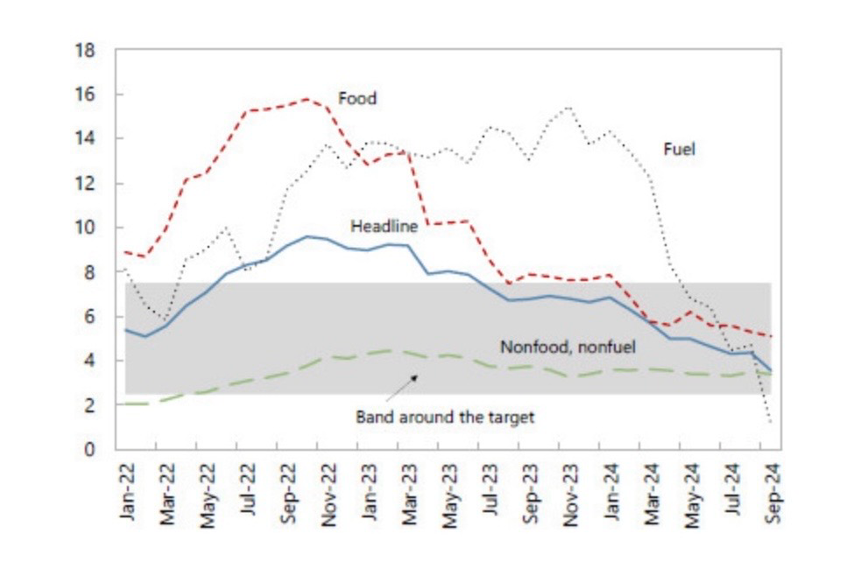
Figure 2. Kenya consumer price inflation, January 2022–September 2024. Adapted from International Monetary Fund (2024a).
As can be seen from Figure 2, inflation in Kenya surged to a large extent in 2022, mainly driven by food and fuel prices. Inflation peaked in 2022, and then gradually declined through 2024. Food and fuel inflation was significantly higher than non-food, non-fuel inflation for the time of the largest price increases. This suggests that food and fuel price pressures were important drivers of inflation in Kenya. Inflation decreased to 3.6% in the headline by September 2024, as compared to 6.9% in January 2024 (Kenya National Bureau of Statistics, 2024a; Kenya National Bureau of Statistics, 2024b). This suggests that the overall level of price pressures was considerably eased. However, non-food, non-fuel inflation persisted, which shows that domestic price pressures continued to be an important concern. The pattern outlined in Figure 2 helps explain the tightening of monetary policy by the Central Bank of Kenya during this period, as policymakers tried to bring inflation back to the target range while addressing exchange rate issues. Furthermore, the central bank took steps to intervene in the foreign exchange market in order to alleviate the pressures resulting from the depreciation of the shilling and the shortage of US dollars (IMF, 2023d; IMF, 2024a).
The support provided by the IMF has had both advantages as well as disadvantages for Kenya’s economy. The economy remained quite healthy and real GDP growth went up to 5.6% during the year of 2023, while inflation declined and the value of the Kenyan shilling improved in 2024 (IMF, 2024a). Nonetheless, Kenya had serious issues with public debts by the end of 2023. Higher costs of borrowing and lower tax revenues made it difficult for the government to curb their debts (IMF, 2024a). Spending cuts may have also impacted public investment and future growth (IMF, 2024a). The protests against the Finance Bill of 2024 indicate that higher taxes and lesser spending may have caused problems for the government as well as the public (IMF, 2024a).
4.3 Egypt
Furthermore, Egypt’s case portrays strong IMF conditionality reforms and how conditionality can influence the economic policies of a developing country. In the years following the COVID-19 pandemic, the Egyptian economy seemed to recover strongly. Real GDP growth reached 6.6% in 2022, while nominal GDP increased from around US $424.7 billion in 2021 to US $476.7 billion (World Bank, 2024). However, looking at GDP alone does not really show what was happening underneath the surface. Inflation was also beginning to rise, while the government’s fiscal position remained under pressure. In FY2021/22, government expenditure was around 23.7% of GDP, while revenue and grants were approximately 16.6% of GDP, leaving Egypt with a fiscal deficit of around 7.1% of GDP (IMF, 2023). So, although the economy was growing, the government was in a much weaker position than the headline growth figure might suggest.
Conditions became more difficult after Russia invaded Ukraine in February 2022. Egypt relies heavily on imported food and energy, so the rise in global commodity prices quickly became a concern. On top of this, foreign investors began pulling money out of Egyptian debt markets. This created a serious shortage of US dollars and put increasing pressure on the Egyptian pound. The IMF estimated that Egypt was facing an external financing gap of around US $17 billion (IMF, 2023). Egypt required more foreign currency than it had available. The Central Bank of Egypt was already trying to respond to these pressures by raising interest rates. The overnight deposit rate increased from 8.25% in December 2021 to 11.25% by August 2022, while the lending rate went from 9.25% to 12.25% (CBE, 2021; CBE, 2022). This shows that Egypt was already moving towards tighter monetary policy even before the IMF’s programme came into effect.
It was in this situation that the IMF approved a 46-month Extended Fund Facility (EFF) worth approximately US $3 billion in December 2022 (IMF, 2022b). One of the biggest conditionality implementations concerned the Egyptian pound. The IMF wanted Egypt to move towards a more flexible exchange-rate system, where the value of the pound would be allowed to respond more to market conditions rather than being heavily supported by the government. The idea behind this was to reduce the shortage of foreign currency and rebuild Egypt’s reserves (IMF, 2022b). However, this also created a difficult trade-off. A weaker pound could help correct some of Egypt’s external problems, but it also made imported goods more expensive. For a country that depends heavily on imported food and energy, this was going to have an impact on the households.
The IMF also placed considerable pressure on Egypt to improve its public finances. The government was expected to control spending, improve tax collection and reduce its debt burden. Energy subsidies became an important part of this discussion. The IMF encouraged Egypt to reduce broad subsidies on fuel and electricity and instead provide more targeted support to people who needed it most (IMF, 2025). From the government’s perspective, this made sense financially because subsidies were becoming increasingly expensive. However, reducing subsidies while households were already dealing with rising prices could make everyday life more expensive.
The effects of these reforms can be seen clearly in the years that followed. Interest rates in particular rose dramatically. By March 2024, the central bank’s overnight deposit rate had reached 27.25%, while the lending rate stood at 28.25% (CBE, 2024). Compared with the 8.25% deposit rate in December 2021, this was a significant change. The aim was to reduce inflation and restore confidence in the Egyptian pound. To some extent, it appears to have worked. Inflation reached a peak of 35.7% at the end of FY2022/23, before falling substantially to 16.6% by FY2024/25 (IMF, 2025b). Egypt’s fiscal position also improved, with the primary balance increasing from around 1.6% of GDP in FY2022/23 to 6.2% in FY2023/24. Gross government debt also fell from 95.9% to 90.9% of GDP during the same period (IMF, 2025b). Lastly, there was also a slowdown in economic growth. Real GDP growth fell from 3.8% in FY2022/23 to 2.4% in FY2023/24, before recovering to 3.6% in FY2024/25 (IMF, 2025b).
Overall, Egypt shows that IMF conditionality has had a substantial influence on monetary and fiscal policy in the post-pandemic period. The IMF did much more than provide financial assistance. Its conditions affected Egypt’s exchange-rate policy, interest rates, government spending, subsidies and even the role of the state in the economy. However, the IMF cannot be held responsible for every problem Egypt experienced as external shocks played a major role as well.The most reasonable conclusion is that IMF conditionality helped Egypt move towards greater economic stability, but that stability came with a significant short-term cost. Whether the programme can ultimately be considered successful will depend on what happens next. If the reforms eventually encourage investment, stronger growth and better living standards, the difficult adjustment may prove worthwhile. If not, then Egypt may have achieved better economic figures without necessarily achieving better economic conditions for the people living through them.
5. Discussion and Conclusion
Across the three case studies, it is evident that the IMF had a consistent and extensive role in influencing fiscal policies. This is apparent as conditionality reformed the fiscal policies of the three developing countries, following similar patterns of reform by targeting government expenditures, taxation and consolidation. In Zambia, Kenya and Egypt’s cases, the IMF aimed the countries towards reducing fiscal deficits and improving debt sustainability, incorporating consolidation strategies that required budget tightening, and in Zambia and Egypt’s cases, also included reduced subsidisation for certain industries. The consistency of policy adjustment across each country comes to show how the IMF was a major contributing factor in impacting fiscal policies through conditionality. On the other hand, each country had been dealing with severe economic crises that central banks were primarily combatting, such as inflationary prices, currency devaluation, COVID-19 pandemic impacts, the Ukraine-Russia war and its impact on trade, and other external financial pressuring factors. So, while the IMF’s conditionality contributed to monetary policy adjustment, it would not be as straightforward or linear to directly associate monetary policy reforms derived strictly from stipulation, but rather also to consider ongoing crises and previously challenging time periods. This entails that while there exists a certain conditionality factor contributing to monetary policy, it remains weaker than that of extensive fiscal policy impacts.
The IMF’s conditionality had both positive and negative outcomes. Some example reforms for both fiscal and monetary policy included devaluing currencies, reducing subsidisation on certain industries and increasing taxation, leading to significant increases in primary budget balances, which became positive at the end of the observed period. For instance, Zambia recorded a primary budget surplus of 3.3% in 2025, a significant improvement from -5.8% in 2021. Egypt experienced similar outcomes with debt management and primary balance as a result of the consolidation. However, the same policy adjustments that improved macroeconomic conditions conversely resulted in negative impacts on social stability in the short-term. The general trend for Zambia, Kenya and Egypt included reduced subsidies, increased taxation, reduced expenditure and higher borrowing costs, which would’ve constrained consumers’ purchasing power, weakened incentives for business growth and reduced overall demand. Hence, the improvement of macroeconomic policies, while improving macroeconomic conditions, did not directly correlate to social stability and living standards.
Overall, these outcomes cannot be entirely associated with IMF’s conditionality, as a wide range of external and domestic factors impacted economic growth and development. IMF’s conditionality had a significant yet not exclusive impact on fiscal and monetary policy – by positively influencing macroeconomic conditions while trading-off short-term social stability – with fiscal policy having had a more substantial impact than monetary policy due to a more direct relationship between IMF’s policy reform and fiscal consolidation.
Bibliography
Arab Republic of Egypt: Request for extended arrangement under the extended fund facility-press release; and staff report. (2023). IMF Staff Country Reports, 2023(002).
Bouis, R., Capelle, D., Dell’Ariccia, G., Erceg, C.J., Peria, M.S.M., Sy, M., Teoh, K. and Vandenbussche, J. (2025). Navigating trade-offs between price and financial stability in times of high inflation. [online] IMF. <https://www.imf.org/en/publications/staff-discussion-notes/issues/2025/04/10/navigating-trade-offs-between-price-and-financial-stability-in-times-of-high-inflation-565220>
CBE (2024a). Special MPC press release 6 March 2024. [online] CBE. <https://www.cbe.org.eg/en/news-publications/news/2024/03/06/05/42/special-mpc-press-release-6-march-2024?.com>
CBE (2026b). Central Bank of Egypt. [online] Central Bank of Egypt <https://www.cbe.org.eg/>
Chen, J. (2026). Economic conditions definition. [online] Investopedia. <https://www.investopedia.com/terms/e/economic-conditions.asp>
Flynn, S.I. (2019). Economic growth > business and management > research starters. [online] EBSCO. <https://www.ebsco.com/research-starters/business-and-management/economic-growth#terms-concepts>
Friedman, B.M. (2000). Monetary policy. [online] NBER Working Paper 8057. <https://www.nber.org/papers/w8057>
Hayes, A. (2025). All about fiscal policy: What it is, why it matters, and examples. [online] Investopedia. <https://www.investopedia.com/terms/f/fiscalpolicy.asp>
Horton, M. and El-Ganainy, A. (n.d.). Fiscal policy: Taking and giving away. [online] International Monetary Fund. <https://www.imf.org/en/Publications/fandd/issues/Series/Back-to-Basics/Fiscal-Policy>
IMF (2020). Articles of agreement of the International Monetary Fund — 2016 edition. [online] International Monetary Fund. <https://www.imf.org/external/pubs/ft/aa/index.htm>
IMF. (2022). IMF Executive Board approves 46-month US$3 billion extended arrangement for Egypt. [online] International Monetary Fund. <https://www.imf.org/en/News/Articles/2022/12/16/pr22441-egypt-imf-executive-board-approves-46-month-usd3b-extended-arrangement>
IMF. (2022). Zambia: Request for an Arrangement Under the Extended Credit Facility-Press Release; Staff Report; Staff Supplement; Staff Statement; and Statement by the Executive Director for Zambia. [online] International Monetary Fund. <https://www.imf.org/en/Publications/CR/Issues/2022/09/06/Zambia-Request-for-an-Arrangement-Under-the-Extended-Credit-Facility-Press-Release-Staff-523196>
IMF. (2023a). Zambia: 2023 Article IV Consultation, First Review Under the Extended Credit Facility Arrangement, and Financing Assurances Review-Press Release; Staff Report; and Statement by the Executive Director for Zambia. [online] International Monetary Fund. <https://www.imf.org/en/Publications/CR/Issues/2023/07/13/Zambia-2023-Article-IV-Consultation-First-Review-Under-the-Extended-Credit-Facility-536340>
IMF. (2023b). Zambia: Second Review Under the Arrangement Under the Extended Credit Facility, Requests for a Waiver of Nonobservance of a Quantitative Performance Criterion, Modifications of the Monetary Policy Consultation Clause and of Quantitative Performance Criteria, and Financing Assurances Review-Press Release; Staff Report; and Statement by the Executive Director for Zambia. IMF Staff Country Reports, 2023(439).
IMF. (2023c). Zambia: Selected Issues. [online] International Monetary Fund. <https://www.imf.org/en/Publications/CR/Issues/2023/07/13/Zambia-Selected-Issues-536343>
IMF. (2023d). Kenya: Fifth Reviews Under the Extended Fund Facility and Extended Credit Facility Arrangements and Request for a 20-Month Arrangement Under the Resilience and Sustainability Facility, Requests for Extension, Rephasing, and Augmentation of Access, Modification of a Performance Criterion, Waiver of Applicability for Performance Criteria and Waiver of Nonobservance for a Performance Criterion, and Monetary Policy Consultation Clause-Press Release; Staff Report; and Statement by the Executive Director for Kenya. [online] International Monetary Fund. <https://www.imf.org/en/Publications/CR/Issues/2023/07/19/Kenya-Fifth-Reviews-Under-the-Extended-Fund-Facility-and-Extended-Credit-Facility-536772>
IMF. (2023e). IMF Executive Board Completed the Fifth Reviews of Kenya’s Extended Fund Facility and Extended Credit Facility Arrangements and Approves Arrangement under the Resilience and Sustainability Facility. [online] International Monetary Fund. <https://www.imf.org/en/News/Articles/2023/07/17/pr23265-kenya-imf-executive-board-completed-fifth-reviews-eff-ecf-approves-rsf>
IMF. (2024a). Kenya: Seventh and Eighth Reviews Under the Extended Fund Facility and Extended Credit Facility Arrangements, Requests for Reduction of Access, Augmentation and Rephasing of Access Under the Arrangements, Modifications of Performance Criteria, Waiver of Nonobservance of Performance Criteria, and Review Under the Resilience and Sustainability Facility Arrangement-Press Release; Staff Report; and Statement by the Executive Director for Kenya. [online] International Monetary Fund. <https://www.imf.org/en/Publications/CR/Issues/2024/11/01/Kenya-Seventh-and-Eighth-Reviews-Under-the-Extended-Fund-Facility-and-Extended-Credit-556994>
IMF. (2024b). IMF Executive Board completes the first and second reviews of extended fund facility arrangement for Egypt, approves augmentation of the arrangement. [online] International Monetary Fund. <https://www.imf.org/en/News/Articles/2024/03/29/pr24101-egypt-imf-executive-board-completes-first-second-reviews-eff-approves-augmentation>
IMF. (2025a). IMF conditionality. [online] International Monetary Fund. <https://www.imf.org/en/About/Factsheets/Sheets/2023/IMF-Conditionality>
IMF. (2025b). IMF Executive Board completes the fourth review of the extended fund facility arrangement for Egypt, approves the request for an arrangement under the resilience and sustainability facility, and concludes the 2025 article IV consultation. [online] International Monetary Fund. <https://www.imf.org/en/News/Articles/2025/03/11/pr-2558-egypt-imf-completes-4th-rev-eff-arrangement-under-rsf-concl-2025-art-iv-consult>
Kenton, W. (2026). International Monetary Fund (IMF). [online] Investopedia. <https://www.investopedia.com/terms/i/imf.asp>
Ko, J., Lee, H.F. and Leung, C.K. (2025). How IMF conditionalities contribute to political destabilization: Evidence from 167 countries, 1980–2019. Emerging Markets Finance and Trade, 62(9), pp.3350–3377.
Kenya National Bureau of Statistics. (2023). Kenya: Highlights of Consumer Price Indices, May 2023. [online] Kenya National Bureau of Statistics. <https://new.knbs.or.ke/reports/kenya-highlights-of-consumer-price-indices-may-2023/>
Kenya National Bureau of Statistics. (2024a). Consumer Price Indices and Inflation Rates – January 2024. [online] Kenya National Bureau of Statistics. <https://www.knbs.or.ke/reports/consumer-price-indices-and-inflation-rates-january-2024/>
Kenya National Bureau of Statistics. (2024b). Consumer Price Indices and Inflation Rates – September 2024. [online] Kenya National Bureau of Statistics. <https://www.knbs.or.ke/reports/consumer-price-indices-and-inflation-rates-september-2024>
OANDA (2025). What is the IMF?: A beginner’s guide. [online] OANDA. <https://www.oanda.com/ca-en/skills-and-insights/education/fundamental-analysis/macroeconomics/imf-roles-functions-history/>
The Investopedia Team (2025). Monetary Policy Meaning, Types, and Tools. [online] Investopedia. <https://www.investopedia.com/terms/m/monetarypolicy.asp>
The Investopedia Team (2026). Quantitative easing definition. [online] Investopedia. <https://www.investopedia.com/terms/q/quantitative-easing.asp>
The World Bank (2022). Egypt, arab rep > data. [online] World Bank. <https://data.worldbank.org/country/egypt-arab-rep>
Tricontinental: Institute for Social Research. (2025a). How the international monetary fund underdevelops Africa: The twenty-first newsletter (2025). [online] Tricontinental. <https://thetricontinental.org/newsletterissue/africa-imf-underdevelopment/>