Supervised by Liam Obuobie
Edited by Ahmed Elseehy
Co-edited by Avalon Jarvi, Jen Tye & Felipe Pfeiffer Battaglia
Abstract (OF)
This paper looks at how an eVTOL could be designed for use as an aerial taxi in London, UK. As these aircraft start appearing as a viable option for travelling across the city, the main question is whether they can successfully meet human expectations: safety, comfort, sustainability, accessibility and general reliability. This report covers propulsion options, noise reduction, battery and hydrogen-fuel-cell systems, how eVTOLs fit into London’s airspace and the basic structural features required. It also examines UK laws and regulations these vehicles would need to follow.
For safety, the paper discusses system backups, heat management, obstacle-detection sensors, evacuation options and ways to minimise impact if something goes wrong. On the passenger side, it brings in anthropometric data, Kansei engineering, accessibility needs, psychological factors and the design of the platform to ensure the system works for different types of users. The study also looks at the infrastructure required such as vertiports, charging areas, maintenance facilities and communication with air-traffic services. Overall, it suggests that the best approach is to combine engineering performance with passenger wellbeing in order for the eVTOL system to realistically operate in London and gain public acceptance.
| Acronym | Full Meaning |
| AAM | Advanced Air Mobility |
| ADM | Autonomous Decision Making |
| AEA | All Electric Aircraft |
| AFC | Air Flight Control |
| AI | Artificial Intelligence |
| AMS | Airspace Modernisation Strategy |
| B | Bandwidth (Hz) |
| C | Channel capacity (bps) |
| CAA | Civil Aviation Authority |
| CO2 | Carbon dioxide |
| CORSIA | Carbon Offsetting and Reduction Scheme for International Aviation |
| CS-23 | Small planes |
| CS-27 / CS-29 | Helicopters and large rotorcraft |
| DfT | Department for Transport |
| EASA | European Union Aviation Safety Agency |
| eVTOL | Electric Vertical Take-Off and Landing vehicle |
| FAA | Federal Aviation Administration |
| FASI | Future Airspace Strategy Implementation |
| GANP | Global Air Navigation Plan |
| HFC | Hydrogen Fuel Cell |
| ICAO | International Civil Aviation Organization |
| Li-ion | Lithium ion |
| Mmo | Maximum match number (speed of sound) |
| S/N | Signal-to-Noise ratio |
| TCAS | Traffic Collision and Avoidance System |
| TTC | Time-To-Collision |
| UAM | Urban Air Mobility |
| UI | User Interface |
| UKADS | UK Airspace Design Service |
| UX | User experience |
| Vmo | Maximum operating speed (knots) |
1. Aims and Objectives (AE)
This study aims to tackle the challenges of designing passenger-centric electric vertical take-off and landing (eVTOL) vehicle, focusing on sustainability, safety, comfort and accessibility. It explores the impact of environmental concerns on passenger acceptance, opportunities for sustainable energy infrastructure and safety features that boost passenger confidence. The research also examines legal frameworks, UI/UX principles and accessibility features, while leveraging passenger data and feedback to inform design decisions. Ultimately, it proposes design recommendations prioritising passenger needs, preferences and values to enhance the overall eVTOL experience.
2. Literature Review (AE)
Urban air mobility (UAM) research reflects an interdisciplinary effort to integrate technological innovation, sustainability, regulation and human factors. Engineering studies, such as those by De Souza Borges et al. [54], examine automation levels and flight control systems, highlighting strategies to enhance safety, reliability and operational efficiency in eVTOL aircraft. Sustainability considerations are increasingly central, with studies emphasising energy-efficient propulsion systems, battery optimisation and minimisation of environmental impacts through strategic infrastructure planning [12]. Legal and regulatory frameworks, including FAA guidelines [16], establish critical standards for airborne software and hardware assurance, operational safety and airspace integration, ensuring that emerging technologies align with public safety requirements. Psychological research provides insight into passenger acceptance, perceived risks and behavioural responses, identifying factors that may facilitate or hinder adoption of new air mobility services [21]. Meanwhile, user-centred app and interface design plays a crucial role in operational adoption, influencing how passengers interact with air taxi services and perceive usability, convenience and trustworthiness [63]. Together, the literature indicates that successful UAM deployment is contingent upon a holistic approach that simultaneously addresses engineering innovation, environmental responsibility, regulatory compliance and human-centred design, fostering a sustainable and socially accepted urban air transport ecosystem.
3. Introduction (AM)(AE)
Urban air mobility is rapidly evolving, and eVTOL aircraft promise to redefine transportation in dense cities like London. These vehicles combine aeronautical innovation with cutting-edge propulsion and control systems, aiming to deliver speed, efficiency and safety. Designing an eVTOL for passengers demands rigorous engineering analysis, balancing performance, energy consumption and structural integrity. To find the optimal passenger-centric eVTOL design, user requirements must be considered. User requirements are particularly significant as the attempt is made to meet the specific expectations that users have towards a product or service through digital surveys and third party statistics, while also protecting the identity of the user under the GDPR Act 2018. With these statistics, rules and expectations are then changed to benefit all users to ensure a comfortable and secure experience. User requirements are interdependent with the comfort of the user as the contentment and satisfaction of the user’s journey is the result of meeting the specific expectations that were outlined by the community [12] such as:
- More space for wheelchair users and the inclusion of ramps for a struggle-free entry and exit.
- Extendable seatbelts for extra room.
- Live translation apps, which break the barrier of communication between the user and driver.
4. Hierarchical Task Analysis (HTA) (FPB)(AM)(DC)(JT)(VA)
4.1 Passenger HTA (FPB)(AM)(DC)(JT)(VA)
4.1.1 Parent 1 (DC)
4.1.2 Parent 2 (VA)

4.1.3 Parent 3 (JT)
4.1.4 Parent 4 (FPB)

4.2 Pilot HTA (JT)
5. Purpose and Performance (AE)(DC)(JT)(AJ)
5.1 Purpose (AE)
The purpose of an eVTOL is fundamentally to add a dimension for transport in cities. Additionally, the specificity in their design for vertical take-off and landing leverages electric propulsion to provide a quieter, more environmentally-friendly alternative to traditional rotorcraft. With potential applications in urban air mobility, logistics and emergency services, eVTOLs aim to transform transportation networks and urban planning, promoting more efficient solutions. They facilitate the means to resolve modern day, evolving challenges. For this passenger-centric approach, the following criteria must be met in all design applications:
- Design features must prioritise passenger safety, both emotionally and physically.
- Design aspects meet sustainability requirements in alignment with global sustainability goals such as the UN Charter to align with passenger views.
- Passenger rights must be adhered to in all design aspects.
- Passenger perception and psychology are adhered to in design models such that passengers are inclined to the eVTOL.
- Inclusivity and accessibility must be examined.
- Performance and purpose in each design element are essential for structural integrity.
5.2 Commute Speed (AE)(AJ)
Due to the advantage of a third dimension being used to travel, eVTOLs substantially save commute times, being recorded to save up to 23 minutes compared to cars and 22 minutes compared to public transport for urban routes covering 50km. This minimises the carbon footprint while relieving the pressure on urban sprawl and congestion.
The UK Civil Aviation Authority state that EASA has removed a maximum operation speed (Vmo and Mmo) for VTOLs, as VTOLs are dynamically more similar to helicopters rather than CS-23 (small planes) [74]. As a result, each VTOL has its own individual cruise, manoeuvring and stall speeds specific to that aircraft.
5.3 Affordability (JT)(AJ)
HFC powered eVTOLs are predicted to lower future journey costs due to lower maintenance costs. Fuel cells have fewer moving parts and 60% higher (compared to 20-30% in petrol or diesel) [48] efficiency converting energy to power energy, meaning less wasted fuel and a drop in hydrogen fuel production costs.
5.4 Psychology in Performance (AE)
In the real world, many boycotts occur for political reasons; however, there are also many who boycott fossil fuels, nuclear energy plants etc. This can be explained by SDT which proposes people are motivated by autonomy, competence and relatedness. When a cause aligns with their values they’ll participate (or boycott) to demonstrate autonomy and align with a group. Similarly, the Rereactance Theory suggests that people resist restrictions on their freedom, often leading to a stronger desire to do the opposite [51]. This is relevant to the performance of an eVTOL as the designs must be in alignment with passenger values. Specifically, people tend to judge innovation quickly. To mitigate this, the performance of the eVTOL must always be exemplary. This can be managed by updating and renewing materials, designs and infrastructure.
5.5 Range and Endurance (AJ)

Figure 1: The three vertical categories of UK airspace – lower, middle and upper – and the vehicles that fly within these zones (GOV.UK, n.d.)
The UK Airspace Design Service (UKADS), the Airspace Modernisation Strategy (AMS) and ICAO’s Global Air Navigation Plan (GANP) provide the framework for designing UK airspace in compliance with national regulations, international standards and safety requirements. UK airspace is divided into three vertical categories: upper (25,000ft – 46,000ft), middle (7,500ft – 24,500ft) and lower (7,000ft). These three verticals are then categorised into five classes (A, C, D, E and G). A-E are primarily used by commercial flights, whilst class G refers to recreational flyers, helicopters, drones and potentially eVTOLs in the future [19]. The AMS, led by the Department for Transport (DfT) and the Civil Aviation Authority (CAA), must align with ICAO’s Global Air Navigation Plan’s (GANP) global standards of navigation. One of AMS’s key programmes is the Future Airspace Strategy Implementation (FASI), which will redesign lower airspace below 7,000 ft, introducing more efficient routes and structures to safely integrate new aircraft types such as eVTOLs [75]. These changes are expected to reduce CO₂ emissions, lower noise impact and optimise fuel use on climb and arrival.

Figure 2: The GANP structure designed to increase the capacity of airspace and improve efficiency while minimising climate impacts and costs (ICAO, 2025).
5.6 The Sustainability Impact of Hydrogen Fuel Cells (JT)
HFCs emit only hydrogen and heat as byproducts, whereas the combustion of one gallon of kerosene emits 9.9kg of CO2 [9]. Consequently, sustainable aviation fuel is expected to cut down emissions by 80%, supporting net-zero goals as eVTOLs become more widely integrated and scaled to reduce aviation’s climate impact. HFCs integrates high energy density with low mass to produce consistent performance and extended flight ranges [27]. Current designs rely heavily on lithium-ion batteries, which suffer from limited energy density [50]; therefore, HFCs provide a continuous operation with minimal downtime.
5.7 Noise and Efficiency (AJ)(JT)
Noise pollution is a major concern among the public with the development of vertiports and eVTOL aircraft. Both the European Union Aviation Safety Agency (EASA) and the Federal Aviation Administration (FAA) have taken this into account by setting regulations to minimise noise pollution and disruption. These thresholds include maximum decibel levels during take-off, landing and hovering. In addition, noise management will involve time-sensitive-restrictions, carefully chosen flight paths and altitude limits [17].
Isolating vibrating machinery ensures less energy consumption with guaranteed lower material waste as consistent performance reduces maintenance costs leading to quieter [81] performance from sustainable production. Aerodynamic noise is significantly reduced by lower blade tip speeds due to shape optimisation of multiple rotors and low “disk loading”, which is the aircraft’s weight that is distributed over the rotor area [82]. These implementations warrant low noise operations that assimilate to ambient noise.
5.8 Public Perception (AE)
To mitigate negative public perception, it is necessary that eVTOLs align not only with passenger expectations for performance, but also passenger beliefs. By effectively coupling the electrification of aerial transport with scalable carbon management solutions and contributing to a scientifically grounded pathway towards net-zero operational emissions, a positive public reception can be encouraged. Specifically, a carbon capture programme will be implemented. The eVTOL would source its electricity from grids employing advanced CCS technologies, which sequester CO₂ emissions and store in geological formations, reducing the net carbon intensity of electricity consumption [56]. Additionally, the firm could collaborate with carbon utilisation platforms such as CarbonCure, which mineralise captured CO₂ into building materials, creating high-integrity carbon credits and enabling a circular carbon economy that offsets emissions indirectly associated with fleet operations by strategically aligning its charging infrastructure with decarbonised or CCS-enhanced electricity [57].
6. Safety for the Passenger (AE)(AJ)
6.1 The Importance of Safety (AE)
Safety is a multifaceted concept when it comes to eVTOLs in particular. The design incorporates the need for systems to prevent passengers from physical and emotional harm and to reduce risk factors. The combination of engineering innovations in the field of mechanics, ergonomics and information architecture have led to the most optimal eVTOL design. When pondering specifically on the field of safety, there is not just the aspiration to safeguard the passenger but to also maintain the clientele relations paradigm. Passenger trust depends on apparent visible safety and maintenance; i.e., the perception of poor maintenance reduces adoption.
6.1.1 THE LAW IN SAFETY (AJ)(AE)
The innovation of eVTOL aircraft in the UK must comply with several legal requirements, including operational standards, environmental responsibilities and passenger safety measures. eVTOL aircraft must adhere to the Air Navigation Order 2021, aligning with CORSIA’s climate regulations [17]. In addition, they must follow the UK Airspace Modernisation Strategy and ICAO’s GANP to minimise noise disruption and limit the environmental impact of carbon emissions [18]. Both EASA and the CAA will prioritise passenger safety through strict enforcement of performance standards, operating speed requirements and the implementation of coordinated emergency protocols [75].
6.2 Safety Derived from Mechanics (AE)
By using the safety criticality matrix, the mechanical engineering aspect of the design is the most important in terms of safety. To ensure optimisation the eVTOL design utilises several key designs.
6.2.1 MITIGATION FOR SYSTEM FAILURE (AE)
To enhance safety, the design considers the possibility of eVTOL encountering unforeseen circumstances where the battery or motor is damaged. In such cases, the mitigation implemented in the design are motor redundancy and backup power, with the backup power initiating an emergency landing sequence promptly. However, the rotors are not in redundancy due to a limiting weight capacity, yet the eVTOL design resolves this through emergency evacuation.
6.2.2 MECHANICAL REMEDIATION (AE)(AJ)
In the case of complete system failure, the design has implemented remediation to further prevent harm to the passenger. This includes fire suppression using a potassium-based wet chemical: potassium/sodium acetate and potassium ciritate for the highest success chance of extinguishing fire [55]. In an emergency, silicone-coated woven airbags would deploy in all six planes. The risk factor from airbags is eliminated here as it is a prolonged crash from vertical.
Aviation fire safety in the UK is governed by Regulation (EU) No. 139.2014, which requires commercial airport operators to have an emergency protocol proportionate to the size of the aircraft in place [75]. The protocol must ensure coordination of emergency response organisations at the site (airport), include procedures for testing the protocol’s sufficiency and include the provision of airport rescue and fire fighting services with suitable equipment, extinguishing agents and personnel. Although the vertiports and standard airports are very different, this regulation may still apply to eVTOL aircraft and subsequently the vertiports where landing and take-off will take place.
6.2.3 SYSTEM SAFETY (AE)
The implementation in design for passenger safety extends to system schematics, incorporating real-time motor and power monitoring with centralised human oversight to enable early detection of anomalies across the fleet. Battery management systems maintain safe charge and discharge cycles, support emergency power regeneration and mitigate the risk of thermal runaway, while active cooling prevents motor overheating [56]. Vibration reduction ensures cabin and component comfort and enhances passenger safety, particularly for those susceptible to injury from vibration, while also reducing load on the motor and drivetrain. Collision avoidance and obstacle detection systems are fully integrated, and landing gear features robust design with continuous monitoring to ensure safe take-off, flight and landing. Stabilisation sensors and onboard weather detection – using PRTs, thermistors, IR sensors and pressure and humidity sensors – further enhance operational safety, collectively minimising the risk of in-flight incidents and reinforcing passenger confidence in the reliability of the system.
6.2.3.1 Vibration Reduction (AE)
Vibration reduction in an eVTOL is achieved by controlling the dynamic forces generated by its rotors and airframe. Passive techniques include the use of elastomeric or isolator mounts, tuned mass dampers and structural design modifications that shift natural frequencies away from excitation sources [8]. Active methods employ sensors to detect vibrations and actuators to generate counteracting forces in real time, often through active mass damping or control-surface modulation [81]. In some designs, rotor speed modulation and phase control are used to minimise harmonic interactions between multiple rotors, further reducing transmitted vibrations.
6.2.4 MATERIAL SELECTION FOR MOTOR SAFETY (AE)
The motor in an EV is very complex. To maximise both safety and efficiency, each system must align with three core goals that ensure passenger protection. Each system requires careful material selection. This is a multidisciplinary challenge shaped by three main requirements: achieving high power density in the electric motor; keeping components lightweight to maximise efficiency and range; and ensuring heat resistance for safety.
Advanced magnetic materials, such as thin electrical steels, soft magnetic composites and high-silicon steels, are used to optimise core efficiency and power density, while copper or high-temperature superconducting windings minimise electrical losses. Lightweight alloys, including high-strength aluminium for structural blocks and magnesium for housings, along with composites for non-structural components reduce overall mass to improve efficiency and range. Heat resistance and passenger safety are further enhanced through materials that withstand elevated temperatures, supported by component design strategies such as hollow or ribbed geometries, reduced wall thickness and additive manufacturing, which maintain stiffness and structural integrity while lowering weight [31][38].
Achieving higher power density in electric motors typically involves increasing operational speed within the constraints of application and mechanical strength, increasing air gap magnetic flux density within the constraints of core materials# and increasing current density in windings within the constraints of thermal dissipation. As a result, researchers have been focused on developing advanced novel materials that possess improved mechanical, electromagnetic and thermal properties. By incorporating these materials into the electric motor design, it is possible to further increase power density and improve overall performance [31][38][39].
6.2.4.1 Material Sustainability (JT)
Silicon steel has low magnetic core losses, allowing the eVTOL to operate more efficiently, thus consuming less energy over its lifespan. MG silicon, which is the key raw material used for silicon steel, has electrical energy consumption in the range of 10.5-13kWh/kg, thus being energy-efficient [81]. Raw materials for silicon production consist of coal and charcoal (carbothermic process) which makes greenhouse gas emissions unavoidable. When sourced from a low carbon or renewable source, this becomes proficient in reducing overall CO2 emissions.
6.2.5 HEAT CONTROL AND THERMAL MANAGEMENT (AE)
Optimal motor control and passenger comfort in eVTOLs depend on carefully managed thermal systems. Research suggests cabin temperatures between 20-25°C (68-77°F) and motor temperatures below 80°C (176°F) are optimal for efficient operation [39].
Separate temperature zones can enhance comfort:
- Passenger cabin: 22°C ±2°C (72°F ±4°F)
- Electronics and motor compartments: 40-60°C (104-140°F)
Thermal insulation, heat-resistant materials and advanced cooling systems are crucial. Real-time thermal monitoring ensures safety and efficiency. Heat exchangers can effectively manage heat dissipation, reducing the risk of overheating and maintaining optimal performance. This integrated thermal management approach ensures passenger safety, comfort and optimal eVTOL operation.
6.2.6 OBSTACLE DETECTION SYSTEMS (AE)
Obstacle detection is vital; the threat to passenger safety from uncalculated obstacles is real. Though the eVTOL has a calculated route where it avoids buildings and structures, there still remains the possibility for collision. This can be mitigated by obstacle detection. eVTOL obstacle detection systems integrate LiDAR, RGB cameras, IR cameras and radar to detect birds, UFOs, balloons and other aerial objects. These sensors feed data into algorithms like YOLO and Faster R-CNN, which achieve >90% mAP at 30fps and >80% mAP at 5fps, respectively. Sensor fusion techniques combine data, while inertial navigation and positioning systems correlate detected objects with the vehicle’s motion. Computing platforms, such as NVIDIA Jetson or Xilinx FPGA-based architectures, support >10 TOPS computational throughput. This enables real-time processing, ensuring safe and efficient eVTOL operation, prioritising passenger safety and comfort by minimising collision risks, reducing turbulence and optimising flight paths for smoother journeys [27][2][39].
6.3 Force and Impact Management (AE)
When the eVTOL is on course, there will be direct communication with a central hub. From there they can communicate with nearby police and vertiports to evacuate bystanders and use safety nets or barriers in case of an emergency crash. Additionally, for the safety of the passenger, there will be padded seating made from polyurethane foam, a graphene exterior, a crumple zone underneath the cabin and a unique cabin layout which minimises the possible harm by cabin features like screens. Specifically, due to time being inversely proportional to the force on the passenger F = Δp / Δt, if the time the crash takes increases, the force on the passenger decreases and hence less damage. Therefore, the crumple zone would decrease the force on the passenger. The emergency exit design is easy to use and has a mechanical option in case of an electrical system failure. The cabin layout will also be optimal for evacuation, with luggage areas on opposite sides to emergency doors, hence, not creating unnecessary traffic for evacuation. Additionally, cabin pressure will be monitored to limit the effects of altitude on passengers, even in the case of an emergency descent.
6.4 Passenger Restraints and Comfort (AE)(AJ)
Seatbelts would be made from kelon and nylon webbing (a high tenacity polyester) for strength, durability, tensile resistance, light-weightedness and flame resistance (meeting aviation standards) to withstand repeated friction [81][27]. The seatbelts would be multi-point harnesses for extra security and would be adjustable. They would also have a rapid tensioning and release mechanism for emergency use. As well as the seatbelts, the seats would be tested and fitted to fit all. Airbags would also be used as a further safety precaution.
The Commission Regulation (EU) 2015/640 Additional Airworthiness Specifications for Operations state that: (a) all materials and equipment used in compartments occupied by the crew or passengers shall demonstrate flammability characteristics compatible with minimising the effects of in-flight fires and the maintenance of survivable conditions in the cabin for a time commensurate with that needed to evacuate the aircraft; (b) smoking prohibition shall be indicated with placards; and (c) disposal receptacles shall be such that containment of an internal fire is ensured – such receptacles shall be marked to prohibit the disposal of smoking materials [17][18][75].
6.5 Emergency, Landing and Ground Safety (AE)(AJ)
Full-cabin ejection emergency evacuation in an eVTOL is intended to safeguard passengers during the most dire circumstances. By separating as a single unit, the entire cabin strikes a balance between human safety and engineering precision. It must be light enough for parachutes to guide a controlled descent while releasing cleanly under extreme stress. To ensure predictable landings, parachutes are made of sturdy, specialised fabrics. There is a manual override as a final safeguard, but the majority of the system is automated to avoid trepidation. A £50,000 fine for false activation serves as a deterrent from misuse, highlighting the seriousness of the system and putting passenger safety first. Passengers are not left in silence during the descent. At a time when clarity is crucial, people are less afraid thanks to clear lighting cues, soothing multilingual announcements and straightforward visual instructions. The safety framework changes once the cabin touches down. Employees at the vertiport adhere to stringent passenger-first procedures, directing everyone to safe areas while obstacle-detection sensors, lighting systems and designated pathways maintain the landing area’s security. Without ongoing practice and maintenance, a negative perception of the eVTOL will arise. Therefore, the system’s dependability is maintained through regular evacuation drills, updates linked to each new eVTOL model and careful maintenance schedules for both the aircraft and ground infrastructure.
The Air Navigation Order 2016 (2016 No. 765) Article 90(1) states that, “subject to paragraphs (9), (10) and (11), a person must not drop, be dropped or be permitted to drop to the surface or jump from an aircraft flying over the United Kingdom except under and in accordance with the terms of either a police air operator’s certificate or a parachuting permission granted by the CAA under this article” [18][75]. However, this Order provides exemption for emergencies stating that, “nothing in this article applies to the descent of persons by parachute from an aircraft in an emergency”. Therefore, in case of emergency, parachute descent is legally permitted and does not require authorisation by the Civil Aviation Authority [17][18].
6.6 Accessibility (AE)(AJ)
6.6.1 IMPORTANCE OF ACCESSIBILITY (AE)
Ensuring accessibility in eVTOLs is essential for all passengers, regardless of language, age or disability. We’ve implemented multilingual interfaces, intuitive cabin designs and assistive technologies to accommodate mobility, hearing and visual impairments, ensuring a safe, inclusive and comfortable experience that makes urban air mobility truly accessible to everyone.
6.6.2 LINGUISTIC INCLUSIVITY (AE)
Firstly, a multilingual app interface allows passengers from diverse backgrounds to select their preferred language for booking, boarding and in-flight notifications. The wide spread of language options ensures optimal inclusivity. Additionally, after selecting preferred language, digital screens in the cabin automatically translate safety instructions, announcements and on board entertainment. Specifically, a large variety of media, abstaining from political bias, allows for equity in in-flight entertainment, securing positive enjoyment. AI-powered voice assistance guides you through the entire process from the app, through the platform and to your destination. Specifically, an AI voiceover for any announcement or communication from any personnel would minimise confusion. Furthermore, pictograms and universal symbols, such as emojis, allow for quick communication for all and decreases reliance on text, ultimately decreasing the risk of miscommunication.
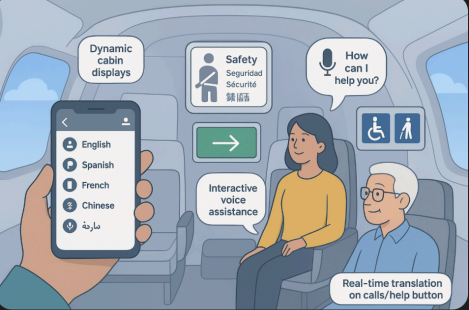
Figure 3: AI-generated image representing accessibility features (2025).
6.6.3 AGE (AE)
Accessibility in eVTOL operations must account for passengers of all ages, with a particular focus on children and the elderly. Infants are accommodated with specially-designed seatbelts to ensure safety during flight, while older passengers benefit from wheelchair ramps and smooth, walking-stick-friendly floorings that make boarding and moving through the cabin or vertiport easier. Human assistance is available for elderly passengers, guiding them safely from arrival to departure. Additionally, accessible toilets on platforms ensure that basic needs are met without difficulty. By designing with age-specific needs in mind, eVTOL systems can provide a safe, comfortable and inclusive travel experience for passengers at every stage of life.
6.6.4 DISABILITIES (AE)
Accessibility for passengers with disabilities in eVTOL systems focuses on safety, comfort and medical readiness, tailored to specific needs. Cabins and vertiports provide adjustable seating, secure handholds and easy access for passengers with mobility limitations. Medically trained staff and first aid kits are available to respond to emergencies, including epileptic seizures, and cabin lighting is designed to avoid flashing or strobe effects that could trigger episodes. Blind passengers benefit from tactile guidance and clear floor pathways, while deaf passengers rely on simple, easy-to-read instructions. Passengers with a fear of heights receive calm, hands-on support and reassurance during boarding and flight. There would also be an epinephrine auto-injector and other medical emergency appliances in a medical kit for emergencies. These measures ensure all passengers can travel safely and confidently.
6.6.5 INEQUALITY AND PASSENGER RIGHTS (AJ)
eVTOLs in the UK will be required to integrate passenger rights and accessibility mandates that align with established aviation and equality legislation to ensure fair and inclusive transportation. Under the Equality Act 2010, eVTOL operators must ensure fair treatment of disabled passengers [75]. The Act states that discrimination occurs when “A treats B unfavourably because of something arising in consequence of B’s disability” unless the measure is a “proportionate means of achieving a legitimate aim”. Similarly, Regulation (EC) No 1107/2006 requires that passengers with disabilities “should be accepted for carriage and not refused transport on the grounds of their disability or lack of mobility, except for reasons which are justified on the grounds of safety,” [75] and that necessary assistance must be provided “without additional charge”. Regulation (EC) No 261/2004 ensures standard passenger rights including compensation, care, reimbursement, rerouting and information [17]. This regulation states that it “establishes, under the conditions specified herein, minimum rights for passengers when: (a) they are denied boarding against their will; (b) their flight is cancelled; (c) their flight is delayed”. The Public Sector Bodies (Websites and Mobile Applications) Accessibility Regulations 2018 additionally require that eVTOL apps and websites are accessible to all users [75]. Finally, Regulation (EU) 2018/1139 sets “common rules in the field of civil aviation safety”, aiming to ensure “the highest possible common level of safety in civil aviation” through regulated aircraft design, maintenance and operational standards [17].
7. Passenger Comfort (AM)(AE)
7.1 Anthropometry (AM)
When it comes to the use of anthropometrics, it is heavily essential as it gives the engineers and the company a niche and straightforward design to follow. In addition, it lets the team have an image in their head whether the people would be standing or sitting etc. This is incredibly useful as it focuses on disabled society, creating measurements that will adjust to those within wheelchairs, with prosthetics and much more.
Engineering design relies on anthropometric data, which is the measurement of the human body’s physical characteristics. This data moves beyond simple height and weight, encompassing hundreds of dimensions relevant to human interaction with the built environment [1]. It provides a foundational understanding of human variability for designing systems, equipment and facilities that accommodate a wide range of users.
Within anthropometrics, there are two parts involved:
- Static anthropometry
- Dynamic anthropometry
Static anthropometry is also known as structural anthropometry, which refers to the measurements when the body is in a fixed position like sitting or standing. Examples include standing stature, sitting height and shoulder breadth, which capture skeletal dimensions. These measurements establish basic dimensional requirements for minimum clearance or fixed product sizes [80].
Dynamic anthropometry refers to the measurements taken when the person is in movement or performing a task. This data defines functional dimensions, such as maximum reach, the range of joint motion or the necessary clearance for manoeuvring. Dynamic data is often more applicable than static data because real-world design involves the body in functional attitudes. For instance, static arm length is less useful than the functional reach envelope needed to operate a control panel.
With the use of static and dynamic anthropometry, it’s much easier for engineers to create and structure the environment of the eVTOL, making sure that it’s useful and accessible to those who are disabled or travelling in groups, or those who carry a lot of medication.
7.2 Kansei Engineering (AM)(AE)
Kansei engineering was developed as a consumer-oriented technology for new product development. It is defined as “translating technology of a consumer’s feeling and image for a product into design elements”. Kansei engineering (KE) technology is classified into three types: KE Type I, II and III. KE Type I is a category classification on the new product towards the design elements. Type II utilises the current computer technologies such as expert system, neural network model and genetic algorithm. Type III is a model using a mathematical structure [78].
Kansei engineering has permeated Japanese industries, including automotive, electrical appliances, construction, clothing and so forth. Successful companies using Kansei engineering benefit from improved sales regarding the new consumer-oriented products. The use of Kansei engineering is impressive as it integrates the human element and emotion (Kansai) with engineering, leaving the user feeling a sense of trust and confidence within the company’s product or service [78].
The use of Kansei engineering is used within the eVTOL to bring comfort to users. A few examples are:
- Adjustment controllers to the seats if the person would like to lay back.
- Soothing coloured lights that can be controlled with a remote. This is salient as it creates a cosy, inviting environment, making the user feel a lot more relaxed and safe throughout the journey.
- Noise cancelling headphones in case the person is sensitive to noise or they are autistic.
- Blankets of different textures in case the person prefers a certain type.
- iPads that have voice over text to break down the barrier of communication between the user and driver.
Comfort is heavily important for the eVTOL because it allows the user to feel safe and impacts the user’s entire journey, building a sense of trust between the user and the company. This makes the company seem more credible as more people would be able to see the benefits of the journey psychologically, physically and mentally. In-flight entertainment, comfortable seats and luxury options would all bring the eVTOL a sense of comfort and luxury, becoming more attractive.
8. Platform Interface Principles and Guidelines (FPB)
8.1 Overview (FPB)
The ride will be booked from either an app or a website, with the platform used for booking and managing the rides being an essential piece of infrastructure within the process of using the eVTOL; therefore, the user experience provided by the platform will be essential in creating a human-centred eVTOL experience. The definition of user experience (UX) is as follows: “A person’s perceptions and responses that result from the use or anticipated use of a product, system or service” [69]. To ensure that the user experience provided by the platform will be adequate, its core functions and user interface (UI) must be made according to established principles.
8.2 User Needs and Design Objectives (FPB)
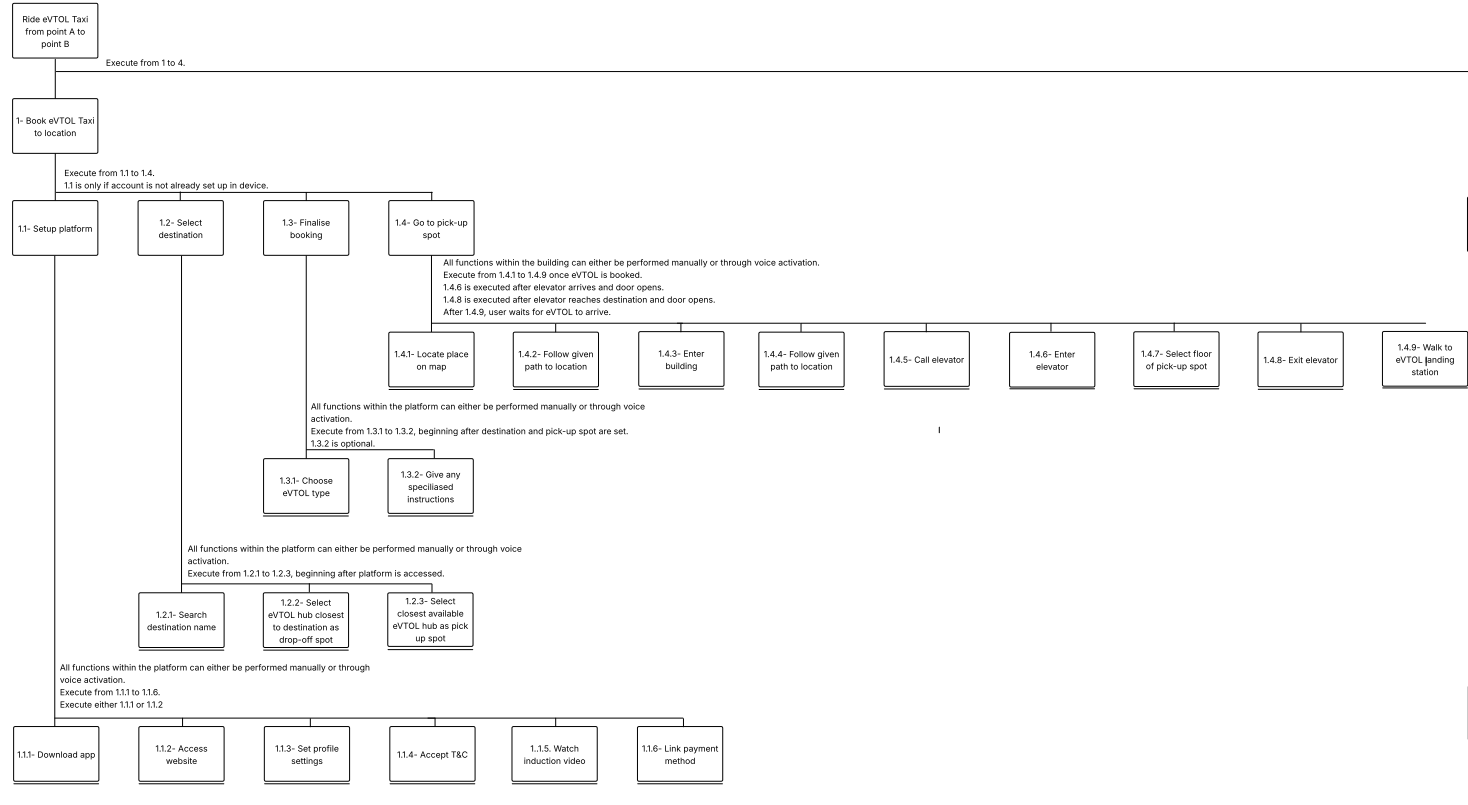
The main objective of the user when interacting with the platform is to book an eVTOL from their current location towards their intended location. To accomplish this objective, the user must perform the actions listed under the “1- Book eVTOL Taxi to Location” section of the HTA. The main features which concern the user will be the ease of creating an account, ease of booking ride, speed of ride confirmation, price transparency, accuracy of ETA, live tracking of vehicle, safety reassurance and accessibility for different user types [70]. To ensure a satisfactory UX, the main features must be easily accessible, as in the UI must have a clear and direct structure, the functions must have clear command structures and give direct feedback upon use, and the system must always keep the user informed about what is going on.
8.3 Usability Principles (FPB)
There are many user-centred design principle systems that can be applied; the two which will be considered are “The Eight Golden Rules of Interface Design” by Ben Shneiderman [71], and “Nielsen/Xerox 13 Usability Heuristics” [72]. Both systems aim to guide designers in creating interfaces that are intuitive, efficient and error-resistant. Nielsen/Xerox’s is more detailed, containing several examples underneath each point; however, it is developed for heuristic evaluation, meaning that its purpose is to inspect interfaces for usability violations. Shneiderman’s, on the other hand, is more straightforward and less focused on evaluation, but rather on design. Therefore, it could be concluded that Schneiderman’s is more appropriate as guidelines for creation, while Nielsen/Xerox’s is more appropriate for evaluation [73]. Consequently, Schneiderman’s principles will be used in the conceptual development of the platform.
Shneiderman’s principles are as follows: (1) strive for consistency; (2) seek universal usability; (3) offer informative feedback; (4) design dialogues to yield closure; (5) prevent errors; (6) permit easy reversal of actions; (7) keep users in control; and (8) reduce short-term memory load [71]. They are relatively straightforward, but creating a user interface that is able to follow all of these principles requires meticulous planning.
8.4 Core UI/UX Features (FPB)
8.4.1 SITE MAP (FPB)

The indefinite site map is a low-fidelity way of showing what the logical structure of the platform could look like; it does not communicate all the important visual and structural nuances required for maintaining a satisfactory UI [46].
8.4.2 PLATFORM SPECIFICATIONS (FPB)
8.4.2.1 First Principle (FPB)
When adhering to the first principle, “strive for consistency”, it is necessary to account for the differing design philosophies of each operating system so the platform remains consistent both internally and with the device environment. Using iOS and Android as examples, iOS tends to prioritise elegance, intuitiveness and uniformity, while Android emphasises versatility, personalisation and expressiveness. Accordingly, an Android version would use Roboto typography, expressive motion and dynamic colour theming, whereas an iOS version would rely on SF Pro, fluid motion and haptics [65].
8.4.2.2 Second Principle (FPB)
For the second principle, “seek universal usability”, the platform must integrate properly with system accessibility settings, including voice commands and colour-blindness features, while also offering its own accessibility options (as listed in the site map). These would include adjustable button sizes and the ability to notify the eVTOL service of user conditions. Providing several languages is equally important, with accurate translations so that location names on the map remain consistent within each language.
8.4.2.3 Third Principle (FPB)
For the third principle, “offer informative feedback”, this can be achieved through haptic responses on iOS and expressive animations on Android.
8.4.2.4 Fourth Principle (FPB)
For the fourth principle, “design dialogues to yield closure”, adherence depends on having a clear and logical structure. Shneiderman associates this principle with user satisfaction [61], and Moustafa Elnadi et al. [66] found that satisfaction in ride-hailing platforms depends largely on perceived usefulness and ease of use, with usefulness correlating positively with optimism and innovativeness and negatively with discomfort and insecurity. In practice, this principle will be met if the eVTOL service functions reliably and if the platform follows the coherent structure outlined in the site map.
8.4.2.5 Fifth Principle (FPB)
For the fifth principle, “prevent errors”, the most serious mistake would be booking or flying to the wrong destination, as this wastes time and money. However, constant tracking, visible landing pads, the ability to cancel shortly before departure and the option to change destination mid-flight all help mitigate such an error, though the user must first notice it. Other mistakes can be resolved through the 24/7 help line.
8.4.2.6 Sixth Principle (FPB)
For the sixth principle, “permit easy reversal of actions”, the reasoning is similar to the previous point for cancelling or altering flights. For smaller actions, a consistently placed “close” or “back” button allows users to return easily, ensuring reversibility throughout the interface.
8.4.2.7 Seventh Principle (FPB)
For the seventh principle, “keep users in control”, Shneiderman notes that experienced users dislike surprises and unnecessary data entry [61]. Shortcuts such as “home” and “work”, automatically directing the user to their nearest landing pad, support this principle by reducing friction for frequent users.
8.4.2.8 Eighth Principle (FPB)
For the eighth principle, “reduce short-term memory load”, shortcuts also contribute here. This can be strengthened further by adopting a minimalist UI approach, similar to Uber’s, so that users are not required to retain excessive information while navigating the platform [67].
8.5 Platform Summary (FPB)
By creating a ride booking and managing platform that follows the site map and specifications given, it will be possible to adhere to general UI design principles, therefore allowing for the UX provided by the platform to be satisfactory, positively contributing to the aggregate eVTOL experience.
9. Infrastructure (VA)
An eVTOL is not just a flying electric car, it is an entire ecosystem, and any and every part of it can influence whether the eVTOL succeeds or fails. This infrastructure that needs to exist is listed below:
- The taxi itself
- Vertiports (physical take-off and landing sites) and regulations
- Air traffic control
- Power systems
- Charging stations
- Repair and maintenance
- App and website
9.1 Vertiports and Regulations (VA)
Initially, vertiports will have to be built on building rooftops in London. This comes with several challenges. The main challenge is considering if the buildings will be able to hold the eVTOL’s weight. An eVTOL will potentially weigh from 4000-7000kg (without passengers). The buildings in London are old and weak; the weight their rooftops can take is about 20 pounds per sq feet (on the roof). This translates to 9kg/sq feet. Hence, an area of minimum 780 sq feet will be required. Possibly 1000 if passengers are on board. Another problem is that rooftops are slanted, not flat. So the roofs will require major redevelopments, along with elevator access to the rooftops. Consent of residents will also be required, if noise requirements are not met (currently 72dB) for cars’ exhausts [24][27].
9.2 Air Traffic Control (VA)
The current ATC range is 50-150km, mostly depending on line of sight and weather. It will need a specific radio frequency that does not interact with radio/TV/mobile broadcasting (54MHz-5.7GHz). It should also not interfere with airplanes’ communication with their ATC (118.000MHz-136.975 MHz) [45][12]. The important thing is for all eVTOLs to have line of sight with the ATC for communication.
Data transfer per second is given by the following formula:
C = B*log2(1 + S/N)
Practically (for a frequency of 100KHz):
- Very noisy (S/N = 1), C = 100KBps
- Moderately noisy (S/N = 10/10db), C = 346KBps
- Partially noisy (S/N = 100/20db), C = 664KBps
This seems highly unlikely during take-off and landing, but even during the cruise itself. This means that the height of the ATC’s antenna should be as tall, if not taller, than all the buildings in the regulated area, meaning either a new building must be constructed or a space in the tallest building must be rented, which will be expensive. An alternative to this is that every eVTOL communicates with each other and passes its data through other eVTOLs. Then, the eVTOL directly above (or at a slight angle) to the ATC (which can now be on the ground) will send all the data to the ATC [3]. However, this method requires lots of eVTOLs to be present, which is unsuitable initially. Additionally, a single eVTOL’s dysfunction/hijack can cause major accidents.
9.3 Power Systems (VA)
For an eVTOL, the charge density (watt-hour/mass) is key. A higher energy density to fly longer, reduce mass and increase efficiency is primary. The best current technologies are summarised in the table below:
| Battery type | Charge density (WH/kg) |
| Lithium iron phosphate | 90-160 (commercial) |
| Li-ion | 150-260 (commercial) |
| Solid-state Li-ion | 360 (mass production), 711 (lab record) |
| Lithium-air (theoretical) | Approx. 11,140 |

Figure 4: Diagram explaining how a lithium-air battery works (Castleman, 2015).
Li-air batteries are the future and the applicant for an eVTOL battery to reduce weight. However, these are currently in the development phase. The lead companies are: Polyplus Battery Company, Lithium Air Industries and DayLyte Batteries [20], which are all US-based.
Charging batteries extends waiting time; a solution could be separate batteries which are slotted in and out of the eVTOLS and put to charge in a station. Hence, the batteries are re-charged on stations where depleted batteries can be replaced for charged ones at a fee. It is also important to consider the weight of the battery as it might become too heavy for the charging-operator to switch them. This can be solved by dividing the battery into multiple sections, so each section of the battery is not too heavy. This will, however, take up space and increase weight so should be done sparsely.
9.4 The Charging Stations (VA)
These can be a part of a taxi warehouse where the eVTOLs can be parked and powered by solar panels for a better carbon footprint and lower electricity costs [43] (a cheaper alternative to this could be an underground parking system). This can include a repair shop for eVTOLs. Ideally, no more than one should be required per city.
Charging should be done between rides so user experience is not disturbed. The minimum battery limit for a flight should be:
(Distance: from user to current eVTOL position + Ride distance (with user)
+ Distance: from destination to charging station) * 1.2
This formula ensures that there will always be more battery in the eVTOL than needed.
9.5 Repair and Maintenance (VA)
Repair and maintenance can be integrated within the charging stations. Repair might need specialised automated machines and engineers for precise movement during assembly/disassembly. It is also crucial that redundant flight-control electronics basic operations are checked, and that there are visual ways of checking these (rather than needing detailed examination). This allows the eVTOL to be checked every day, which aligns with current helicopter maintenance. For external inspections, a laser chamber can be created. Lasers emitted are received by sensors, allowing for a detailed 3D model of the eVTOL [43][44]. This can help identify tiny imperfections, especially in crucial parts like rotors and doors.
10. Evaluation (FPB)
10.1 Conclusion (FPB)(AE)
Designing a passenger-centric eVTOL service based in London requires more than producing a functional vehicle; safety, legality, accessibility and user experience need to also be considered. This study showed that propulsion choices, noise-reduction strategies, thermal management, redundancy and material selection each play a direct role in protecting passengers and satisfying their physical and psychological needs. Concurrently, user-centred designing tools such as anthropometrics and Kansei engineering help shape a cabin environment that is comfortable, inclusive and aligned with the expectations and emotions of a diverse passenger base. The platform used for booking and managing flights is equally critical: applying Shneiderman’s principles ensures that the interface remains intuitive, consistent across operating systems and accessible through features such as multilingual support, colour-blind adaptation and voice commands. There is also the surrounding infrastructure: vertiports, charging facilities, air-traffic integration and maintenance frameworks; they form the backbone that allows the entire service to operate reliably. Taken together, the findings suggest that public acceptance will emerge only when technical performance, regulatory compliance, environmental responsibility and human-centred design are developed in parallel. An eVTOL system that can take into account all these factors stands the best chance of becoming a practical and widely accepted mode of transport in London.
10.2 Limitations (FPB)
There were many limitations which were detrimental to performing research related to this topic. The most impeding one was the lack of published work specifically related to the topic of user-centred eVTOL design. Due to this limitation, the analysis included a lot which was imposed from a different context to that of eVTOLs; the law and platform user experience design being two examples where cited research on the former focused mostly on established aeronautical vehicles, while on the latter it focused mostly on pre-existing car ride-hailing services. Time and resource constraints were also detrimental, where time limited the scope of research and the lack of resources meant that we could not acquire data of our own through a survey or experiment, which would have added another interesting dimension to the analysis.
10.3 Future Improvements (FPB)
Taking this research further, it would be interesting to further analyse the more technical and numerical aspects to try to come up with an estimated cost of the service as the price of the experience is very much related to accessibility and the way in which the user interacts with the product.
Bibliography
- AirShaper (2022) What is Urban Air Mobility? AirShaper [online]. Available from: https://airshaper.com/blog/what-is-urban-air-mobility
- Airbus (n.d.). CityAirbus: Next Gen. Airbus [online]. Available from: https://www.airbus.com/en/innovation/energy-transition/hybrid-and-electric-flight/cityairbus-nextgen
- André, M. & Hajek, M. (2019) Robust Environmental Life-Cycle Assessment of eVTOL Concepts for Urban Air Mobility. ResearchGate [Conference Paper]. Available from: https://canadianaam.com/wp-content/uploads/2021/05/Robust-Environmental-Life-Cycle-Assessment-of-Electric-VTOL-Concepts-for-Urban-Air-Mobility.pdf
- Nelson, R.C. (1998) Aircraft Flight Control Systems: A Comprehensive Overview, Flight Stability and Automatic Control (2nd ed) [online]. Available from: https://home.engineering.iastate.edu/~shermanp/AERE355/lectures/Flight_Stability_and_Automatic_Control_N.pdf
- Anon (n.d.) Deep dive into our technology [online].
- Johnson, W. (1990) Airloads, Wakes, and Aeroelasticity, NASA [online]. Available from: https://www.scribd.com/document/717241126/Airloads-wake-Aeroelasticity
- Anon. (n.d.) Volume5_Issue3_Paper6_2021-libre.pdf [online].
- Yamada, M., Higashiyama, H., Namiki, M., Kazao, Y. & Uesu, K. (1996) Active Vibration Control System Using Gyro-Stabilizer, IFAC Proceedings Volumes, 29(1), pp.5559-5564.
- Archer (n.d.) Electric Air Taxis [online], Archer. Available from: https://www.archer.com/
- BASF (2025) Car Interior Ideal. BASF [online]. Available from: https://plastics-rubber.basf.com/southamerica/en/performance_polymers/industries/pp_automotive/applications/application_automotive_interior/car-interior-ideal
- Bridgelall, R., Smith, J. & Tan, Y. (2023) Future of Urban Air Transport: Opportunities and Challenges for eVTOL Integration. Transport Policy, 135:48–63.
- Brunelli, M., Ditta, C.C. & Postorino, M.N. (2023) New infrastructures for Urban Air Mobility systems: A systematic review on vertiport location and capacity. Journal of Air Transport Management, 112:102460.
- Davis, A., Lee, B., Hartl, D.J. & Benedict, M. (2022) Biomimetic Adaptive Airframe Technology (BAAT) for Rotorcraft Design and Optimization. Vertical Flight Society 78th Annual Forum [Conference Paper]. Available from: https://www.researchgate.net/publication/362291698_Biomimetic_Adaptive_Airframe_Technology_BAAT_for_Rotorcraft_Design_and_Optimization
- Edwards, T. & Price, G. (2020) eVTOL Passenger Acceptance. NASA [online]. Available from: https://ntrs.nasa.gov/api/citations/20200000532/downloads/20200000532.pdf
- Ergonomics Centre (2020) Anthropometric Data for U.S. Adults [Table; PDF]. The Ergonomics Centre [online]. Available from: https://ergocenter.ncsu.edu/wp-content/uploads/sites/18/2020/07/Anthropometry-Summary-Table-2020.pdf
- Federal Aviation Administration (2023) AC 20-115D – Airborne Software Development Assurance Using EUROCAE ED-12() and RTCA DO-178(). FAA [online]. Available from: https://www.faa.gov/regulations_policies/advisory_circulars/index.cfm/go/document.information/documentID/1032046
- Federal Aviation Administration (2023) AC 20-152A – Development Assurance for Airborne Electronic Hardware. FAA [online]. Available from: https://www.faa.gov/regulations_policies/advisory_circulars/index.cfm/go/document.information/documentID/1041323
- Federal Aviation Administration (2023) Unmanned Aircraft Systems (UAS) in Controlled Airspace Aviation Rulemaking Committee (ARC). FAA [online]. Available from: https://www.faa.gov/media/34531
- Federal Aviation Administration (2023 Urban Air Mobility Concept of Operations v2.0. FAA [online]. Available from: https://www.faa.gov/sites/faa.gov/files/Urban-Air-Mobility-Concept-of-Operations-2.0.pdf
- Flash Battery (2022) Solid-state batteries: The new frontier of electrification? Flash Battery [online]. Available from: https://www.flashbattery.tech/en/blog/how-solid-state-batteries-work/
- Giu, H., Hao, L., Geng, W., et al. (2025) Urban Air Mobility and eVTOL adoption trends: Economic and environmental impact analysis. Journal of Transport Research, 12(4):45–59.
- Grepow (2024) What Is An eVTOL And How To Choose Batteries For It? Grepow [online]. Available from: https://www.grepow.com/blog/what-is-an-evtol-and-how-to-choose-batteries-for-it.html
- Hu, Y., Li, P., Zhang, S. & Kumar, R. (2025) Operational efficiency and passenger experience in eVTOL aircraft: A case study. Journal of Advanced Mobility Studies, 9(2), pp.102–118.
- Huber, M. (2023) Electric charging for eVTOL aircraft is different from cars. AIN [online]. Available from: https://www.ainonline.com/aviation-news/general-aviation/2023-01-02/electric-charging-evtol-aircraft-different-cars
- IG.Space (n.d.) Ultimate guide: eVTOL electric vertical take-off and landing air taxis. IG.Space [online]. Available from: https://ig.space/commslink/ultimate-guide-evtol-electric-vertical-takeoff-landing-air-taxis
- INRIX (2024) Global Traffic Scorecard: USA congestion statistics 2024. INRIX [online]. Available from: https://inrix.com/scorecard/
- Jäger, F., Bertram, O., Lübbe, S.M., Bismark, A.H., Rosenberg, J. & Bartscht, L. (2023) Battery-Electric Powertrain System Design for the HorizonUAM Multirotor Air Taxi Concept. CEAS Aeronautical Journal Special Issue “HorizonUAM – Opportunities and Challenges of Urban Air Mobility”. Available from: https://arxiv.org/abs/2309.10631
- Joby Aviation (n.d.) Joby Aviation [online]. Available from: https://www.jobyaviation.com/
- Kansei Engineering (n.d.) Home applications of Kansei engineering in Japan: An overview, Kansei Engineering [PDF].
- Lilium (n.d.) The Lilium Jet [online]. Available from: https://jet.lilium.com/
- Littell, J. & Putnam, J. (2023) An Overview of the NASA Lift+Cruise eVTOL Crash Test. NASA [online]. Available from: https://ntrs.nasa.gov/citations/20230008604
- MarketsandMarkets (2025) Electric Vertical Takeoff and Landing (eVTOL) Market. MarketsandMarkets [online]. Available from: https://www.marketsandmarkets.com/Market-Reports/electric-vertical-take-off-and-landing-evtol-market-283877017.html
- MarketsandMarkets. (2025) eVTOL Aircraft Market Size, Share and Trends, 2025 to 2023. MarketsandMarkets [online]. Available from: https://www.marketsandmarkets.com/Market-Reports/evtol-aircraft-market-28054110.html
- McKinsey & Company (2023) Air taxis. McKinsey & Company [online]. Available from: https://www.mckinsey.com/featured-insights/the-next-normal/air-taxis
- McKinsey & Company (2020) To take off, flying vehicles first need places to land. McKinsey & Company [online]. Available from: https://www.mckinsey.com/industries/automotive-and-assembly/our-insights/to-take-off-flying-vehicles-first-need-places-to-land
- Mitropoulos, L., Kortsari, A. & Ayfantopoulou, G. (2021) A systematic literature review of ride-sharing platforms, user factors and barriers. European Transport Research Review, 13(1).
- National Geographic Traveller (2024) Would you travel by flying taxi? National Geographic Traveller [online]. Available from: https://www.nationalgeographic.com/travel/article/flying-taxi-travel-aviation
- Onat, E.B., Bulusu, V., Chakrabarty, A., Hansen, M., Sengupta, R. & Sridar, B. (2024) Evaluating eVTOL Network Performance and Fleet Dynamics through Simulation-Based Analysis. AIAA SciTech Forum 2024. Available from: https://arxiv.org/abs/2312.02505
- Rajendran, S. & Srinivas, S. (2021) Air taxi service for urban mobility: A critical review of recent developments, future challenges, and opportunities. Transportation Research Part E: Logistics and Transportation Review. Available from: https://arxiv.org/abs/2103.01768
- Sagirli, F.Y., Zhao, X. & Wang, Z. (2024) Human-Computer Interaction and Human-AI Collaboration in Advanced Air Mobility: A Comprehensive Review. arXiv. Available from: https://arxiv.org/abs/2412.07241
- Sato, M., Nakamura, R., Yamauchi, T. & Taniguchi, H. (2022) Improving Transparency of Hardware Breakpoints with Virtual Machine Introspection. 2022 12th International Congress on Advanced Applied Informatics. pp. 113–117. Available from: https://ieeexplore.ieee.org/document/9894562
- Silva, C. & Solis, E. (2024) Aircraft Design Implications for Urban Air Mobility Vehicles Performing Public Good Missions. NASA Technical Reports Server [online]. Available from: https://ntrs.nasa.gov/api/citations/20240005129/downloads/1714_Silva_Final_042424.pdf
- Sripad, S. & Viswanathan, V. (2021) The promise of energy-efficient battery-powered urban aircraft. Proceedings of the National Academy of Sciences, 118(45).
- Stoll, A.M., Bevirt, J., Pei, P.P. & Stilson, E.V. (2014) Conceptual Design of the Joby S2 Electric VTOL PAV. American Institute of Aeronautics and Astronautics. Available from: https://www.jobyaviation.com/S2ConceptualDesign%28AIAA%29.pdf
- Thomas, G.L. & Malone, B.P. (2022) Power System Redundancy Design Trends for All-Electric eVTOL Quadrotors. AIAA SciTech Forum, National Harbour [online]. Available from: https://ntrs.nasa.gov/api/citations/20220017649/downloads/Thomas_G_20220017649_AIAA_SciTech_Forum_National-Harbor_MD_2.pdf
- Interaction Design Foundation (n.d.) User Experience Design. Interaction Design Foundation [online]. Available from: https://www.interaction-design.org/literature/topics/ux-design?srsltid=AfmBOooki-T14oqe8j3LEtqOso8qAC1YukdSWoAel9mCaEjRn3gvjpTT
- Vertical Aerospace (n.d.) Pioneering Electric Aviation. Vertical Aerospace [online]. Available from: https://www.vertical-aerospace.com/
- Volocopter (n.d.) Air Mobility Pioneer. Volocopter [online]. Available from: https://www.volocopter.com/en/air-mobility
- Aerospaces Global News (n.d.) Global regulators unite to fast-track AAM certification. Aerospace Global News [online]. Available from: https://aerospaceglobalnews.com/news/aam-regulators-roadmap-evtol-certification-caa-faa/
- Aerospace Innovations (n.d.) AI-Q1-Feb2025-1. Aerospace Innovations [online]. Available from: https://aerospace-innovations.com/wp-content/uploads/2025/03/AI-Q1-Feb2025-1.pdf
- Dirwan, D. & Latief, F. (2024) Understanding the Psychology Behind Consumer Behavior. Advances in Business & Industrial Marketing Research, 1(3).
- AirShaper (2022) What is Urban Air Mobility? AirShaper [online]. Available from: https://airshaper.com/blog/what-is-urban-air-mobility
- Bridgelall, R., Smith, J. & Tan, Y. (2023) Future of Urban Air Transport: Opportunities and Challenges for eVTOL Integration. Transport Policy, 135, pp.48–63.
- De Souza Borges, S.F., Cardoso Junior, M.M. & Silva Casthilo, D. (2024) Method for Defining the Automation Level of an eVTOL. Journal of Aerospace Technology and Management, 16.
- He, R., Holzapfel, F., Brocker, J., Lai, Y. & Zhang, S. (2024) A Decentralized Voting and Monitoring Flight Control Actuation System for eVTOL Aircraft. Aerospace, 11(3).
- von Strandmann, P.A.E., Burton, K.W., Oelkers, E.H. et al. (2019) Rapid CO2 mineralisation into calcite at the CarbFix storage site quantified using calcium isotopes. Nature Communications, 10(1983).
- The CarbFix Pilot Project (n.d.) Storing carbon dioxide in basalt. CarbFix Pilot Project [online]. Available from: https://www.carbfix.com/
- ScienceDirect (n.d.) Elevons – an overview. ScienceDirect Topics [online]. Available from: https://www.sciencedirect.com/topics/engineering/elevons
- McCormick, J. (2014) Five UX Insights about Uber and the Ridesharing Economy. UX Magazine [online]. Available from: https://uxmag.com/articles/five-ux-insights-about-uber-and-the-ridesharing-economy
- Chaudhary A. (2025) Apptechies. Apptechies [online]. Available from: https://apptechies.com/how-to-create-a-taxi-app-like-uber-or-lyft/
- Shneiderman B. (2016) The Eight Golden Rules of Interface Design. Umd.edu [online]. Available from: https://www.cs.umd.edu/users/ben/goldenrules.html
- UX Heuristics (2012) Nielsen/Xerox 13 Usability Heuristics. UX Heuristics [online]. Available from: https://uxheuristics.net/heuristics/nielsenxerox-13-usability-heuristics
- Saksono, R.D., Sulistyorini, D., Sagita, S.R. et al. (2024) Usability Evaluation and Interface Design Improvement for the Maxim Application with User-Centered Design Approach. Jurnal Sistem Informasi, 20(1).
- Smith, C. (2025) The Complete Guide to Modern Mobile App UI/UX Design. Medium [online]. Available from: https://medium.com/@CarlosSmith24/the-complete-guide-to-modern-mobile-app-ui-ux-design-89a97f236b
- Smith, C. (2025) Mobile App Design Guidelines for iOS and Android in 2025. Medium [online]. Available from: https://medium.com/@CarlosSmith24/mobile-app-design-guidelines-for-ios-and-android-in-2025-82e83f0b942b
- Elnadi, M., Troise, C., Jones, P., Hani Gheith, M. (2024) Exploring post-usage behaviour in app-based ride-sourcing services: Evidence from Egypt. Technological Forecasting and Social Change, 207.
- Nikulnikova, V. (2022) Taxi app design — UX Case Study. Medium [online]. Available from: https://medium.com/design-bootcamp/taxi-app-design-ux-case-study-915065e4b5d9
- Xiang, S., Xie, A., Ye, M. et al. (2023) Urban Air Mobility systems: A systematic review on vertiport location and capacity. Green Energy and Intelligent Transportation, 3(1): 100140.
- Pivotal (n.d.) Helix Defense Specs. Pivotal [online].
- STEM Learning (n.d.). Advanced Air Mobility: The Science Behind Quadcopters Reader—Student Guide. STEM Learning [online].
- Avionics (2022) Exploring Cockpit Configurations Inside Next Generation eVTOL Aircraft. Avionics Digital Edition.
- Sheffield School of Aeronautics (n.d.) How Air Traffic Control Systems Work. Sheffield School of Aeronautics [online].
- IE-Flight (2025) Benefits of Intelligent Energy’s PEM Fuel Cell Technology for eVTOL Applications, IE-FLIGHT [pdf]. Available from: https://www.intelligent-energy.com/wp-content/uploads/2024/11/eVTOL_Whitepaper-November-2024.pdf
- UK Civil Aviation Authority (2025) Consultation Paper UK.SC.VTOL Iss 2. UKCAA [PDF]. Available from: https://consultations.caa.co.uk/airworthiness-policy-team/consultation-for-special-condition-uk-sc-vtol-issu/supporting_documents/Consultation%20Paper%20UK.SC.VTOL%20Iss%202.pdf
- Legislation.gov.uk. (2021) The Air Navigation (Amendment) (EU Exit) Regulations 2021. Legislation.gov.uk [online] Available from: https://www.legislation.gov.uk/uksi/2021/534
- Aviation Benefits (n.d.) CORSIA explained. Aviation Benefits [online]. Available from: https://aviationbenefits.org/other-environmental-challenges/climate-action/market-based-measures/corsia/corsia-explained/
- Amerging Technologies Guide (n.d.) What is a URS (User Requirement Specification)? Amerging Technologies Guide [online]. Available from: https://www.amergingtech.com/post/user-requirement-specification
- Nagamachi, M. (2016) Home applications of Kansei engineering in Japan: An overview. Gerontechnology, 14(4).
- Government Project Delivery (2024) Chapter 31. User need and requirements. Teal Book Part F. Available from: https://www.legislation.gov.uk/uksi/2021/534
- Cope, L. (n.d.) How Anthropometric Data Shapes Engineering Design. Engineer Fix [online]. Available from: https://engineerfix.com/how-anthropometric-data-shapes-engineering-design/
- Bilz (n.d.) The Role of Vibration Isolation in Sustainable Manufacturing. Bilz [online]. Available from: https://bilz-usa.com/the-role-of-vibration-isolation-in-sustainable-manufacturing/
- Hinman, B.L. (2019) The Silent VTOL. Medium [online]. Available from: https://brian-is-flyin.medium.com/the-silent-vtol-e1bdd5d37e47