
Abstract
FinTech has reshaped access to financial services worldwide, yet its role in building financial literacy and long-term wealth among low-income individuals remains underexamined. This paper analyses how FinTech platforms containing features such as mobile banking, micro-investing apps, robo-advisors and digital lending correlate with financial education and inclusion to shape wealth-building outcomes for underserved populations, with a focus on emerging economies such as India. Drawing on Global Findex data and household finance literature, the paper finds that while FinTech has driven substantial gains in account ownership, credit and investment access, benefits remain uneven. FinTech platforms have grown financial inclusion to many underserved demographics and with healthy practices, can be incredibly beneficial to low-income users with the addition of features such as learning modules, robo advisors and AI assistance. Persistent gender and digital access gaps limit inclusion, and low-income users gain less from tools like robo-advisors than wealthier users due to disparities in financial literacy. The 2010 Andhra Pradesh microfinance crisis is examined as a cautionary precedent for how unregulated credit expansion can produce over-indebtedness rather than empowerment which still continues today. The paper concludes that FinTech’s potential for long-term wealth building depends less on access alone and more on pairing that access with financial education and regulatory oversight.
1. Introduction
Financial technology (FinTech) is a broad term referring to any app, software or technology that enables people or businesses to digitally access, manage or transact their finances. It includes innovations such as mobile banking apps, digital wallets, peer-to-peer payment systems and robo-advisor services. It has significantly reshaped financial services worldwide by improving access, convenience and enabling innovative financial products. One important emerging trend in FinTech is the incorporation of financial education and literacy tools directly within platforms and apps. This integration especially benefits underserved or novice users by equipping them with the skills needed for better financial decision-making. Embedding education helps reduce risky financial behaviours, encourages responsible usage, and fosters user trust and engagement, thus increasing adoption of financial products and services. For example, digital financial services (DFS) enabled by FinTech lower costs and improve access for underserved populations by providing tools such as mobile money accounts, budgeting aids and tailored financial tips. These tools help narrow the gap caused by low financial and digital literacy, which is a known barrier to inclusion in many low-income and emerging economies (World Bank Group, 2026). FinTech’s revolution extends beyond increased access to fundamentally democratising investment opportunities and wealth-building tools. Previously available primarily to affluent or well-connected individuals, FinTech innovations such as micro-investing platforms, robo-advisory services and digital gold have opened doors for broader populations, including low-net-worth individuals, to accumulate wealth. This phenomenon is particularly impactful in emerging economies like India, where large portions of the population remain underserved by traditional financial institutions. FinTech platforms have facilitated new mechanisms for wealth accumulation by enabling small-scale, regular investments with minimal capital and paperwork, helping users build financial assets over time. Furthermore, embedded financial literacy features combined with behavioural nudges promote disciplined investing behaviour, crucial for long-term wealth growth. These innovations contribute to the democratisation of asset ownership and more equitable wealth distribution across socio-economic layers, with ripple effects on economic empowerment and poverty reduction (World Bank Group, 2026).
Financial inclusion, defined as ensuring access to affordable and appropriate financial products and services for all individuals and businesses, especially those traditionally excluded, is vital for poverty alleviation, economic growth and social equality. FinTech has accelerated financial inclusion by breaking down physical, financial and informational barriers. Mobile banking and payment platforms, particularly in emerging markets, have seen rapid adoption, with over 850 million mobile money accounts registered in more than 90 countries as of early 2020. These platforms enable low-income populations, women, rural communities and small enterprises to access basic transaction accounts, credit, savings, insurance and investment products that were once difficult to obtain. However, despite progress – such as the global increase in account ownership from 51% in 2011 to 76% in 2021 – a significant proportion of adults in low-income economies remain excluded, with women facing larger gaps (World Bank Group, 2021). Challenges such as digital illiteracy, high costs, regulatory constraints and cybersecurity risks continue to impede full inclusion. Addressing these challenges requires robust policies and tailored interventions to empower all segments, including women entrepreneurs who play a crucial role in FinTech-led inclusive growth, particularly in regions like Sub-Saharan Africa. Women-led FinTech ventures leverage mobile technologies, AI, blockchain and collaborative innovation hubs to enhance financial inclusion but face obstacles such as gender biases, limited digital literacy and regulatory barriers. Targeted policy action is essential to address these constraints and foster equitable FinTech ecosystems (Kumar & Mogyorody, 2023).
2. Literature Review
There is no specific data measuring financial literacy around the world other than a global survey conducted by S&P that asked over 150,000 participants in 154 countries three questions that tested financial literacy. The survey took place in 2014, and it has been widely assumed that financial literacy has been on the rise due to other surveys that have collected data about bank account ownership and digital payments, which have been notably increasing in underdeveloped and developing economies. There are no current statistics or surveys that have been conducted since 2014 that specifically target financial literacy across the globe or in developing regions. In addition, there is no consistent mechanism to measure financial literacy; however, many test financial literacy through knowledge of terms and concepts commonly used in finance such as investments, interest rates and inflation (Klapper, Lusardi & Van Oudheusden, 2015).
Another crucial gap in this paper’s research is the fact that though over 96% of the world lives within reach of mobile broadband networks, 3 billion adults are still offline. In low- and middle-income countries, 1.4 billion people still do not use the internet in 81 of the 123 countries, which is 43% of the adult population on average. Of the 1.4 billion, 800 million are women, revealing a gender gap in access to digital services (Bonfert et al., 2026). Many individuals in low- and middle-income countries do not have access to digital services, which means they most likely cannot access FinTech resources to manage finances. Hence, this paper is not inclusive of people who do not have access to mobile services and exclusively focuses on low-income individuals with access to FinTech platforms.
Another notable issue with the available data was the fact that many low- and middle-income countries do not have exact estimates of mobile money users. While advanced economies may use much closer estimates, low- and middle-income countries have difficulties evaluating the exact percentage of the population that makes use of mobile money apps or has access to a mobile device. This disparity makes it difficult to determine an exact estimate of this as many developing regions allow developed countries and outside non-profit organisations to collect data. Much of this data is drawn from organisations that conduct research and collect this data, such as Global Findex, rather than estimates or a census done by the country itself.
This paper combines two topics that are rarely correlated throughout academic literature due to the rapid growth and recent emergence of FinTech. FinTech is seldom examined under an educational light, nor how it can increase financial literacy among many who may not have access to traditional services to learn this skill.
3. Results
3.1 Differences in Financial Inclusion
There is a notable gap between advanced economies and emerging economies in financial literacy of populations. A country that has an emerging market and developing economy is more likely to have a lower percentage of its population that is financially educated. This gap is commonly attributed to limited access to financial services, underdeveloped banking systems and lower income, which can lead to a focus on short-term survival rather than managing long-term wealth (Koç Yurtkur et al., 2025). This gap shows how there is a correlation to financial inclusion and financial literacy as advanced economies generally are more knowledgeable on concepts in finance as seen in Figure 1.
Figure 1 shows the average percentage of financially literate people in emerging and developing economies in comparison to the average percentage of financially literate people in advanced economies. This data was collected in 2014 (Klapper, Lusardi & Van Oudheusden, 2015; Global Financial Literacy Excellence Center, n.d.; International Monetary Fund, 2026).
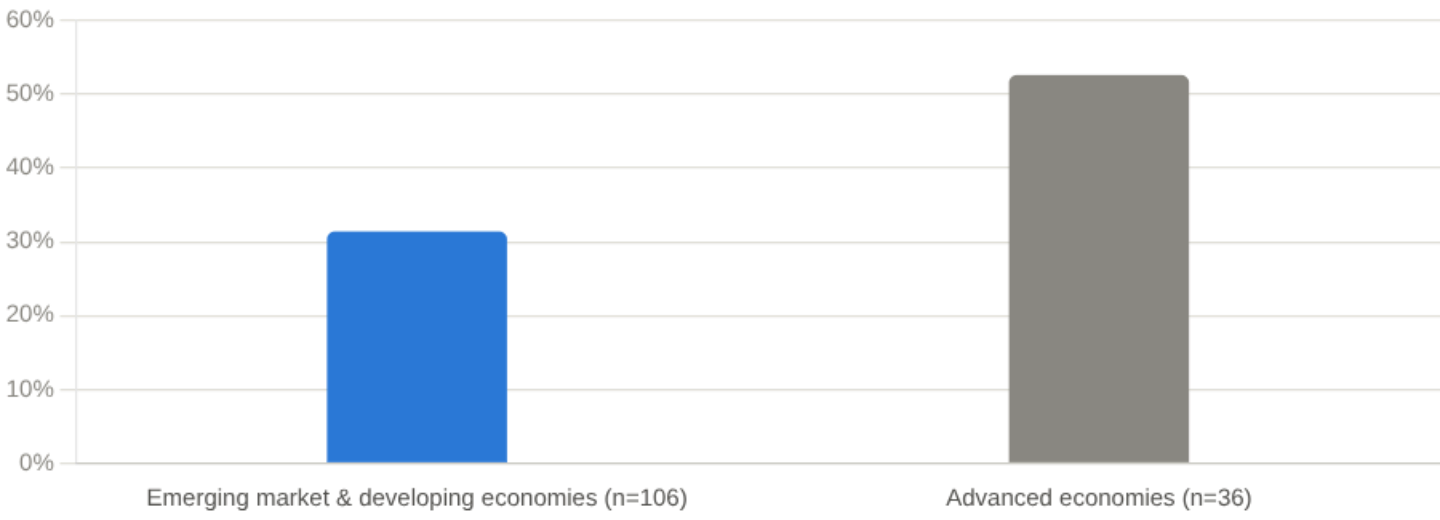
Figure 1: Percentage of financial literate population in emerging and developing economies vs. percentage of financial literate population in advanced economies (Klapper, Lusardi & Van Oudheusden, 2015; Global Financial Literacy Excellence Center, n.d.; International Monetary Fund, 2026).
As seen in Figure 1, wealthy economies are associated with a higher rate of education in finances. The emerging and developing economies trail with a significantly lower population of financially literate adults, almost half of the amount in advanced economies. However, with the rise of digital banking services, many previously underserved individuals are receiving increasingly more financial support especially due to the rise of FinTech platforms.
3.2 FinTechs and Financial Inclusion
In order to become a thriving and successful business, many FinTechs target underserved demographics such as rural locations, low-income individuals, women, seniors and the youth (Elliott, 2025). FinTechs are increasingly focusing on these demographics in emerging and developing economies rather than advanced economies.
Figure 2 shows the percentage of FinTechs offering targeted product and service offerings for customer segments in advanced economies compared to emerging and developing economies.
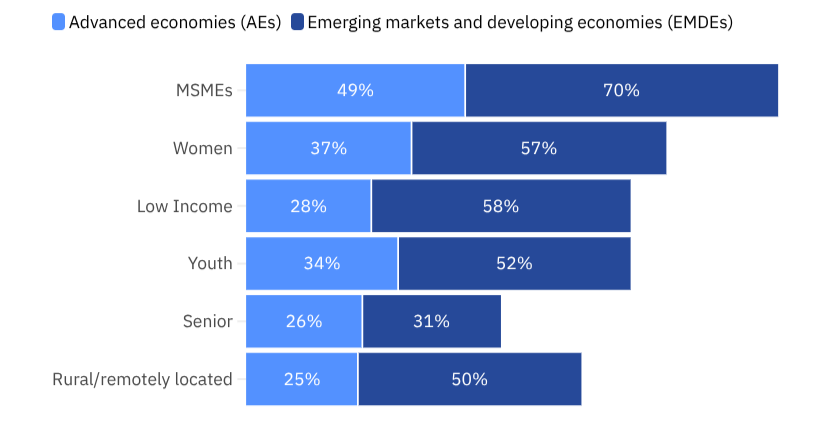
Figure 2: Percentage of FinTechs offering targeted product or service offerings to customer segments in advanced economies in relation to emerging and developing economies (Elliott, 2025).
As FinTechs continue to grow more popular, a rise in access to banking services has been noted. The increase in access to financial services, specifically in low-income regions, is accredited to the rise of FinTech platforms (CFA Institute, 2023). FinTech platforms began booming after the banking crisis of 2008 and the increased popularity of the smartphone in 2010 (Brandl & Hornuf, 2020). The growth of FinTech platforms is associated with an increase in accessible financial services such as bank account ownership, investments and assets. In developing countries as of 2021, 71% of people had a bank account, up from 42% in 2011 (CFA Institute, 2023).
Figure 3 shows the increase in bank account ownership.
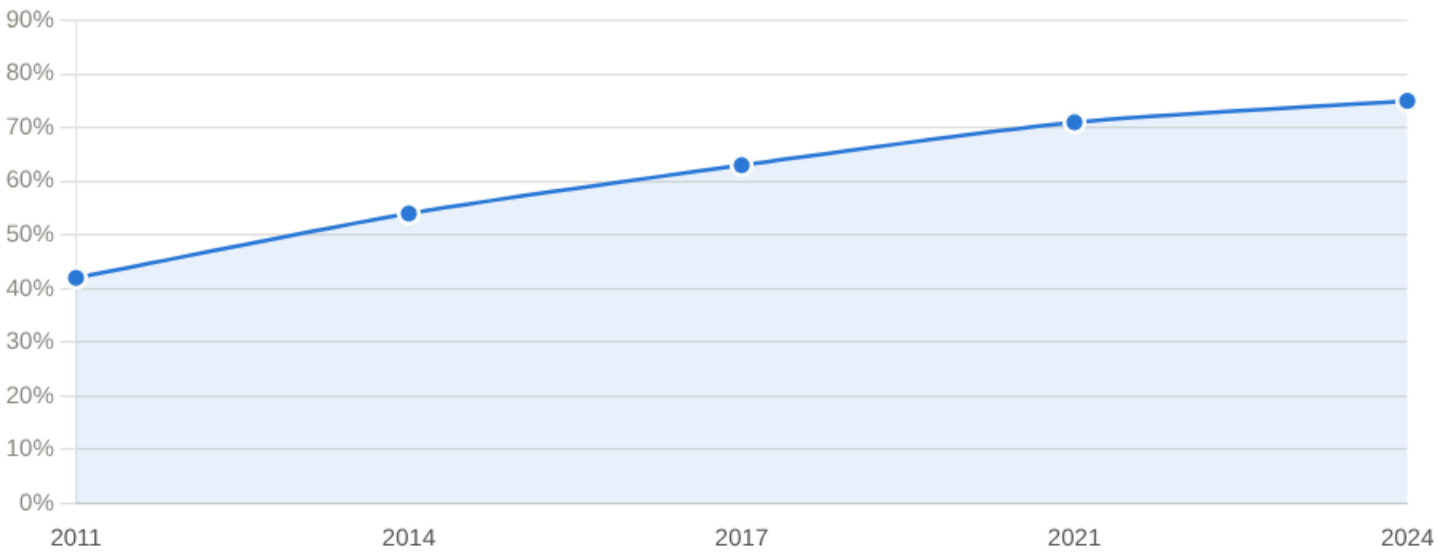
Figure 3: Percentage of individuals in emerging and developing economies from 2011-2024 (CFA Institute, 2023).
This upward trend has been driven largely by the expansion of mobile money, which has offered a more accessible entry point into the financial system than traditional banking. Since 2014, mobile money has become central to global gains in account ownership, whether used alone or alongside a traditional bank account (World Bank, 2025). By 2024, worldwide account ownership had reached 79% of the global population, and 75% of people in low- and middle-income economies held an account, while mobile money accounts had spread to 15% of adults globally (World Bank, 2025). In low- and middle-income countries specifically, 18% of adults held a mobile money account in 2024, up from just 3% a decade earlier (Kapllani, 2025).
This growth has had a measurable effect on closing long-standing gaps in financial access. The gender gap in account ownership, for instance, has narrowed considerably: 77% of women now have an account, narrowing the global gender gap to 4 percentage points, although meaningful gender gaps in account ownership still persist in 65 low- and middle-income economies (World Bank, 2025). However, progress has not been the same across all FinTech products. Kapllani (2025) notes that while account ownership gaps are narrowing, the gender gap specifically within mobile money account ownership has actually widened since 2021, with women in low- and middle-income countries 36% less likely than men to own a mobile money account in 2024, compared to 30% in 2021. This disparity is compounded by unequal access to the mobile phones needed to use these services in the first place: women are nine percentage points less likely than men to own a phone, and poorer adults are eight points behind wealthier counterparts, with more than 300 million women in South Asia still lacking a mobile phone altogether (World Bank, 2025). These statistics show that while FinTech platforms may aid in financially educating and including populations, many are left out due to lack of mobile access and gender disparities.
In addition, they suggest that while FinTech has undeniably expanded access to financial services for underserved populations, the depth and consistency of that inclusion still varies by demographic and by product type. Structural barriers such as the digital divide continue to limit FinTech’s reach, particularly in rural or remote areas where reliable internet access and digital literacy remain limited (University of Phoenix, 2024). As such, closing the remaining gaps in account ownership and active use will likely depend not only on continued FinTech expansion, but on parallel investment in digital infrastructure, mobile phone access, and financial and digital literacy among the populations FinTechs aim to serve.
4. Discussion and Analysis
4.1 FinTechs and Financial Inclusion
The transformative potential of FinTech in advancing financial education, wealth building and inclusion has been well documented, especially in emerging economies like India and markets such as Vietnam. This section analyses how embedded financial literacy in FinTech platforms, the resultant impacts on long-term wealth creation and broadening of financial inclusion are interlinked and mutually reinforcing.
Firstly, the integration of financial education tools directly into FinTech platforms emerges as a critical innovation. Leading platforms such as MoMo in Vietnam demonstrate that embedding budgeting tools, savings products and credit education within a single app framework can significantly enhance user financial knowledge and encourage more responsible money management (Nguyen et al., 2025). OECD’s INFE survey also highlights that digital financial literacy is increasingly vital, with technology-enabled learning driving improved financial behaviours globally (OECD, n.d.). This integrated approach reduces traditional barriers to financial literacy such as location, cost and accessibility of education, which are especially pertinent in developing countries.
In the Indian context, this embedding of financial literacy within FinTech dovetails with the nation’s vast move towards digital finance. Platforms such as Groww and Zerodha have lowered barriers to entry into stock and mutual fund investing, offering educational content and tools that help novice investors build disciplined, diversified portfolios over time (NITI Aayog, n.d.; SEBI, 2022). The rise of automated investments, robo-advisory and micro-investing solutions has fostered a culture of savings and investment that was historically limited to higher-income groups. The Reserve Bank of India’s data on the exponential increase in digital payments and investment accounts underscore this growing adoption (RBI, 2023). This accessibility is critical for enabling long-term wealth building, as wealth accumulation requires not just access but regular, informed engagement with financial markets.
Moreover, financial inclusion serves as both a foundation and outcome of these developments. The World Bank’s Global Findex data reveals a significant rise in account ownership in India, from 53% in 2014 to 78% in 2021, aided by government initiatives like the Pradhan Mantri Jan Dhan Yojana and the UPI digital payments infrastructure (World Bank, 2021; RBI, 2023). FinTech companies leverage this infrastructure to provide affordable credit, micro-savings and insurance solutions to previously underserved populations, including women and rural communities, thereby enhancing economic participation and resilience (Narayanan & Pillai, 2021). However, challenges such as digital literacy gaps, trust issues and infrastructural constraints persist, limiting full realisation of inclusion benefits (CGAP, n.d.).
The synergy among financial education, wealth-building FinTech products and financial inclusion creates a virtuous circle. Educated users engage more confidently with investment products and digital financial services, which in turn promote wealth accumulation and economic empowerment. Conversely, inclusion expands the user base that can benefit from education and wealth-building tools. Nevertheless, this integration also presents risks, including potential over-indebtedness from easy credit access, data privacy concerns and the need for regulatory oversight to ensure consumer protection (OECD, n.d.; RBI, 2023).
4.2 The Risks of FinTech in Low-Income Individuals
While FinTechs are often credited with expanding financial access for underserved populations, a counterargument holds that the same features that make FinTech lending fast, low-barrier and scalable can also make it dangerous for the very people it claims to serve. Critics argue that rapid, poorly regulated credit expansion can push low-income borrowers into cycles of over-indebtedness rather than out of poverty, and that the 2010 Andhra Pradesh microfinance crisis in India offers a cautionary precedent for what can happen when access to credit outpaces consumer protection.
Andhra Pradesh had, by the late 2000s, become known as the “Mecca of Microfinance”, with the state accounting for just under 30% of India’s total microfinance portfolio in 2009 despite housing only 7% of the country’s population (Taylor, 2011, cited in Guérin, Morvant-Roux & Villarreal, 2013). This concentration was driven by intense competition among microfinance institutions (MFIs), which prioritised rapid portfolio growth over responsible lending. By 2010, studies found that more than half of MFI borrowers in Andhra Pradesh held three or more active loans simultaneously, a direct result of weak screening processes and the absence of a centralised credit information system that could flag existing debt. Loan officers, operating under strict growth targets, issued repeat loans without meaningfully assessing borrowers’ capacity to repay (Priyadarshee & Ghalib, 2012).
The consequences were severe. As over-indebtedness spread, some MFIs turned to coercive recovery tactics, and a wave of borrower suicides was linked to aggressive debt collection practices (Priyadarshee & Ghalib, 2012). Loan repayment rates in the state collapsed from around 95% to just 1% by 2012, effectively causing a collapse (Policy Circle, 2025). The state government’s emergency response, the Andhra Pradesh Microfinance Institutions Ordinance of 2010, halted virtually all lending and recovery activity in the state overnight, demonstrating how quickly a credit-access model built on speed and scale rather than borrower protection can unravel (Saxena, 2015).
This case remains directly relevant to contemporary FinTech lending. Many of the structural weaknesses that caused the Andhra Pradesh crisis – weak credit screening, multiple concurrent borrowing, thin regulation and pressure to scale quickly – persist in today’s app-based digital lending products aimed at low-income and previously unbanked populations. Research on FinTech lending in Indonesia and India has found that while it improves credit access for digitally connected, low-income households, it simultaneously introduces new risks of over-indebtedness, predatory lending, weak data protection and limited financial literacy among borrowers (Airlangga, 2026). In some regions, illegal or unregulated lending apps have gone further, exploiting gaps in regulation through undisclosed fees, misleading terms and constant encouragement for borrowers to take on additional loans (Mutati, 2024). A related concern specific to digital, app-based lending – one that did not exist in the 2010 Andhra Pradesh model – is data exploitation: investigations have found that some lending apps request access to borrowers’ media files, contacts and call logs far beyond what is necessary for identity verification or credit risk assessment, with access to the loan conditioned on granting these invasive permissions (Stefanko, 2023).
Taken together, these findings suggest that FinTech’s ability to reach underserved populations should not be treated as inherently protective. Without regulatory oversight and enforced data protection standards, FinTechs may end up ruining many low-income individuals just as quickly as Andhra Pradesh demonstrated in the pre-digital microfinance era, and as ongoing cases in digital lending suggest is still possible today.
4.3 Long-Term Wealth Building
Beyond expanding access to basic banking, FinTech is increasingly positioned as a tool for helping low-income individuals build long-term wealth rather than simply manage day-to-day cash flow. Micro-investing and round-up apps have lowered the entry point for investing to as little as $1, compared to the thousands of dollars traditionally required to open a brokerage account, allowing users to build small, consistent positions in the market over time (Santika, 2026). These apps can also build financial literacy through experience and help low-income individuals build knowledge with investing. AI-driven credit models extend this further into asset-building credit: platforms such as Nubank and Konfío analyse alternative data sources, including utility payments and business cash flow, to serve millions of previously unbanked individuals and small business owners (Shetty, 2025), enabling users to establish credit histories that can support future asset purchases such as a home or business. This alternative credit scoring can aid in building credit history and encourage safe lending practices.
Yet evidence suggests this potential is not automatically realised for low-income users. Research in the Review of Corporate Finance Studies found that robo-advisors have tended not to benefit poorer households, instead moving them into lower-return bond holdings, while wealthier users are guided into higher-fee active funds that deliver stronger performance gains (Gambacorta, Gambacorta & Mihet, 2023), and a related study found low-income households face particular challenges using FinTech effectively due to limited financial knowledge, financial constraints and risk aversion, resulting in slower portfolio optimisation compared to higher-income users (Xu et al., 2025). This suggests that long-term wealth building through FinTech depends less on access to the tools themselves and more on whether that access is paired with financial education and fee structures that can decrease returns from low-income individuals.
5. Conclusion
In conclusion, the evidence suggests that FinTech platforms that embed financial literacy within their frameworks can significantly advance long-term wealth building and financial inclusion. India’s rapidly evolving digital financial ecosystem offers a compelling example of how governmental policy, technology innovation and user education can converge to foster broader economic empowerment. However, without proper regulation and security, FinTech financial inclusion could have severe consequences. Future research should focus on longitudinal tracking of individual wealth-building trajectories facilitated by such platforms and assess the socio-economic impacts at scale.
Bibliography
AI Disclosure: Claude Opus was used, in part, to generate the foundational ideas for the abstract and sections 3.2, 4.2 and 4.3, on which the authors built upon and refined using their own research and thought processes. In addition, it was used to format the bibliography.
Ayyagari, M. and Beck, T. (2015) ‘Financial Inclusion in Asia: An Overview’, ADB Economics Working Paper Series, 449.
Bonfert, A., Danman, S. and Srinivasan, S. (2026) ‘Beyond Coverage: Closing Gaps in Digital Access and Use in Low- and Middle-Income Countries’, World Bank Group Gender Data Portal [online]. <https://genderdata.worldbank.org/en/data-stories/beyond-coverage-closing-gaps-in-digital-access-and-use-in-low-and-middle-income-countries>
Brandl, B. and Hornuf, L. (2020) ‘Where did FinTechs come from, and where do they go? The transformation of the financial industry in Germany after digitalization’, Frontiers in Artificial Intelligence, 3.
Centre for Responsible Credit (2018) ‘How financial technology benefits low income households’, Money & Pensions Service Research Library [online]. <https://evidence-hub.maps.org.uk/en/research-library/insight/how-financial-technology-can-benefit-low-income-households>
CFA Institute (2023) ‘How fintech is driving financial inclusion’, CFA Institute [online]. <https://www.cfainstitute.org/insights/articles/how-fintech-is-driving-financial-inclusion>
CGAP (n.d.) ‘Data and tools on financial inclusion’, Consultative Group to Assist the Poor [online]. <https://www.cgap.org/data>
Department of Financial Services (n.d.) ‘Financial Services’, Ministry of Finance, Government of India [online]. <https://financialservices.gov.in/>
Elliott, D. (2025) ‘Stable growth and broader access: here’s how fintech is reshaping finance’, World Economic Forum [online]. <https://www.weforum.org/stories/financial-and-monetary-systems/fintech-growth-inclusion-financial-services/>
Gambacorta, L., Gambacorta, R. and Mihet, R. (2023) ‘FinTech, investor sophistication, and financial portfolio choices’, The Review of Corporate Finance Studies, 12(4), pp. 834–866.
Global Financial Literacy Excellence Center (n.d.) ‘S&P Global FinLit Survey – Methodology’, GFLEC [online]. <https://gflec.org/sp-global-finlit-survey-methodology/>
IMF (2026) ‘World Economic Outlook Database’, International Monetary Fund [online]. <https://www.imf.org/en/publications/weo>
Kapllani, B. (2025) ‘Progress in closing the mobile money gender gap has stalled: latest evidence from Findex 2025’, GSMA [online]. <https://www.gsma.com/solutions-and-impact/connectivity-for-good/mobile-for-development/programme/mobile-money/progress-in-closing-the-mobile-money-gender-gap-has-stalled-latest-evidence-from-findex-2025/>
Klapper, L., Lusardi, A. and Van Oudheusden, P. (2015) ‘Financial Literacy Around the World: Insights from the Standard & Poor’s Ratings Services Global Financial Literacy Survey’, Global Financial Literacy Excellence Center [pdf]. <https://gflec.org/wp-content/uploads/2015/11/3313-Finlit_Report_FINAL-5.11.16.pdf>
Koç Yurtkur, A., Kilic, Y., Bugan, M.F., Dibooglu, S. and Cevik, E.I. (2025) ‘The impact of financial literacy on financial development: a cross-country analysis’, Borsa Istanbul Review, 25(Supplement 2), pp. 177–191.
Mutati, C.M. (2024) ‘Digital lending apps: what you need to know before seeking another loan’, Paradigm HQ [online]. <https://paradigmhq.org/digital-lending-apps-what-you-need-to-know-before-seeking-another-loan/>
Narayanan, S. and Pillai, R. (2021) ‘FinTech and financial inclusion: the Indian landscape’, Journal of Financial Services, 14(2), pp. 45–62.
NEFE (n.d.) National Endowment for Financial Education [online]. <https://www.nefe.org/>
Nguyen, T.M,, Nguyen-Than, N. and Duy, D.T. (2025) ‘Exploring mobile money adoption in Vietnam: Insights from payment technology and demographic dynamics’, Social Sciences & Humanities Open, 11, 101421.
NITI Aayog (n.d.) ‘Reports and downloads’, NITI Aayog [online]. <https://niti.gov.in/reports-downloads>
OECD (n.d.) ‘International Network on Financial Education’, Organisation for Economic Co-Operation and Development [online]. <https://www.oecd.org/en/networks/infe.html>
Policy Circle (2025) ‘Microfinance faces credit stress as delinquencies surge’, Policy Circle [online]. <https://www.policycircle.org/industry/microfinance-faces-credit-stress/>
Price, D. (2024) How fintech impacts financial inclusion,’ University of Phoenix [online]. <https://www.phoenix.edu/articles/finance/fintech-impact-on-financial-inclusion.html>
Priyadarshee, A. and Ghalib, A. (2012) ‘Over-indebtedness, coercion and default: causes of the Andhra Pradesh microfinance crisis and regulatory implications’, Enterprise Development and Microfinance, 23(3).
Reserve Bank of India (2023a) Financial inclusion progress report.
Reserve Bank of India (2023b) Payment systems in India – statistics.
Santika, W. (2026) ’10 best micro investing apps to grow money from $1 in 2026′, FinancialBinder [online]. <https://financialbinder.com/best-micro-investing-apps/>
Saxena, S. (2015) ‘The 2010 microfinance crisis in Andhra Pradesh, India and its implications for microfinance in India’, Reconsidering Development, 3(1), pp. 55–68.
SEBI (n.d.) ‘Reports & Statistics’, Securities and Exchange Board of India [online]. <https://www.sebi.gov.in/reports-and-statistics.html>
Shetty, R. (2025) ‘This is what the new frontier of AI-powered financial inclusion looks like’, World Economic Forum [online]. <https://www.weforum.org/stories/financial-and-monetary-systems/this-is-what-the-new-frontier-of-ai-powered-financial-inclusion-looks-like/>
Statista (2024a) Global digital financial literacy levels among internet users as of 2021 [online]. <https://www.statista.com/statistics/1090186/global-digital-financial-literacy-levels/>
Statista (2024b) India: number of digital payments via UPI from 2017 to 2023 [online]. <https://www.statista.com/statistics/1223985/india-number-of-digital-payments-via-upi/>
Statista (2024c) Size of the wealth management market in India from 2019 to 2025 [online]. <https://www.statista.com/statistics/1128836/wealth-management-market-size-india/>
Stefanko, L. (2023) ‘Beware of predatory fin(tech): loan sharks use Android apps to reach new depths’, ESET Research [online]. <https://www.welivesecurity.com/en/eset-research/beware-predatory-fintech-loan-sharks-use-android-apps-reach-new-depths/>
Sudrajad, O.Y. (2026) ‘Assessing the impact of digital and fintech lending on poverty alleviation in Indonesia: a soft systems approach’, Systems Research and Behavioral Science, pp. 1–21.
TRAI (n.d.) ‘Reports and data’, Telecommunications Regulatory Authority of India [online]. <https://trai.gov.in/>
World Bank (2021) The Global Findex Database 2021: financial inclusion, digital payments, and resilience in the age of COVID-19 (Washington, DC: World Bank).
World Bank (2025) The Global Findex Database 2025 (Washington, DC: World Bank).
Xu, Y., Guo, B., Zhan, S. and Lu, Y. (2025) ‘Is Fintech driving household asset allocation towards the law of one price?’, Finance Research Letters, 78.