Abstract
Digital twin technology has emerged as a foundation for modern hybrid engineering, integrating physical assets with their virtual replicas through continuous, automated bidirectional data synchronisation. Driven by the connection of the Internet of Things (IoT), artificial intelligence (AI), cloud computing and extended reality (XR), digital twins enable continuous monitoring, accurate simulation, predictive maintenance and real-time operational feedback. Across key sectors, including manufacturing, aerospace, healthcare, agriculture, automotive and smart construction, digital twin adoption can drive improved proactive decision-making, enhanced lifecycle sustainability and resource optimisation. However, fully realising these practical capabilities remains constrained by persistent challenges, including data quality limitations, cybersecurity risks, high deployment costs, interoperability issues and infrastructure dependencies like bandwidth and computing power. Overcoming these technical, financial and organisational barriers through cross-industry standardisation will be vital to unlocking the full potential of digital twin implementations.
1. Introduction
1.1 Digital Twin Technology
As modern engineering continues to shift to a hybrid system that integrates physics into the digital world, digital twin technology has emerged as a core part to fulfill this transition. Over the years, there have been many definitions of what a digital twin really is and what distinguishes it from a digital model. Rather than offering a standalone globally agreed definition, academic literature offers many different perspectives on the matter. The first definition of the digital twin was introduced in 2002, by Dr Michael Grieves, who defined the concept as a three-part model, comprising a physical asset in a physical space, its corresponding digital replica in a virtual space and the data that links both the physical object and its digital counterpart (Grieves & Vickers, 2017). Building on this and other previous definitions, Fuller et al. (2020) have defined the digital twin as a digital representation of a physical object or process that continuously updates via real-time data. Similarly, Semeraro et al. (2021) define it as being a set of virtual information that updates continuously using real-time data, that fully describes and predicts the potential of a certain action. Analysing all these definitions over time reveals an important conceptual shift, while Grieve’s definition highlights the structural link between the physical and digital spaces, later definitions emphasise real-time updating, analytical predictions and dynamic behaviour. Ultimately, across all these definitions, the unifying characteristic that can be found amongst all of them is continuous automated data exchange and synchronisation between a physical entity and its virtual representation.
To distinguish the concepts, Fuller et al. (2020) have classified digital interpretations by their level of data integration between the physical and the digital environments:
-
Digital Model: A digital representation of a physical object where the data exchange is performed manually in both directions.
-
Digital Shadow: An automated one-way data flow, in which any alterations to the physical model automatically update the digital one, but virtual changes do not affect the physical model.
-
Digital Twin: A bidirectional data flow, where physical alterations continuously update the digital model and virtual modifications create physical adjustments in real time.
Therefore, it shows that the key distinction is not simply whether a virtual representation simply exists, but the degree and direction of automated data exchange between the two environments. This distinction is important because a virtual replica should not automatically be considered a digital twin.
The concept’s roots trace back to the aerospace industry, more specifically to NASA’s Apollo 13 programme in the 1960s, which used physical and digital elements to mirror and simulate in-flight conditions for emergency situations (Attaran & Celik, 2023). Later on, Glaessgen and Stargel (2012) formalised this concept for NASA and the US Airforce by combining physics-based models with real-time flight data to predict aircraft fatigue and lifespan. We can observe that digital twins evolved from relatively specialised simulation approaches in aerospace into dynamic, data-driven systems capable of continuous monitoring, prediction and interaction, largely due to developments in key technologies, which made the entire process increasingly feasible.
Attaran and Celik (2023) also explain that rather than an usual chronological progression, the digital twin technology has been propelled massively in the last decade by the development and implementation of key technological enablers. Rapid advances in the Internet of Things (IoT), artificial intelligence (AI), extended reality (XR) and cloud computing have accelerated the evolution of digital twins by providing the foundation for continuous data collection, high-capacity processing, predictive analysis and immersive physical-virtual interactions.
1.2 Key Technologies Enabling Digital Twins
Digital twins rely on interconnected technologies that link physical assets with their virtual representations, collect operational data and support analysis. However, these technologies are not universally required to the same extent. Their importance depends on the application, with IoT supporting physical-digital connectivity, while cloud computing, AI and XR provide additional computational, analytical and interaction capabilities (Hu et al., 2021; Mihai et al., 2022; Attaran & Celik, 2023). Therefore, digital twins should be viewed as adaptable systems rather than a fixed combination of technologies.
IoT and sensor technologies provide the data required to keep a digital twin representative of its physical counterpart. Sensors can capture variables such as temperature, pressure, vibration, location and performance, which are transmitted to the virtual model. Hu et al. (2021) identify IoT as an important enabling technology, while Fuller et al. (2020) similarly emphasise continuous data integration between physical and virtual systems. Without appropriate sensing and communication, a digital twin could still function as a static model or simulation, but it would have limited ability to reflect changing real-world conditions. IoT is therefore particularly important for real-time monitoring, although its effectiveness depends on the quality and frequency of collected data (Hu et al., 2021; Fuller et al., 2020).
Cloud computing provides scalable infrastructure for storing and processing the large datasets generated by connected physical systems. Mihai et al. (2022) identify cloud computing as an important component of digital twin infrastructure, while Attaran and Celik (2023) similarly recognise its role in supporting digital twin applications. Cloud resources can support complex simulations and analytics that may exceed local computing capabilities. However, increasing data volumes create greater requirements for connectivity and computational resources. This has increased interest in edge computing, which can process data closer to the physical asset and reduce dependence on remote cloud resources (Mihai et al., 2022).
AI extends the analytical capabilities of digital twins through machine learning, pattern recognition, anomaly detection and prediction. Sharma et al. (2022) identify machine learning and big-data technologies as important for improving digital twin forecasting, while Mihai et al. (2022) similarly highlight AI for analysing data and supporting predictions. Together, these perspectives demonstrate that AI does not necessarily establish the physical-virtual connection; instead, it transforms collected data into predictive and decision-support information. A digital twin can therefore support monitoring without advanced AI, whereas AI enables more sophisticated predictive maintenance, optimisation and forecasting (Sharma et al., 2022; Mihai et al., 2022).
XR, including augmented reality (AR) and virtual reality (VR), primarily enhances how users visualise and interact with digital twin information. Unlike IoT, cloud computing and AI, XR does not maintain the underlying physical-digital connection or perform the core analysis. Asad et al. (2023) demonstrate its potential for human-centred digital twin interaction, including visualisation and operational applications. However, XR is not essential to a digital twin’s core operation as conventional interfaces can provide access to information. Its value therefore depends on whether immersive interaction benefits the particular application (Asad et al., 2023; Attaran & Celik, 2023).
Overall, these technologies are complementary rather than universally mandatory. IoT provides data, cloud and edge computing support processing, AI generates advanced insights and XR can enhance human interaction. Future digital twin development is likely to involve greater integration of these technologies, particularly AI and edge computing, while their combination will continue to depend on application requirements (Mihai et al., 2022; Attaran & Celik, 2023).
1.3 Benefits and Opportunities of Digital Twins
Digital twins offer a wide range of benefits and opportunities across industries, largely through their ability to connect physical systems with continuously updated virtual representations. One of their most significant benefits is improved decision-making through real-time monitoring and data analysis. Unlike conventional models that rely primarily on historical or static information, digital twins can integrate real-time sensor data with existing models to reflect changes in their physical counterparts. Negri et al. (2017) identify engineering and numerical analysis as important means through which digital twins can improve decision-making, while Zheng et al. (2019) demonstrate their potential for dynamic modelling and real-time optimisation. Together, these capabilities can shift decision-making from reactive responses towards more informed and proactive approaches.
Another major benefit stems from the ability to simulate and predict outcomes without directly interfering with physical systems. Virtual experimentation allows alternative conditions to be evaluated before implementation, reducing the cost and risk associated with real-world testing. In aerospace, Zaccaria et al. (2018) demonstrate the use of digital twin-based approaches for monitoring aero-engine performance, while manufacturing studies have applied digital twins to virtual evaluation and optimisation throughout design and production (Qi et al., 2019). More broadly, Qi et al. (2019) find that simulation and prediction can support earlier fault detection, maintenance planning and reductions in downtime. Collectively, these applications demonstrate that virtual experimentation not only reduces the risks and costs of physical testing, but also enables potential problems to be identified before they affect real-world systems, supporting preventative intervention and more reliable operations.
These capabilities can also contribute to greater operational efficiency and sustainability. By modelling system behaviour before resources are physically committed, digital twins can support more efficient allocation of equipment, materials and labour while reducing unnecessary experimentation and waste. Qi et al. (2019) associate digital twins with improvements in productivity and efficiency alongside reductions in cost and time. Beyond economic efficiency, Kaewunruen and Lian (2019) explore the use of digital twins for sustainability evaluation and lifecycle management in buildings and railway infrastructure, highlighting their potential to support improvements in both environmental and operational performance.
Beyond these benefits, digital twins offer opportunities for greater integration across system lifecycles. Liu et al. (2020) found that only 5% of reviewed studies considered the full lifecycle, with most research focusing on individual stages such as design, production, operation or maintenance. While this gap suggests considerable scope for greater lifecycle integration, it also highlights the limited evidence currently available for full-lifecycle implementation. Claims that digital twins can deliver benefits across an entire system lifecycle should therefore be treated cautiously until these capabilities are more extensively demonstrated in practice.
1.4 Challenges and Limitations of Digital Twins
The benefits discussed in Section 1.3, including proactive decision-making, risk-free simulation of alternatives and improvements in sustainability, suggest that digital twins can enhance productivity and efficiency in the agriculture, healthcare, automotive and industrial sectors. In practice, however, realising these advantages depends heavily on technical, organisational and contextual conditions that are not guaranteed by the technology itself. Digital twin deployment can face technological, data-related, financial, organisational, security and privacy issues that constrain these gains (Attaran & Celik, 2023).
The technological challenges associated with digital twins include unreliable connectivity, legacy systems and computational and storage demands (Attaran & Celik, 2023). Digital twins require continuous data transmission to maintain synchronisation between the physical system and its virtual representation. Where connectivity is unreliable, data may be delayed or missing, meaning the twin may no longer accurately reflect current operating conditions. Legacy systems create further difficulties because older equipment and software may lack compatible interfaces, communication protocols or integrated infrastructure for exchanging data with a digital twin (Bean et al., 2026). In addition, complex and real-time twins require computing power to process large sensor streams and run simulations quickly enough to support decisions. These challenges directly undermine the proactive decision-making and system-wide integration discussed in Section 1.3: delayed or incomplete information can make outputs less reliable, leaving organisations dependent on partially reactive rather than predictive decisions.
Attaran and Celik (2023) identify data quality, management and standardisation as important challenges, while heterogeneous systems can generate data in incompatible formats. If a digital twin is updated using inaccurate, incomplete or inconsistent data, its virtual representation may itself become inaccurate. Consequently, predictions relating to maintenance, resource allocation or operational performance may be unreliable. Therefore, the claimed benefit of data-driven decision-making does not result simply from collecting more data; it depends on continuous access to accurate, standardised and interoperable data.
Financial challenges also create tension between the promised cost savings of digital twins and the investment required to implement them. Costs may include sensors, software platforms, infrastructure development, data management, security solutions and continuing maintenance, including model recalibration and sensor replacement (Attaran and Celik, 2023). Byrareddy et al. (2026) similarly identify financial barriers as a limitation to wider adoption. For smaller organisations, these costs can restrict digital twin use to pilots or isolated assets, preventing the system-wide deployment required to achieve significant efficiency, waste-reduction and lifecycle-management benefits. Thus, while digital twins may reduce operational costs over time, their return on investment is likely to vary according to organisational size, application complexity and existing digital infrastructure.
2. How Do Digital Twins Work?
Digital twins operate through a continuous flow of information between a physical asset and its virtual counterpart. Rather than remaining a static model, a digital twin continuously updates using real-time and historical data from the physical environment. This constant synchronisation enables the virtual representation to accurately reflect the current state, performance and behaviour of the physical asset (Hu et al., 2021; Fuller et al., 2020).
The process begins with the physical asset, such as a machine, vehicle, building or manufacturing system. IoT sensors, cameras, GPS systems and operational databases collect data directly from the asset. These devices capture vital operational metrics, including temperature, pressure, vibration, location, energy consumption and overall performance (Hu et al., 2021). Once captured, the data travels across wireless networks, the internet or 5G infrastructure to reach databases, cloud-computing platforms or edge-computing systems. Here, data from multiple sources are integrated, organised and validated to improve data consistency, cleanliness and overall reliability before processing occurs (Fuller et al., 2020; Liu et al., 2021).
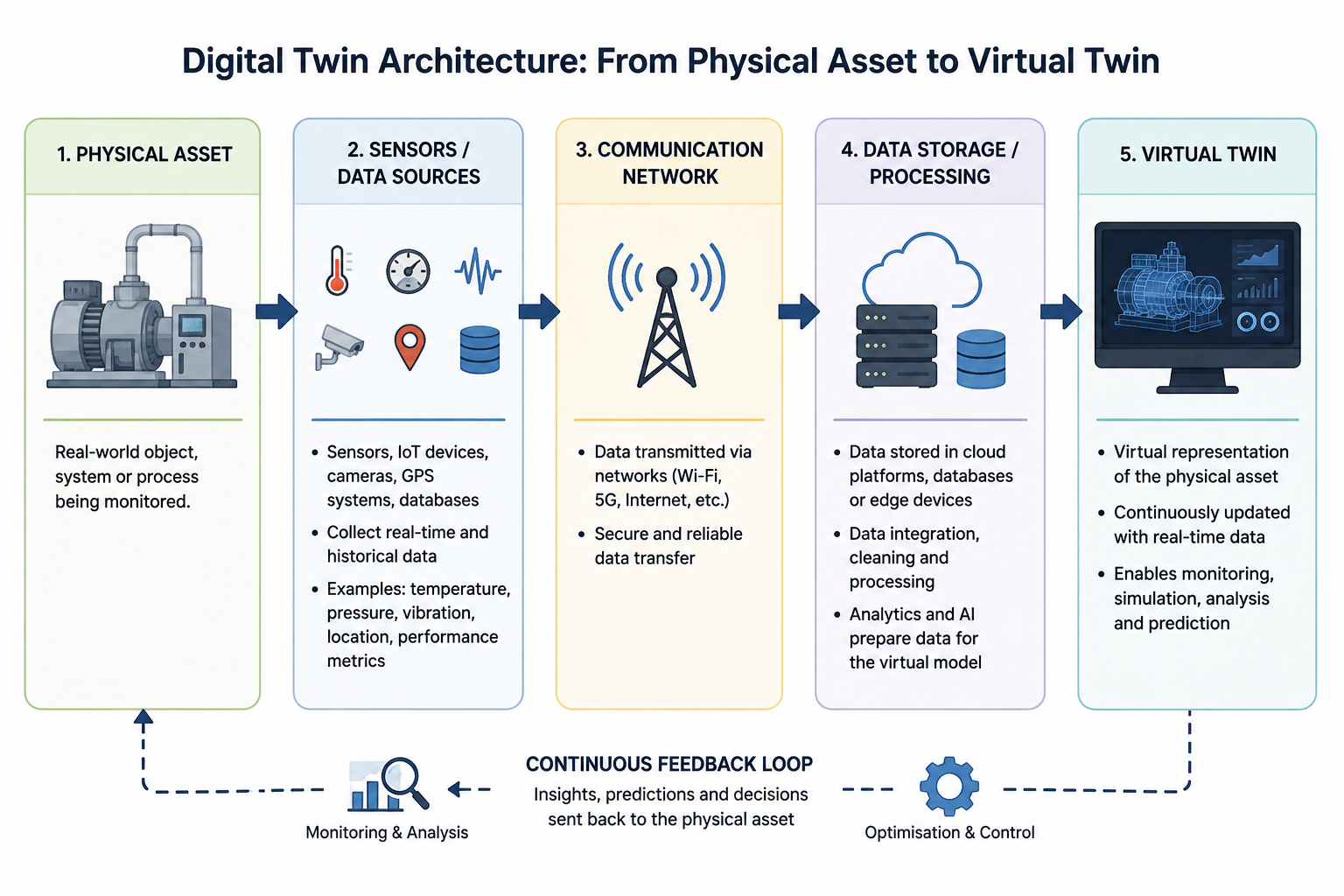
Figure 1: Digital Twin Architecture: From Physical Asset to Digital Twin (OpenAI, 2026). Adapted from the digital twin architecture concepts presented by Hu et al. (2021) and Jones et al. (2020).
Finally, advanced modelling, simulation and analytics tools transform the incoming data stream into a dynamic digital representation. Depending on the system architecture and specific application requirements, continuous or near-real-time data exchange enables physical operational changes to be reflected in the virtual twin, providing a foundation for ongoing monitoring, predictive analysis and system optimisation (Melesse et al., 2021; Semeraro et al., 2021).
Once telemetry reaches the virtual twin, raw sensor data must undergo systematic processing before it can generate actionable intelligence. Heterogeneous streams collected from diverse IoT devices are first cleansed, normalised and integrated with historical operational databases to resolve data gaps, noise and inconsistencies (Liu et al., 2021). These refined datasets are then processed through core simulation engines and analytical algorithms to evaluate real-time asset conditions, detect operational anomalies and map physical performance against baseline models (Semeraro et al., 2021). By transforming unstructured sensor streams into structured diagnostic metrics, this data processing tier establishes the baseline state representation of the physical asset. Crucially, while this stage focuses on validating data integrity and mapping current operational patterns, it provides the foundational inputs required for advanced AI-driven forecasting and predictive analysis in subsequent operations (Liu et al., 2021; Semeraro et al., 2021).
Building upon this processed data, digital twins combine physics-based simulation models with AI and machine learning algorithms to evaluate current and future system behaviours. By unifying structural physical models with live operational streams, these systems forecast potential outcomes, stress-test performance under varied conditions and trigger predictive maintenance routines. Consequently, these capabilities elevate digital twins beyond basic monitoring tools into predictive and prescriptive decision-support systems (Hu et al., 2021; Liu et al., 2021).
Ultimately, these analytical outputs are translated into actionable operational insights. By surfacing critical data regarding asset health and operational status, digital twins allow operators to pinpoint maintenance demands, optimise resource allocation and minimise unplanned downtime through proactive management strategies (Melesse et al., 2021; Liu et al., 2021).
To complete the operational workflow, these generated insights are communicated back to human operators or directly ingested by automated control mechanisms. This bidirectional information exchange creates a direct link where virtual analysis actively informs and modifies physical behaviour (Fuller et al., 2020; Semeraro et al., 2021).
Unlike static models that remain unchanged after creation, a digital twin continuously evolves alongside its physical counterpart throughout its lifecycle. This dynamic relationship operates as a continuous cycle involving the physical asset, data acquisition, data transmission, digital representation, analysis and simulation, insight and decision-making, physical action, new data generation and subsequent updates to the digital twin. As illustrated in Figure 2, operational changes and interventions applied to the physical asset produce new sensory data, which immediately updates the virtual representation.
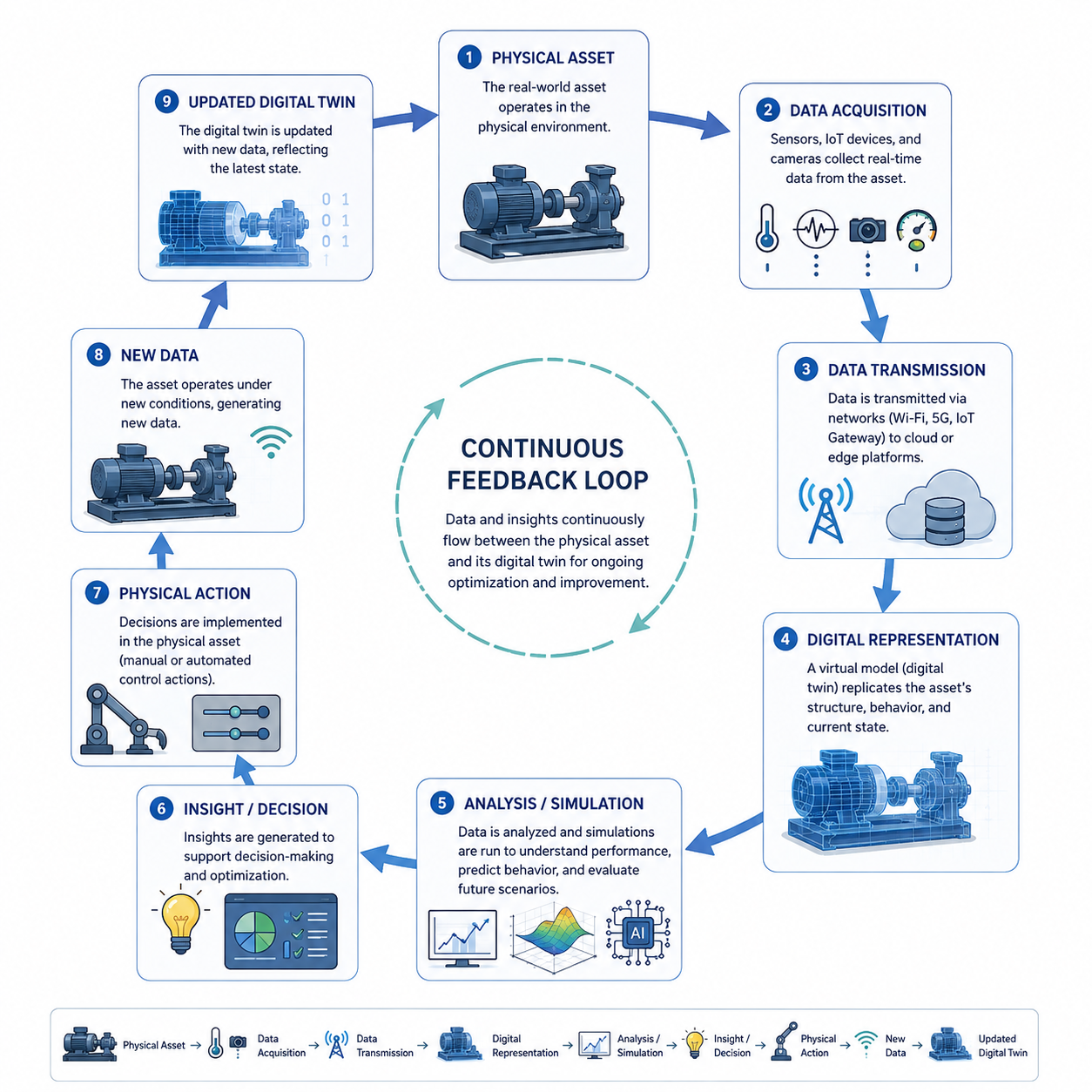
Figure 2: Continuous Digital Twin Feedback Loop (OpenAI, 2026).
This continuous closed-loop architecture ensures that the virtual representation reflects ongoing physical wear, environmental shifts and operational modifications over time, fundamentally setting digital twins apart from traditional, static simulation models (Hu et al., 2021).
Overall, digital twins operate through a continuous cycle in which data from a physical system is collected, transmitted and integrated into a virtual representation. Simulation, analytics and, where appropriate, AI can then be used to generate predictions and insights that inform human or automated actions. These actions produce new physical data, creating an ongoing feedback loop between the physical and virtual environments.
3. Applications of Digital Twins in Various Sectors
3.1 Digital Twins in Manufacturing and Industry 4.0
Digital twins have become increasingly central to Industry 4.0 because they revolutionise how systems are monitored, optimised and simulated (Tao & Qi, 2025). By maintaining a digital replica of physical assets or processes, digital twins allow manufacturers to anticipate failures, test changes virtually, improve productivity and minimise resource waste. This is particularly valuable in high-risk or high-cost environments where physical experimentation is expensive or unsafe. Recent literature reviews show that AI-driven digital twins are being used for predictive maintenance, process optimisation, quality control and dynamic scheduling (Nguyen et al., 2025). However, implementation challenges may limit these benefits.
Digital twins are used throughout product development, from design to testing and validation. High-fidelity virtual representations allow manufacturers to analyse product behaviour and evaluate designs before physical production. Huang et al. (2022) show that digital twin-based prototypes can support product testing in virtual environments, while Wei et al. (2023) demonstrate that virtual validation can reduce reliance on physical prototyping, lowering costs and shortening development cycles. Therefore, digital twins can shift aspects of design and validation from physical to virtual domains, reducing material waste and time-to-market. However, these benefits depend on effective integration between physical and virtual infrastructures and accurate underlying data, as poor integration or unreliable data can reduce digital twin outputs (Tao & Qi, 2025).
Digital twins are increasingly applied at the production and system level, modelling entire cells or production lines using data from machines, sensors and enterprise systems. This enables manufacturers to simulate workflows, test alternative schedules and identify bottlenecks. AI-driven digital twins can adjust machining parameters, balance production flows and support dynamic scheduling in response to demand changes or disruptions (Nguyen et al., 2025). They can also support in-line quality monitoring, using real-time image and sensor data to detect defects and trigger corrective actions before large batches of non-conforming parts are produced. Overall, digital twins combine real-time operational data with simulation and optimisation models to improve throughput, reduce scrap and enable responsive scheduling, provided connectivity and data standards are sufficient.
Digital twins continuously monitor machinery during operation, enabling manufacturers to identify potential failures before they occur. Iliuţă et al. (2024) identify real-time monitoring, simulation and analysis as fundamental capabilities, with sensor data integrated into virtual counterparts to detect abnormal patterns indicating deterioration. Nguyen et al. (2026) further identify predictive maintenance as a major application of AI-driven digital twins, where real-time monitoring and predictive analytics identify equipment faults and maintenance needs. This can shift maintenance from reactive responses towards earlier intervention, reducing unexpected downtime, maintenance costs and production disruption while potentially extending equipment lifespans. However, incomplete, noisy or intermittent sensor data can cause inaccurate predictions or false alarms, undermining trust in recommendations (Yu et al., 2025).
Despite these advantages, scaling digital twins across manufacturing remains challenging. Their effectiveness depends on accurate, real-time sensor data as unreliable measurements can lead to incorrect predictions of equipment failures, process performance or product quality (Yu et al., 2025). Interoperability is another challenge because factories often contain machines, sensors and software from different manufacturers using incompatible data formats or communication standards. Scaling from individual machines to entire production lines also increases complexity, requiring models to represent interactions between interconnected equipment while processing larger data volumes. Overall, digital twins have significant potential to improve manufacturing, but their effectiveness depends on accurate data, integrated industrial systems and reliable modelling of complex production environments.
3.2 Digital Twins in Healthcare and Life Sciences
Digital twins have an increasingly wide range of applications in healthcare, operating at both clinical and organisational levels. Patient-specific models are being explored for diagnosis, personalised treatment, surgical planning and drug development, while broader applications include medical devices and healthcare systems. Together, these applications offer opportunities for more personalised, predictive and data-informed healthcare, although many remain emerging rather than established in clinical practice.
One significant application is the creation of virtual representations of individual patients or organs. Sadée et al. (2025) explain that these models can visualise disease, predict its progression and update as new patient data becomes available, potentially supporting more individualised care. For example, Raza et al. (2025) created cardiovascular digital twins using data from 343 heart-failure patients to characterise individual disease states and support personalised diagnosis and prognosis. Together, these studies suggest that patient-specific modelling could provide predictions more closely tailored to individual physiological characteristics, although its clinical value depends on how accurately the model represents the patient.
Digital twins are increasingly applied in clinical settings to support surgical planning and personalised therapy. By incorporating patient-specific CT and MRI imaging data, virtual anatomical models allow surgical teams to simulate complex procedures prior to surgery, helping identify potential risks before the intervention (Asciak et al., 2025). Expanding on personalised care, Sadée et al. (2025) highlight dynamic applications in oncology, where twins monitor tumour evolution to adjust radiotherapy dose distributions and chronic disease management, such as diabetes models tracking blood glucose to predict HbA1c fluctuations for dynamic insulin dosing. Although these medical conditions differ significantly, they collectively demonstrate how digital twins facilitate adaptive, data-driven treatment strategies that evolve alongside changing patient metrics over time.
Digital twin technology also has the potential to contribute significantly to treatment discovery and personalised medicine through dynamic, in-silico patient replicas. By analysing extracted biological data within computational disease models, researchers propose that virtual drug testing could help predict patient intolerance and adverse side effects during research, potentially reducing the reliance on human participants in early-stage trials (Björnsson et al., 2020). For instance, Sadée et al. (2025) indicate that combining AI algorithms with biological principles enables virtual models to simulate treatment responses, predict cancer progression and optimise therapy timing to prevent drug resistance. However, translating these conceptual models into clinical practice remains constrained by biological complexity, data uncertainty and the need for extensive model validation across diverse patient populations. Digital twins may therefore complement early treatment evaluation, but their simulated predictions cannot automatically substitute for empirical clinical trial evidence unless the underlying models have been thoroughly validated.
Beyond direct patient care, digital twins are applied separately to healthcare operations and facility infrastructure. By constructing virtual models of hospital environments, administrators can simulate patient flow, optimise bed capacity and streamline emergency department and critical care workflows (Appuhamilage et al., 2025). Furthermore, operational digital twins enable intelligent facility management and predictive maintenance for medical systems, anticipating equipment failures to minimise operational downtime and improve resource allocation across the facility (Attaran & Celik, 2023). Distinguishing operational applications from clinical tools highlights how digital twins can optimise hospital throughput independently of patient-specific diagnostic workflows.
Furthermore, digital twins can model medical devices and healthcare systems. Bethencourt et al. (2021) used a digital twin to simulate a connected lymphedema-monitoring device, while Kuruppu Appuhamilage et al. (2025) developed a critical-care digital twin that tracked staff tasks and treatment workflows. Digital twins can also support capacity planning and equipment monitoring (Sadée et al., 2025; Attaran & Celik, 2023). Collectively, these examples show that healthcare digital twins can operate at multiple scales, from individual devices to organisational systems.
However, healthcare applications also present significant challenges because inaccurate predictions can directly affect patient care. Sel et al. (2025) identify data uncertainty, privacy and clinical validation as major barriers, as virtual patient models inevitably simplify complex biological processes and may not accurately represent a patient if their underlying data is incomplete or unreliable. Patient-specific digital twins also require large quantities of sensitive health data, creating concerns around privacy, security and responsible data use. Furthermore, their integration into clinical practice raises questions of reliability and responsibility: digital-twin predictions must be rigorously validated and used alongside, rather than in place of, professional medical judgement. Overall, while digital twins offer substantial opportunities across healthcare, their safe adoption depends on accurate data, strong privacy protections, rigorous validation and careful clinical implementation.
Collectively, the literature suggests that healthcare digital twins could contribute to a shift towards more personalised, predictive and data-informed healthcare at both patient and organisational levels. However, these benefits remain dependent on the accuracy and completeness of patient data, appropriate clinical validation and the ability of healthcare organisations to integrate digital twin outputs safely into existing decision-making processes.
3.3 Digital Twins in Agriculture and Smart Farming
Agriculture faces high variability in weather, soil conditions and resource availability, alongside pressure to increase productivity and implement sustainable practices. These characteristics make it well suited to digital twin applications because IoT can integrate sensor, environmental, weather and operational data to model changing agricultural conditions and support responsive decisions or automated interventions (Subeesh & Chauhan, 2026).
In farm monitoring, digital twins integrate data from soil sensors, weather stations, drones and satellite imagery to create a virtual replica of the field. Reviews show that digital twins can mirror plant lifecycle stages, supporting early detection of stress and disease (Melesse, 2025). This can reduce crop losses and provide targeted recommendations to improve crop health. However, outputs may be less reliable where sensor coverage does not capture substantial spatial variation across a field (Melesse, 2025).
Beyond crop monitoring, digital twins can be leveraged to reduce resource waste and optimise irrigation schedules in response to changing crop requirements. Kabakchieva et al. (2026) discuss how digital twin-based irrigation and nutrient management has considerable potential to support more eco-friendly practices by reducing water use while maintaining crop yield. This suggests that digital twins could be particularly valuable in water-stressed agricultural environments, where more precise irrigation decisions may help balance resource conservation with crop requirements and reduce dependency on chemical fertilisers. Despite these potential advantages, digital twins for resource optimisation rely on adequate internet bandwidth and computing capacity for continuous data processing. Where these are unavailable, delayed updates to the digital twin can restrict real-time processing and reduce the usefulness of irrigation recommendations in time-sensitive situations (Awais et al., 2025).
Digital twins can also incorporate real time and historical weather data to model how changing temperature, rainfall and humidity may affect crop development and yield. Zaragoza-Esquerdo et al. (2025) demonstrate that agricultural digital twins can combine local weather-station data with machine-learning models to produce short-term, location-specific forecasts, supporting irrigation and crop-management decisions. This can improve resilience to climate variability, although forecasts remain uncertain where weather-station coverage is sparse or microclimates vary within farms.
Soil management can similarly benefit from digital twins through the continuous integration of measurements such as soil moisture, temperature and nutrient conditions combined with crop-growth models. Melesse (2025) identifies soil-moisture monitoring and predictive modelling as important applications of agricultural digital twins, allowing farmers to make more targeted decisions regarding irrigation and fertilisation. This can improve input efficiency while reducing unnecessary water and chemical use; nevertheless, soil heterogeneity means models require local calibration before recommendations can be applied confidently across an entire field.
Digital twins can extend beyond crop production to livestock by integrating sensor data on animal behaviour, health, environmental conditions and productivity. Subeesh and Chauhan (2026) identify livestock monitoring and management as key applications of agricultural digital twins, with potential to improve productivity while reducing resource consumption.However, reliable monitoring of large herds requires wearable sensors that do not disrupt animal welfare, while sensor failures or missing data can make individual health predictions unreliable.
Finally, digital twins can connect farm-level data with wider agricultural supply chains, allowing production, storage, transportation and distribution to be simulated and optimised. Tzachor et al. (2022) suggest that digital twins could reduce food waste and greenhouse-gas emissions by identifying more efficient supply-chain strategies. However, this depends on data sharing and interoperable systems across stakeholders whose priorities and platforms may differ.
Overall, the literature presents agricultural digital twins as progressing from monitoring field conditions to modelling, prediction and resource-allocation decisions. Their value for productivity and sustainability is promising, but remains dependent on reliable local data, appropriate models and suitable digital infrastructure.
3.4 Digital Twins in Automotive and Aerospace
Digital twins have become an important technology in the automotive industry by creating virtual representations of vehicles, components and systems that are continuously updated using real-time sensor data. These digital models allow engineers to monitor vehicle performance, detect faults and optimise operations throughout a vehicle’s lifecycle. One of the most significant applications is predictive maintenance, where sensor data is analysed to identify signs of wear and potential failures before they occur. Taken together, research suggests that the value of digital twins in automotive maintenance extends beyond condition monitoring, enabling continuously updated data to support earlier maintenance interventions, potentially reducing maintenance costs, improving reliability and preventing unexpected breakdowns (van Dinter et al., 2022; Zhong et al., 2023). However, uncertainty in sensor measurements and degradation models can affect the accuracy of remaining useful life predictions, meaning that inaccurate digital representations could lead to inappropriate maintenance decisions.
Digital twins are also increasingly applied to electric vehicle batteries, where virtual models use real-time data such as temperature, state of charge and battery degradation to monitor condition and predict remaining useful life. By continuously comparing the virtual battery with its physical counterpart, the digital twin can identify abnormal behaviour, support battery management and help optimise charging and operating conditions. These capabilities could improve battery performance, safety and lifespan (Jose & Shrivastava, 2025). However, battery degradation varies according to factors such as temperature, charging behaviour, driving conditions and battery age. Consequently, models developed under limited operating conditions may not accurately represent real-world degradation, reducing the reliability of predictions.
Beyond maintenance and battery systems, digital twins support vehicle design, testing and component management. Virtual vehicle models can simulate vehicle dynamics, safety performance and operating conditions, reducing reliance on physical prototypes during development. In manufacturing, Son et al. (2021) demonstrated the application of a digital twin-based cyber-physical system to automotive body production, achieving accurate production-plan predictions and supporting manufacturing decision-making. At the vehicle level, digital twins can also support component health monitoring and lifecycle management by integrating operational data throughout the vehicle’s service life. However, increasingly connected digital twins also create cybersecurity and data-integration challenges as vehicle information must be transferred between heterogeneous sensors, software platforms and external systems. Overall, digital twins have significant potential to improve automotive development, reliability, safety and lifecycle management, but their effectiveness depends on the accuracy of models, quality of data and reliability of predictions in changing real-world conditions.
Digital twin technology has also become increasingly important in the aerospace industry, supporting applications ranging from sensor integration to advanced simulations of aircraft systems. By creating a real-time connection between the physical vehicles and their digital models, digital twins can enhance reliability, minimise flight delays and optimise overall flight performance.
One of the most significant aerospace applications of digital twins is propulsion and jet engine monitoring. Utilising real-time sensor data enables engineers to track indicators of mechanical engine fatigue in its early stages, supporting a transition from reactive to predictive maintenance strategies. Moghtadaei (2024) demonstrates that by analysing operational metrics such as pressure, temperature, vibrations and performance parameters, algorithms can help detect abnormal engine behaviour and potential turbine risks. Replacing static maintenance schedules with live sensor data analysis shifts engine management toward a proactive framework. Ultimately, such monitoring may support earlier identification of operational anomalies, potentially allowing maintenance interventions before faults develop into critical failures and thereby contributing to safer flight operations.
Beyond engine monitoring, digital twins are increasingly applied to support predictive maintenance strategies across broader aircraft systems. Shifting from traditional calendar-based maintenance to sensor-driven condition monitoring offers the potential to minimise aircraft-on-ground (AOG) downtime, lower operational costs and optimise the remaining useful life (RUL) of critical components. As Mehdipour et al. (2026) emphasise, integrating real-time sensor streams with physics-based data and advanced AI algorithms can support early mechanical wear detection and component-level RUL estimations.
However, translating these predictive models into operational aerospace workflows introduces significant technical and regulatory challenges (van Dinter et al., 2022). Accurate RUL estimations depend heavily on sensor reliability and precise degradation modelling; uncertainty in sensor fidelity, harsh environmental variables or unexpected operational stress can lead to inaccurate predictions (Mehdipour et al., 2026). Furthermore, integrating diverse aircraft systems, managing high computational loads and addressing cybersecurity vulnerabilities in connected avionics remain substantial operational hurdles. Because incorrect maintenance forecasts carry severe risks in safety-critical aviation environments, digital twin predictions cannot displace established safety protocols without meeting rigorous airworthiness and regulatory standards. Consequently, while digital twins offer a compelling framework for lifecycle management, their real-world implementation relies on robust model validation and uncertainty quantification before dynamic maintenance scheduling can fully replace traditional oversight.
4. The Future of Digital Twins
The literature suggests that the future evolution of digital twin technology across industrial domains will be defined by cross-sector convergence, transitioning from isolated monitoring frameworks into intelligent, autonomous and lifecycle-spanning systems. Rather than operating as passive virtual mirrors, next-generation digital twins are projected to undergo an evolutionary shift in analytical depth: moving from descriptive monitoring (“what is happening”) and predictive forecasting (“what is likely to happen”) toward prescriptive optimisation (“what should be done”) and, ultimately, high-level operational autonomy (Mihai et al., 2022; Opoku et al., 2023). In this emergent paradigm, future AI and machine learning architectures will enable digital twins to independently execute adaptive control actions, dynamically optimising industrial processes, adjusting medical device feedback or reconfiguring building energy profiles with minimal human intervention (Melesse et al., 2021; Opoku et al., 2023).
This trajectory toward real-time decision autonomy relies on concurrent advances in ubiquitous sensing and next-generation connectivity infrastructure. Future IoT deployments will generate higher-density, multi-modal data streams, while the integration of 5G and future 6G networks will provide ultra-reliable low-latency communication (URLLC) essential for high-frequency synchronisation (Opoku et al., 2023). However, research emphasises that raw transmission speed alone does not produce an effective digital twin; spatial coverage, sensor calibration, edge-computing processing capacity and data governance remain critical determinants of model accuracy (Awais et al., 2025; Mihai et al., 2022). High-bandwidth networks facilitate real-time telemetry exchange, but edge node processing is increasingly necessary to filter noise and mitigate network latency before state updates reach virtual environments (Mihai et al., 2022).
Across manufacturing, healthcare, precision agriculture and smart construction, sustainability and circular-economy optimisation represent unifying drivers for future digital twin development. Rather than being confined to facility management, prospective digital twin implementations are evaluated in the literature for their capacity to model full-lifecycle environmental impacts (Kaewunruen & Lian, 2019). Future applications are expected to simulate complex resource trade-offs, such as balancing photovoltaic energy generation with dynamic building loads, minimising fertilizer run-off in variable-rate irrigation or optimising manufacturing material loops, enabling predictive decarbonisation and resource conservation prior to physical commitment (Kabakchieva et al., 2026; Omrany et al., 2023).
Despite these promising trajectories, synthesised findings across sectors reveal critical unresolved research gaps and structural barriers that constrain enterprise-scale deployment. The current literature remains heavily skewed toward early-stage prototype demonstration, with limited empirical evidence validating full-lifecycle performance, clinical efficacy or long-term return on investment in live operational environments (Liu et al., 2021; Sel et al., 2025). Furthermore, cross-domain scaling remains hampered by persistent data quality limitations, model uncertainty, cybersecurity vulnerabilities and a fundamental lack of universal data standardisation and interoperability protocols across vendor ecosystems (Attaran & Celik, 2023; Opoku et al., 2023). Addressing these gaps requires future research to transition from localised feasibility studies toward rigorous empirical evaluations, standardised semantic architectures and robust multi-stakeholder governance frameworks capable of validating digital twin predictions in complex, safety-critical environments.
5. Conclusion
Digital twins are dynamic virtual representations of physical objects, systems or environments that use continuously updated data to reflect and simulate their real-world counterparts (Negri et al., 2017; Zheng et al., 2019). Enabled by technologies such as IoT sensors, AI, XR and cloud computing, digital twins can support real-time monitoring, prediction and decision-making (Mihai et al., 2022), although their current implementation remains constrained by challenges such as high costs, data quality, computational demands and privacy risks (McKinsey, 2024).
In Industry 4.0, digital twins utilise sensor data and their virtual representations are used to prototype products, optimise machine learning parameters and implement sustainable practices to enable proactive decision-making, reduce waste, maintain quality control. and minimise downtime and costs while improving system productivity (Huang et al., 2022; Wei et al., 2023; Nguyen et al., 2025). In both the automotive and aerospace industries, digital twins serve as vital tools for connecting physical vehicle operations with real-time predictive analysis. By enabling continuous data gathering and monitoring, from assembly process optimisation to active flight fault monitoring, the technology significantly reduces operational downtime and maintenance costs associated with it (Zaccaria et al., 2018). Therefore, integrating digital twins into these industries elevates vehicle reliability, safety standards and overall performance.
In healthcare and life sciences, virtual representations of patients, organs and medical systems can support personalised healthcare, improve hospital operations, workflows and clinical decision-making (Sadée et al., 2025; Kuruppu Appuhamilage et al., 2025). They can also contribute to clinical research through simulating treatment responses of drug development, modelling disease spread and predicting both resource management and equipment maintenance (Björnsson et al., 2020; Attaran & Celik, 2023). Apart from the healthcare sector, digital twins provide the crucial technology for the seamless integration between farm tools, irrigation systems and weathering systems to maximise the resource use, significantly enhance the crop yield and mitigate potential crop diseases from spreading and destroying the land (Byrareddy, Baillie & Scobie, 2026).
Future research and development will likely focus on addressing limitations shared across these fields while expanding the scale and capabilities of digital twins. Advances in IoT, sensing and data-processing technologies could improve real-time synchronisation between physical and virtual systems, while more accurate models and improved validation methods could increase the reliability of their predictions. As these systems become increasingly large and interconnected, however, researchers will also need to address their financial and computational constraints, safety, cybersecurity, data privacy and governance.
In conclusion, digital twin technology represents a permanent shift in modern engineering, transforming it from a traditional physical management approach to a modern hybrid data-centred one. As fundamental technologies continue to develop, digital twins may eventually transition from high-value niche applications into indispensable tools across many industries, reshaping how humans interact, understand and optimise the physical world.
Bibliography
Asad, U., Khan, M., Khalid, A. and Lughmani, W.A. (2023) ‘Human-Centric Digital Twins in Industry: A Comprehensive Review of Enabling Technologies and Implementation Strategies’, Sensors, 23(8), 3938.
Asciak, L., Kyeremeh, J., Luo, X., Kazakidi, A., Connolly, P., Picard, F., O’Neill, K., Tsaftaris, S.A., Stewart, G.D. and Shu, W. (2025) ‘Digital twin assisted surgery, concept, opportunities, and challenges’, npj Digital Medicine, 8, 32.
Attaran, M. and Celik, B.G. (2023) ‘Digital Twin: Benefits, use cases, challenges, and opportunities’, Decision Analytics Journal, 6, 100165.
Awais, M., Wang, X., Hussain, S., Aziz, F. and Mahmood, M.Q. (2025) ‘Advancing precision agriculture through digital twins and smart farming technologies: A review’, AgriEngineering, 7(5), Article 137.
Bean, T., Monfared, R., Segura-Velandia, D. and Fuller, L. (2026) ‘To twin or not to twin, that is the question: Evaluating the business justification for digital twins in legacy systems’, Journal of Intelligent Manufacturing, 37, pp. 4273-4300.
Bethencourt, A., Fernández-Carnero, J. and Tan, Y. (2021) ‘Digital twin of a connected medical device for lymphedema monitoring and treatment evaluation’, IEEE Journal of Biomedical and Health Informatics, 25(8), pp. 3120-3129.
Björnsson, B., Borrebaeck, C., Elander, N., Gasslander, T., Gawel, D.R., Gustafsson, M., Jörnsten, R., Lee, E.J., Li, X., Schäfer, S. and Zhang, H. (2020) ‘Digital twins to personalize medicine’, Genome Medicine, 12(1), pp. 1-4.
Byrareddy, V.M., Baillie, C. and Scobie, M. (2026) ‘A systematic review of digital twin technologies in broadacre agriculture: Challenges, opportunities, and sustainability’, Smart Agricultural Technology, 14, 102394.
Dodero, C., McCormick, M.R., Malik, A.A., Harik, R. and Wuest, T. (2025) ‘Systematic selection framework for digital twin development environments in smart manufacturing’, Digital Twin, 2(4), 2565246.
Fuller, A., Fan, Z., Day, C. and Barlow, C. (2020) ‘Digital Twin: Enabling Technologies, Challenges and Open Research’, IEEE Access, 8, pp. 108952-108971.
Glaessgen, E.H. and Stargel, D.S. (2012) ‘The digital twin paradigm for future NASA and U.S. Air Force vehicles’, 53rd AIAA/ASME/ASCE/AHS/ASC Structures, Structural Dynamics and Materials Conference, Honolulu, Hawaii.
Grieves, M. and Vickers, J. (2016) ‘Digital twin: Mitigating unpredictable, undesirable emergent behaviour in complex systems’, in Kahlen, F.J., Flumerfelt, S. and Alves, A. (eds.) Transdisciplinary Perspectives on Complex Systems: New Findings and Approaches (Cham: Springer), pp. 85-113.
Hu, W., Zhang, T., Deng, X., Liu, Z. and Tan, J. (2021) ‘Digital twin: A state-of-the-art review of its enabling technologies, applications and challenges’, Journal of Intelligent Manufacturing and Special Equipment, 2(1), pp. 1-34.
InduHorizon Report (2026) ‘Industrial economics of digital twin: Cost drivers in 2026’, InduHorizon Report[online]. <https://www.induhorizonreport.com/news/Industrial_Digital/Digital_Twin/Industrial_Economics_of_Digital_Twin_Cost_Drivers_in_2026.html>
Jose, A. and Shrivastava, S. (2025) ‘A comprehensive review of digital twin applications in electric vehicles: Evolution, classification, and future directions towards Industry 5.0’, Results in Engineering, 106570.
Kabakchieva, R., Stanchev, P. and Hinov, N. (2026) ‘Digital twin-based energy management and irrigation optimisation of PV-powered smart agriculture systems using IoT soil monitoring’, Electronics, 15(16), Article 3573.
Kaewunruen, S. and Lian, Q. (2019) ‘Digital twin aided sustainability-based lifecycle management for railway turnout systems’, Journal of Cleaner Production, 228, pp. 1537-1551.
Kuruppu Appuhamilage, S., Perera, C. and Wijesinghe, I. (2025) ‘Real-time operational digital twin framework for critical care unit workflow optimisation’, Computers in Biology and Medicine, 170, 108112.
Liu, M., Fang, S., Dong, H. and Xu, C. (2021) ‘Review of digital twin about concepts, technologies, and industrial applications’, Journal of Manufacturing Systems, 58, pp. 346-361.
Mehdipour, M., Moghaddam, M., Moradkhani, H. and Samani, H. (2026) ‘Integrating Digital Twins, Data Management and Artificial Intelligence for Predictive Maintenance in Aviation: A Comprehensive Review, IET Digital Twins, 1(1).
Melesse, T.Y. (2025) ‘Digital twin-based applications in crop monitoring’, Heliyon, 11(2), e42137.
Melesse, T.Y., Di Pasquale, V. and Riemma, S. (2021) ‘Digital Twin models in industrial operations: State-of-the-art and future research directions’, IET Collaborative Intelligent Manufacturing, 3(1), pp. 37-47.
Mihai, S., Yaqoob, M., Hung, D.V. et al. (2022) ‘Digital twins: A survey on enabling technologies, challenges, trends and future prospects’, IEEE Communications Surveys & Tutorials, 24(4), pp. 2255-2291.
Moghtadaei, A. (2024) ‘Aircraft engine maintenance and digital twin technology in aircraft engines’, Journal of Aviation Research and Technology, 1(1).
Negri, E., Fumagalli, L. and Macchi, M. (2017) ‘A review of the roles of Digital Twin in CPS-based production systems’, Procedia Manufacturing, 11, pp. 939-948.
Nguyen, P., Kim, M., Nichols, E. and Yoon, H.-S. (2026) ‘AI-Driven Digital Twins for Manufacturing: A Review Across Hierarchical Manufacturing System Levels’, Sensors, 26(1), 124.
OpenAI (2026) ChatGPT (GPT-4o) [large language model]. <https://chat.openai.com>
Ouahabi, N., Chebak, A., Kamach, O., Laayati, O. and Zegrari, M. (2024) ‘Leveraging digital twin into dynamic production scheduling: A review’, Robotics and Computer-Integrated Manufacturing, 89, 102778.
Qi, Q., Tao, F., Hu, T., Anwer, N., Liu, A., Wei, Y., Wang, L. and Nee, A.Y.C. (2021) ‘Enabling technologies and tools for digital twin’, Journal of Manufacturing Systems, 58, pp. 3-21.
Raza, A., Heart, M., Smith, R. and Davies, P. (2024) ‘Cardiovascular digital twins for personalised characterization and prognosis in heart failure patients’, European Heart Journal – Digital Health, 6(2), pp. 145-156.
Sadée, C., Testa, S., Barba, T., Hartmann, K., Schuessler, M., Thieme, A., Church, G.M., Okoye, I., Hernandez-Boussard, T., Hood, L., Shmulevich, I., Kuhl, E. and Gevaert, O. (2025) ‘Medical digital twins: enabling precision medicine and medical artificial intelligence’, The Lancet Digital Health, 7(7), e100864.
Sel, K., Mohammadi, A. and Jafari, R. (2025) ‘Data uncertainty, privacy preservation, and clinical validation in medical digital twins’, IEEE Transactions on Medical Robotics and Bionics, 7(1), pp. 88-99.
Semeraro, C., Lezoche, M., Panetto, H. and Dassisti, M. (2021) ‘Digital twin paradigm: A systematic literature review’, Computers in Industry, 130, 103469.
Sharma, A., Kosasih, E., Zhang, J., Brintrup, A. and Calinescu, A. (2022) ‘Digital Twins: State of the art theory and practice, challenges, and open research questions’, Journal of Industrial Information Integration, 30, 100383.
Son, Y.H., Park, K.T., Lee, D., Jeon, S.W. and Noh, S.D. (2021) ‘Digital twin-based cyber-physical system for automotive body production lines’, International Journal of Advanced Manufacturing Technology, 115(1-2), pp. 291-310.
Subeesh, A. and Chauhan, N. (2026) ‘Agricultural digital twin for smart farming: A review’, Green Technologies and Sustainability, Article 100299.
Sun, L., Pei, A., Qi, X., Cao, S., Yang, R. and Liu, X. (2020) ‘Dynamic Analysis of Digital Twin System Based on Five-Dimensional Model’, Journal of Physics: Conference Series, 1486(7), 072038.
Tao, F. and Qi, Q. (2026) ‘Digital twin is revolutionising manufacturing industry’, Digital Twin, 2(4), 2620942.
Thompson, E. (2024) ‘Applications of Digital Twins in Manufacturing’, Cyngn [online]. <https://www.cyngn.com/blog/applications-of-digital-twins-in-manufacturing>
Van Dinter, R., Tekinerdogan, B. and Catal, C. (2022) ‘Predictive maintenance using digital twins: A systematic literature review’, Information and Software Technology, 151, 107008.
Villegas, L.F., Macchi, M. and Polenghi, A. (2025) ‘Digital twins in manufacturing: A unified conceptual framework’, Annual Reviews in Control, 60, 101031.
Zaccaria, V., Stenfelt, M., Aslanidou, I. and Kyprianidis, K.G. (2018) ‘Fleet monitoring and diagnostics framework based on digital twin of aero-engines’, Proceedings of the ASME Turbo Expo 2018: Turbomachinery Technical Conference and Exposition, 6.
Zheng, Y., Yang, S. and Cheng, H. (2018) ‘An application framework of digital twin and its case study’, Journal of Ambient Intelligence and Humanized Computing, 10, pp. 1141-1153.
Zhong, D., Xia, Z., Zhu, Y. and Duan, J. (2023) ‘Overview of predictive maintenance based on digital twin technology’, Heliyon, 9(4), e14534.