
1. Introduction
Difficulties in adult romantic relationships often trace back to early childhood experiences. Research suggests that childhood emotional neglect can disrupt normal brain development, which leads to long-lasting changes in emotional regulation, attachment and the ability to form healthy romantic relationships. These early experiences are particularly important because the absence of emotional support and responsiveness during childhood may affect how individuals perceive relationships, manage emotions and develop bonds in adulthood. Child maltreatment refers to abuse or neglect by a parent or caregiver that harms or threatens a child’s health, survival or development. This paper focuses on childhood emotional maltreatment, in particular neglect. Neglect involves the failure to meet a child’s emotional needs and has lasting effects on brain development and adult romantic relationships. Childhood neglect affects the neural systems involved in attachment, reward and threat processing which contributes to emotional stress response, regulation and social functioning. As a result, individuals who experienced childhood neglect may be more likely to develop insecure attachment styles, difficulties with emotional regulation, increased sensitivity to rejection and problems maintaining stable romantic relationships. This paper will argue that childhood neglect is associated with long-term changes in neural systems involved in attachment, reward and threat processing, which may help explain difficulties in adult romantic relationships.
2. Effects of Early Neglect on Brain Systems
2.1 Attachment system
EFFECTS ON THE ANTERIOR CINGULATE CORTEX
The attachment system is a network of brain regions and neurochemical pathways involved in forming and maintaining close social bonds. One key region is the anterior cingulate cortex (ACC), a part of the cerebral cortex that is involved in emotional regulation, processing social information and responding to emotional experiences. Research suggests that childhood neglect and early deprivation can alter the development of the ACC, including changes in its structure and function. These alterations may impair emotional regulation and social bonding, providing a potential neural mechanism through which early neglect influences adult romantic relationships.
To investigate how childhood neglect affects the development of ACC-related networks, Silveira et al. (2021) examined whether altered development of brain networks involved in executive function (EF) explains the relationship between childhood experiences and later outcomes. Using longitudinal data from 475 adolescents, the researchers investigated whether childhood adversity was associated with alterations in functional brain connectivity. They used resting-state brain scans to examine how strongly different brain areas communicate when the brain is not doing a task. The researchers analysed internalising and externalising behaviours during a one to four year follow-up period. It was discovered that individuals who endured childhood adversity showed high risk of externalising/internalising behaviours. The researchers tested whether weaker communication between the dorsal anterior cingulate cortex (dACC) (monitoring, regulation and adaptation of behaviour) and the cingulo-opercular (CO) network (stable cognitive control and goal-directed behaviour) could explain how childhood adversity contributes to later emotional and behavioural problems, because this network is important for self-control and attention regulation. The findings showed that childhood adversity, particularly neglect, was associated with reduced functional connectivity between the dACC and CO network which helped explain the link between child neglect and externalising behaviour. The reduced connectivity between the dACC and CO network suggests that childhood neglect may disrupt the development of neural systems responsible for executive control, emotional regulation and behavioural monitoring.
Supporting these findings, Kawata et al. (2024) investigated whether childhood neglect also affects the structural development of ACC-related networks. Using MRI, the researchers compared grey matter volume (brain tissue made up of neuron cell bodies which reflects differences in brain structure and development) between children who experienced neglect and typically-developing children, specifically focusing on psychosocial phenotypes (patterns of behaviour, emotions or social functioning) observed in neglected children. The results showed that the neglect group had altered development of the ACC, as well as changes in other brain regions involved in attention and social processing. These structural changes were associated with hyperactivity, inattention and difficulties in social functioning that include peer problems and depressive symptoms. Furthermore, MRI analysis showed disrupted communication between brain regions involved in emotional processing and attention. This research suggests that childhood neglect may alter the development of the ACC and disrupt communication within brain networks involved in emotional regulation and social processing. These disrupted brain networks may contribute to difficulties in emotional and social interactions in neglected children.
Overall, Silveira et al. (2021) and Kawata et al. (2024) provide complementary evidence that childhood neglect alters both the functional connectivity and structural development of the ACC-related networks. The combination of resting-state connectivity and MRI grey matter volume findings strengthen the argument that childhood neglect produces extensive and long-lasting changes in neural systems involved in emotional regulation, control and social functioning, rather than temporary changes in brain activity. However, both studies are observational and cannot establish a causal relationship between childhood neglect and the neural alterations observed, as other environments and factors may contribute. Still, both studies together provide strong evidence that early neglect is associated with atypical development of ACC-related networks.
EFFECTS ON OXYTOCIN
Oxytocin is a hormone and neurotransmitter involved in the attachment system, contributing to the formation and maintenance of social bonds, including attachment and relationship behaviours. Oxytocin plays an important role in the attachment system between a child and a caregiver, which is impaired in many children who have suffered from childhood maltreatment (CM).
Fujisawa et al. (2019) investigated the differences in oxytocin receptor (OXTR) methylation between CM and non-CM groups of children and its impacts on brain structure using brain imaging. The results showed that the CM group showed higher methylation of the OXTR gene, suggesting that oxytocin signalling may have been altered. In addition, increased OXTR methylation was associated with reduced grey matter volume in the left orbitofrontal cortex (OFC) (the brain area involved in emotional regulation, decision-making and social behaviour). The CM group showed much lower grey matter volume in the left OFC, meaning that children in the CM group were more likely to show insecure attachment behaviours. This research concludes that childhood maltreatment alters the oxytocin system through epigenetic changes in the OXTR gene which can affect the development of the OFC and contribute to insecure attachment patterns. Furthermore, this shows that the CM group may find it harder to form social bonds and relationships due to altered attachment processes. However, the attachment system is not only regulated by oxytocin, as vasopressin also plays an important role in forming and maintaining social bonds.
Therefore, Lukas et al. (2010) further investigated how early-life adversity affects both vasopressin and oxytocin systems. Lukas et al. showed that exposure to maternal separation (MS) creates changes in the behaviours of young and adult male rats by investigating whether MS altered the expression and functional availability of vasopressin receptor (V1A-R) and oxytocin receptor (OT-R) within brain regions involved in social behaviours. The findings showed that MS interfered with the normal development of the vasopressin and oxytocin systems which altered the receptor binding in the brain regions involved in social attachment, emotional regulation and rewards-related behaviours. For example, MS altered V1A-R and OT-R binding in the lateral septum (social behaviour, emotional regulation, stress responses and attachment-related behaviours). In addition, there was also observation of reduced OT-R binding in the caudate putamen (motivation and reward-related behaviour) which suggests that early life stress may alter oxytocin signalling in areas important for forming social connections and processing rewarding experiences.
These studies suggest that childhood neglect disrupts multiple neurochemical pathways involved in attachment rather than oxytocin alone. Fujisawa et al. (2019) demonstrated epigenetic alterations that affect oxytocin signalling in humans, while Lukas et al. (2010), through experiment, showed that early life stress alters the availability of both oxytocin and vasopressin receptors in animal models. The findings between animal and human research strengthens the hypothesis that early adversity produces lasting changes in attachment systems supporting social bonding. However, the animal model of maternal separation used by Lukas et al. cannot portray the full complexity of childhood neglect, which means caution is required when comparing these studies to the development of the human brain and its effects. Ultimately, both studies present why individuals who endured childhood neglect may experience difficulties with trust, emotional intimacy and development of secure attachment patterns in social bonds.
2.2 Threat and vigilance system
EFFECTS ON THE AMYGDALA
The threat and vigilance system is a network of brain regions that detects danger, maintains alertness to potential threats and coordinates emotional and physiological responses to protect the individual. A key brain region involved in this system is the amygdala which detects emotionally significant stimuli, particular threats and plays an important role in emotional learning. Because the amygdala develops rapidly during childhood and contains a high density of glucocorticoid receptors (which bind to the stress hormone cortisol), it is particularly sensitive to stress associated with neglect.
To investigate whether childhood maltreatment alters neural responses to threat, Puetz et al. (2020) investigated whether experiences of abuse and neglect were associated with differences in neural reactivity to threatening facial expressions. Although the study examined both abuse and neglect, the present review focuses specifically on findings related to childhood neglect. The information was researched from neural reactivity to facial cues signalling threat across the maltreated group and non-maltreated. Brain imaging analysis showed that individuals who experienced neglect were associated with heightened reactivity in a distributed cortical fronto-parietal network, which supported complex social and cognitive processing, as well as in the dorsal amygdala. The amygdala is responsible for detecting emotionally significant, particularly threatening, stimuli; therefore, heightened reactivity in the dorsal amygdala suggests that childhood neglect may lead to an increased sensitivity to potential threats. Increased activation of the fronto-parietal network may also indicate altered attention and social information processing.
The influence of childhood neglect on the amygdala is further supported by Dannlowski et al. (2013) who investigated whether childhood maltreatment was associated with changes in amygdala functioning during emotional processing. Using fMRI, the researchers measured amygdala responses to subliminally presented emotional facial expressions in 150 healthy adults who had been screened for psychiatric disorders. Childhood maltreatment experiences were assessed using a questionnaire. The study found that higher levels of childhood maltreatment were associated with increased amygdala responsiveness to sad facial expressions, but not happy facial expressions, which suggests that early adverse experiences may lead to a heightened sensitivity towards negative emotional situations. Importantly, these effects remained significant even after controlling for factors such as anxiety, current depressive symptoms, age, gender, intelligence, education and recent stressful life events, indicating that childhood maltreatment itself was linked to lasting alterations in amygdala function. These findings suggest that early caregiving experiences may shape the development of threat and emotional processing systems, causing individuals to become more reactive to potential signs of rejection, distress or negative social feedback.
Overall, even though Puetz et al. (2020) and Dannlowski et al. (2013) used different methods to investigate emotional processing, both studies found increased amygdala activity following childhood maltreatment. The consistency of the findings strengthened the evidence that early adverse experiences may lead to lasting alterations in the brain systems involved in detecting and responding to threats. While both of the studies are observational, meaning they cannot establish a clear link between childhood neglect and amygdala functioning as environmental factors could also have an influence, both of the studies do still provide a possible neural mechanism through which childhood neglect may increase sensitivity to threatening or negative social situations.
EFFECTS ON CORTISOL
Cortisol is a vital part of the threat and vigilance system as it is the main stress hormone that helps the brain and the body respond to perceived threats. The hypothalamus-pituitary-adrenal axis (HPA) (main stress response system) develops most rapidly from birth to the age of five, with the highest sensitivity occurring during the first two to three years of life. During this period, childhood neglect can disrupt the normal development of the HPA axis because the child’s brain is repeatedly exposed to stress and lack of responsive caregiving. As a result, the child may become hypervigilant, constantly anticipating potential threats, or their stress response may become dysregulated, which can lead to abnormal cortisol levels later in life. Preclinical studies have discovered that exposure to stress during early development can have long-lasting or negative effects on the HPA axis.
Carpenter et al. (2007) examined plasma adrenocorticotropin hormone (ACTH) and cortisol reactivity to the Trier Social Stress Test (TSST) in adults with and without reported childhood maltreatment. The results presented how the MAL group showed a smaller increase in cortisol and ACTH from their baseline levels to their highest levels after the stress test, showing that the HPA axis responded less strongly to stress. Throughout the test, cortisol was repeatedly measured and the MAL group consistently showed lower cortisol concentration in comparison to the control group. In addition, the MAL group had blunted ACTH responses which means ACTH increased less or more slowly than the control. Furthermore, research showed emotional neglect was associated with lower maximal cortisol release. Overall, this study suggests that childhood neglect disrupts HPA axis activity leading to reduced cortisol production and an impaired ability to produce an appropriate physiological response to stressful situations.
To further strengthen the argument that childhood maltreatment and neglect affects children’s brain development, Alink et al. (2012) investigated the effects of childhood maltreatment on social functioning and cortisol regulation over time by comparing the behaviours between a maltreated group of children and a control group. The measurement of cortisol levels was taken through saliva, and cortisol levels were assessed by measuring participant’s morning and afternoon cortisol concentrations, as well as the change in cortisol levels across the day. Morning cortisol presented natural peak activation of the HPA axis after waking, while afternoon cortisol reflected natural decline in cortisol throughout the day. The behaviours of the children were assessed through peer and counsellor information, specifically prosocial or disruptive/aggressive behaviours. It was shown that the maltreated children expressed more disruptive and aggressive behaviour rather than prosocial behaviour. Researchers further discovered that childhood maltreatment affected children’s cortisol level indirectly through changes in their behaviour. The expression of this behaviour in maltreated children is due to lower morning cortisol levels. In addition, more socially-withdrawn children showed higher levels of cortisol in the afternoon. As cortisol typically decreases throughout the day, the higher levels suggest their stress system may have remained more active instead of calming down. If maltreatment changes the way the HPA axis develops, it may make children more vulnerable to developing psychological difficulties later in life because their stress response system may not regulate stress effectively.
Overall, Carpenter et al. (2007) and Alink et al. (2012) suggest that childhood maltreatment can disrupt the normal functioning of the HPA axis. While Carpenter et al. showed that adults with a history of childhood maltreatment had reduced cortisol and ACTH responses to stressful situations, Alink et al. found that maltreated children showed abnormal cortisol patterns throughout the day. Together the findings suggest that childhood neglect can affect both the body’s immediate response to stress and long-term regulations of the stress response system. On the other hand, Carpenter et al. relied on retrospective reports of childhood maltreatment which may have been influenced by a bias, meanwhile Alink et al. followed children directly which proved stronger evidence for developmental association between childhood maltreatment and altered cortisol regulation. Therefore, these findings suggest that disrupted HPA axis development may contribute to difficulties regulating stress later in life which provides a possible neural mechanism through which childhood neglect may influence later behaviour.
2.3 Reward system
EFFECTS ON THE PREFRONTAL CORTEX
The reward system is a network of brain regions that help us identify, seek and repeat things that are rewarding or pleasurable. A major component of the reward system is the mesocorticolimbic system which is a dopamine-based pathway that connects areas involved in motivation, reward processing, learning and emotional behaviour. The prefrontal cortex (PFC) is part of this system, and it regulates and evaluates rewards, makes decisions and controls behaviour. The PFC undergoes significant development during adolescence. Childhood maltreatment occurring during this sensitive developmental period potentially affects the proper development of the PFC, which may contribute to difficulties with decision-making and processing rewards, especially emotionally significant experiences such as romantic relationships.
Spivey et al. (2009) tested the theory that adolescent rat females may be more resistant than males to display impulsive behaviour and lower prefrontal cortex thickness after mother-infant separation (MS). Rat pups were separated from their mothers for six hours per day over a ten day period beginning on postnatal day two, while the comparison group received brief handling or standard rearing conditions. The researchers assessed anxiety and impulsivity-related behaviours using many behavioural tests such as being placed in a new unfamiliar environment, placed in a box with a light and dark area, as well as being placed in a common environment. Additionally, the thickness of the frontal cortex was tested through brain analysis. The results concluded that MS rats became more impulsive compared to the control group, meaning the longer the separation from the mother was, the more impulsive behaviour was expressed. The reduction in prefrontal cortex thickness may explain the increased impulsivity observed, as the prefrontal cortex plays an important role in regulating emotions, controlling impulses and making decisions.
While previous research has shown that childhood neglect can affect brain development, Hanson et al. (2013) investigated whether early neglect specifically alters the organisation of PFC connections. The researchers compared children who experienced early neglect in institutional settings with children raised in typical environments. Using diffusion tensor imaging (DTI), a form of MRI that measures white matter organisation, they examined the microstructure of the PFC and assessed neurocognitive performance. The study found that children exposed to early neglect showed altered prefrontal white matter development, characterised by a less organised pattern of white matter connections, and these changes were associated with poorer neurocognitive abilities. These findings suggest that a lack of responsive caregiving during sensitive developmental periods can disrupt the proper development of PFC networks, which may contribute to difficulties in cognitive control, decision-making and emotional regulation.
Overall, the two studies suggest that childhood maltreatment disrupts the development of the prefrontal cortex. Spivey et al. (2009) found that maternal separation was associated with reduced prefrontal cortical thickness and greater impulsive behaviour, while Hanson et al. (2013) showed that early neglect altered the organisation of white matter connections within the prefrontal cortex. Although the studies used different methodologies, both reached similar conclusions. This strengthens the argument that childhood neglect can disrupt PFC development, impairing brain networks involved in cognitive control, decision-making, emotional regulation and learning.
EFFECTS ON THE VENTRAL TEGMENTAL AREA
The mesolimbic pathway is a smaller component of the broader mesocorticolimbic system and refers specifically to dopamine-producing neurons projecting from the ventral tegmental area (VTA) to the nucleus accumbens (NAc), a region involved in reward processing, motivation and reinforcement learning. Like the PFC, the VTA is also significantly affected by childhood maltreatment. The effects of early adversity on VTA connectivity and function have been investigated by Marusak et al. (2017) and Spyrka et al. (2020) in the following studies.
Human neuroimaging studies suggest that early life stress detrimentally affects the brain’s dopaminergic system, particularly the mesocorticolimbic pathway. Marusak et al. (2017) evaluated the impact of early threat exposure on functional connectivity of the VTA and substantia nigra (SN). The researchers used resting-state fMRI scans on 34 trauma exposed and 43 control groups of adolescents. The results stated that the trauma group demonstrated lower functional connectivity between the VTA and the hippocampus. This could affect the gating of new information into long-term memory. Lower connectivity in this circuit suggests it is harder for the brain to update traumatic memories, so the original fear stays strong.
Spyrka et al. (2020) used maternal separation to verify its influence on the properties of neurons in the VTA. The subjects were a rodent model of early-neglect. Using whole-cell patch-clamp recordings (to measure how easily individual neurons fire electrical signals) in brain slices from adolescent female rats, they discovered that MS subjects had the medial VTA particularly affected, as the dopamine producing neurons were easier to activate. This discovery was particularly important as it showed that early stress did not cause the changes to spread across all of the VTA but particular areas. Another discovery was an increase in excitatory synaptic transmission in VTA putative and dopaminergic neurons, so the VTA system became more easily activated. In humans, similar alterations could suggest that early neglect may increase sensitivity to rewarding experiences and strengthen motivation to seek social rewards. However, heightened reward sensitivity may also make individuals more dependent on external validation if their need for social reinforcement becomes excessive.
The two studies portray different effects of early maltreatment and stress on the development of the VTA. The study conducted by Marusak et al. (2017) concluded that maltreatment caused lower functional connectivity between the VTA and the hippocampus, which suggests it is harder for the brain to update traumatic memories, so the original fear stays strong. In contrast, Spyrka et al. (2020) found that maternal separation increased the excitability of dopaminergic neurons within the VTA suggesting that early-life stress can alter the brain’s reward circuitry in a different way. Although the studies investigated different aspects of VTA functions using different methodologies, they both support the idea that early adversity disrupts the normal functioning of the brain’s reward system. If similar neurobiological changes occur in humans, the increased excitatory synaptic transmission in VTA dopaminergic neurons may lead to a more easily activated reward system.
EFFECTS ON DOPAMINE
Dopamine is a key neurotransmitter involved in the brain’s reward system and contributes to motivation, reinforcement learning and the processing of rewarding experiences. The dopamine system develops throughout life with particularly important periods of maturation occurring during childhood and adolescence. Therefore, exposure to maltreatment during these sensitive developmental periods may disrupt the formation and regulation of dopamine pathways. Dopamine is found in many brain areas including the VTA and PFC. The disruption of its formation and regulation may influence how maltreated individuals process social rewards and form relationships in the future.
Egerton et al. (2016) examined the relationship between adversity in childhood and striatal dopamine function (how well dopamine is produced, released and transmitted in the striatum) in early adulthood. Although the study also compared individuals at ultra-high risk of psychosis with healthy volunteers, this review focuses only on the findings related to dopamine. Childhood adversity was assessed using the childhood experience of care and abuse questionnaire and dopamine function using 18-F-DOPA PET scans which measured dopamine production in the associative striatum involved in thinking, learning and integrating information. The results suggested that participants who experienced childhood adversity had higher dopamine function in associative striatum as adults. This proposes that childhood adversity reflects greater sensitivity to rewards, changes in motivation and differences in learning from rewards and punishments.
Furthermore, Liu et al. (2013) investigated how variations in maternal care during early life influence the development of the mesolimbic dopamine system and reward-related behaviours. Using female rats, the researchers compared offspring that received high levels of maternal licking/grooming (LG) with those that received lower levels of maternal care. They found that high maternal LG increased tyrosine hydroxylase (TH) expression in the VTA, suggesting enhanced development and functioning of dopamine-producing neurons. These changes were maintained into adulthood and were associated with increased dopamine receptor expression in the nucleus accumbens, a key region involved in reward processing and motivation. Behaviourally, high-LG offspring showed stronger reward-seeking responses, including increased preference for high-fat food rewards, demonstrating that early caregiving experiences can shape the development of the mesolimbic dopamine pathway. If a similar mechanism occurs in humans, then the differences in early caregiving may influence how individuals process social rewards and form attachments.
Overall, these studies demonstrate that early life experiences can have long-lasting effects on the development and functioning of dopamine reward pathways. Together these findings suggest that childhood adversity may increase dopamine sensitivity and alter reward processing, while positive caregiving experiences can enhance the development of dopamine circuits involved in motivation and reward. Since dopamine contributes to how individuals experience rewarding social interactions, disruptions in these pathways may influence attachment behaviours, emotional bonding and the way individuals seek and maintain romantic relationships in adulthood. However, while both studies suggest that early experiences influence dopamine pathways, neither demonstrate that the alteration of dopamine pathways alone leads to behavioural difficulties. Rather they provide evidence that dopamine is one of the neurobiological factors which childhood maltreatment affects.
3. Behavioural Consequences in Adult Romantic Relationships
3.1 Formation of romantic relationships
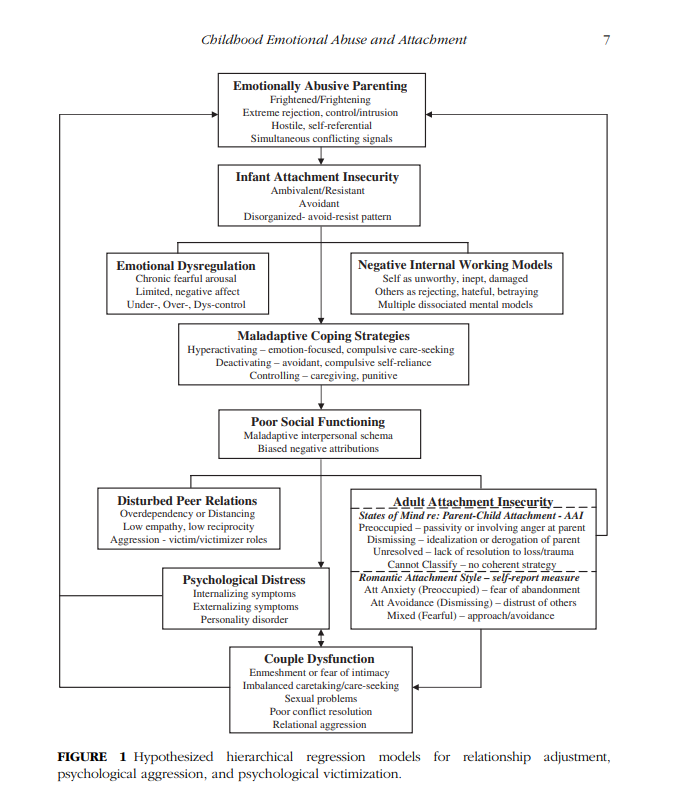
According to Bowlby’s attachment theory, a repeated interaction with caregivers during childhood shapes children’s internal working models (e.g., mental representation of self, others and relationships). These cognitive schemas guide expectations about whether others are trustworthy and responsive, as well as whether one is worthy of love and care. When caregiving is characterised by emotional maltreatment and neglect, children may develop negative internal working models while viewing themselves as unworthy of affection and others as unreliable or rejecting. As these internal working models become relatively stable over time, they increase the likelihood of developing insecure attachment patterns in adulthood.
This theory is supported by Lassri et al. (2016) who investigated the mechanism through which childhood emotional maltreatment influences adult romantic relationship functioning. Their integrative mediational model demonstrated that childhood emotional maltreatment contributed to greater self-criticism and attachment avoidance. The attachment avoidance mediated the association between childhood maltreatment and the development of insecure attachment patterns in adult romantic relationships, which suggests that adverse childhood experiences shape maladaptive internal working models that influence how individuals approach the formation of romantic relationships. Consequently, individuals with insecure internal working models in relationships often expect rejection or emotional unavailability which makes it more difficult to trust partners, initiate intimacy and commit to long-term relationships, especially when entering relationships. However, whilst Lassri et al. provided valuable insight into the mechanism linking childhood maltreatment and adult romantic relationship difficulties, the use of a mediational model means that causal relationships cannot be fully established.
Beyond influencing attachment representations, childhood maltreatment also affects the ability to establish trust and emotional intimacy. Trust and intimacy are essential in healthy relationships because they allow relationships to function in a stable and emotionally satisfying way. Trust lets the individual feel safe in the relationship by being able to rely on a partner and believe they will not intentionally hurt or abandon you. Intimacy is essential for emotional closeness and vulnerability. To achieve intimacy, a person must be: (a) oriented to value and seek closeness; (b) able to tolerate intense emotions that are inherently involved in close relationships; and (c) capable of self-disclosure, reciprocity and sensitivity to and concern for others’ feelings and wellbeing.
Pigeon et al. (2025) supports the theory that childhood maltreatment contributes to attachment insecurity and, as a result, forms challenges when forming social bonds. Pigeon et al. conducted a thematic analysis to identify themes and subthemes of CM participants through interviews and interpersonal experiences. The results clarified the overarching themes with each dealing with broken trust: internal experiences stemming from CM preventing trust, coping with broken trust by protecting oneself and learning how to build trust in others and themselves. The results prove just how impactful childhood maltreatment affects later trust, but the method of interviews and interpersonal experiences cannot be fully relied on for explaining the behaviours of maltreated individuals as everyone has different experiences, coping mechanisms and levels of resilience, meaning the findings may not be generalised for everyone. Furthermore, if the issues with trust are left unresolved, these difficulties can prevent individuals from feeling secure and safe in romantic relationships due to fears of betrayal or abandonment, and may even lead them to avoid relationships altogether because of mistrust of others.
3.2 Maintenance of romantic relationships
To maintain romantic relationships, an individual must be able to regulate their emotions to match their partner, especially when resolving conflicts during stress or emotionally vulnerable moments. This allows communication, trust and relationship satisfaction. Childhood maltreatment disrupts the ability to regulate emotions which influences how individuals respond within romantic relationships, such as heightened sensitivity to rejection or inappropriate emotional responses during relationship challenges.
Miano et al. (2018) supported this theory by testing whether childhood maltreatment changes the presence of a relationship protective mechanism: a motivated inaccuracy. When couples face conversations that could threaten their relationship, they tend to become less empathetically accurate. In the experiment, researchers recorded a couple’s conversation while they were discussing categorically different topics: their favourite film genre (neutral conversation), their most relevant fear of the past year (personally threatening) and the reason that might lead to the breakup of their relationship (directly threatening to the relationship). The researchers then measured how accurately each partner understood what the other had been feeling. The results exposed that most couples during the breakup discussion became less empathetically accurate, suggesting a psychological defence mechanism that protected them from painful information that might damage their relationship. On the other hand, the study and its results are quite dependent on individuals’ confidence and current state of relationships. Some individuals may continue to read their partner’s emotions during the breakup conversation as they are confident in the position of their relationships and do not feel threatened. Therefore, the results are not generalised for everyone. In addition, as the recorded conversation is carried out in an artificial setting, it may influence how participants express their emotions compared to how they would respond in a natural relationship conflict. Meanwhile, for people who experienced childhood maltreatment, during the breakup discussion, they continued reading their partner’s emotions accurately. This potentially means that they lack normal psychological protection that helps couples cope with relationship threats. It suggests that people who experienced neglect tend to monitor other people’s emotions as their caregivers were emotionally unavailable – a routine that often remains in adulthood, causing relationship conflicts to feel more emotionally overwhelming. Hypothetically, it can result in a sudden breakup or heated argument due to the build up of overwhelming emotions, negatively affecting relationships.
Caregiving and support dynamics are essential for maintaining relationships long-term. These are much more complex and go beyond trust and intimacy; they show the consistency of a partner’s emotional availability and support. Emotional support includes a comforting partner willing to listen, validating emotions and being responsive to needs. These behaviours strengthen and maintain healthy and secure relationships. Additionally, caregiving requires the recognition of other’s emotional needs and responding appropriately to the situation. Individuals who have suffered from child maltreatment, especially neglect, may be unavailable to recognise their partner’s emotions or be as responsive or considerate because they have been brought up in an environment where their needs and emotions have been ignored. We would expect such individuals to act more selfishly by focusing on their own emotions while seeking the attention they have always wanted in their caregiver, but now in their romantic partner.
In the study conducted by Fitzgerald et al. (2020), researchers conducted an experiment to examine how maltreatment severity is associated with adult provisions of romantic emotional support, as well as the differences between men and women. Participants completed a retrospective survey report on childhood maltreatment and their current position of emotional support provided by romantic partners. While a survey is an excellent source for getting an individual’s personal opinion, it can also be biased which would influence the results of the investigation. Additionally, the level of support cannot be accurately measured as it is dependent on the current feelings of the individual and easily influenced by external factors such as recent conflict with partner, negative mood or current stress levels. Even if the study provides insight into an individual’s perceived emotional support, the reliance on self-report measures means the study’s findings may be less objective and should be assessed with caution. Using the hierarchical regression analysis, the results showed that childhood maltreatment was negatively associated with provisions of emotional support provided to romantic partners above other childhood adversities, current mental health symptomology and current stress. In addition, the reduction was greater for men than for women when supporting a romantic partner. Overall, the study supported the hypothesis that childhood maltreated individuals provide less emotional support for their romantic partners, especially men. The effects of this in relationships could be that the other partner does not have significant emotional validation or support, making them feel isolated which may cause additional breakups.
3.3 Conflict and relationship instability
Conflict could be seen as a factor for both healthy and unhealthy relationships. Conflict is sometimes necessary in a relationship when a partner is unable to understand the other person’s emotions, behaviours or actions. It allows us to express the built-up emotions that were previously unheard or were unable to be expressed. This can be part of a healthy relationship depending on how the other person reacts to the outbreak of a conflict. In a healthy relationship, the partner would listen and attempt to resolve the issue and comfort their partner. On the other hand, individuals who have experienced childhood maltreatment can potentially express other unhealthy responses during conflict.
Creasey et al. (1999) proved the effects of childhood maltreatment on conflicts in romantic relationships. The researchers examined whether attachment styles were associated with individuals’ beliefs about their ability to regulate negative emotions and with the ways they managed conflicts in relationships with their romantic partner. The researchers used two statistical methods to analyse their data – correlational analyses and multiple regression analyses – and the results were consistent with the theoretical expectations. The results suggested that adolescents with more insecure attachment patterns likely reported having difficulties managing conflict with attachment figures and found it harder to regulate negative mood. However, these findings should be interpreted with caution as the use of correlational analyses means that a direct cause-and-effect relationship cannot be established between childhood maltreatment, insecure attachment and conflict difficulties. As studies suggest, children who suffered from childhood neglect tend to form insecure attachments due to the absence of consistent and responsive caregiving. These early caregiving experiences shape children’s expectations of themselves and others in relationships, which makes insecure attachment more likely to persist into adulthood and influence later romantic relationships in areas such as poorer conflict management, lower relationship satisfaction and a greater likelihood of relationship dissolution. Therefore, childhood maltreatment should be viewed as a contributing risk factor that may increase vulnerability to relationship difficulties rather than a fixed predictor of future relationship outcomes.
Furthermore, frequent conflict can contribute to relationship insecurity and instability. As conflicts become more common, partners may begin to question the strength and stability of the relationship which increases feelings of insecurity and uncertainty about its long-term future. Adults with childhood maltreatment are likely to feel distant from others and develop insecure attachment styles which may affect relationship quality.
Shahab et al. (2021) investigated the association between childhood maltreatment and adult romantic relationship outcomes. The study used validated self-report questionnaires to assess childhood maltreatment, insecure attachment styles and the quality of intimate relationships. A path analysis demonstrated an acceptable model fit which suggests that the relationship between childhood maltreatment and poorer intimate relationship quality was fully explained through depressive symptoms and insecure attachment styles. Specifically, both anxious attachment and avoidant attachment significantly mediated this association. These findings suggest that childhood maltreatment may contribute to difficulties in adult romantic relationships by influencing the development of insecure attachment patterns, which can negatively affect relationship quality. Individuals with anxious attachment may experience increased fears of rejection and seek excessive reassurance, whereas individuals with avoidant attachment may struggle with emotional closeness and dependence on others. However, the cross-sectional design and self-report measures limit conclusions about causations. Other factors such as personality traits, social support and mental health can also influence relationship outcomes. While the findings should be addressed with awareness, they still highlight how childhood maltreatment may affect adult romantic relationships by shaping insecure attachment patterns that influence trust, intimacy and conflict response.
4. Integrating Neurobiological and Behavioural Perspectives on Early Neglect and Adult Romantic Relationships
4.1 Altered attachment system
Silveira et al. (2021) showed that early neglect in human children resulted in weaker connections between the dACC and the cingulo-opercular network. This is a brain network involved in maintaining cognitive control, detecting errors, monitoring performance and regulating emotionally significant stimuli. The dACC plays an important role in monitoring conflicts, regulating emotional responses and adapting behaviour based on social feedback. Therefore, reduced dACC connectivity may make it more difficult for individuals to regulate reactions during relationship conflicts or interpret interpersonal cues accurately. Since the results showed increased externalising behaviours following childhood adversity, altered dACC development may contribute to difficulties in adult romantic relationships through reduced emotional regulation, increased impulsivity and difficulties managing conflict. However, as Silveira et al. examined children, rather than adults in romantic relationships, these findings cannot directly prove that altered dACC connectivity causes later relationship difficulties. Instead, it suggests that early neglect may influence brain development and emotional regulation processes contributing to difficulties in relationships.
These findings are further supported by Kawata et al. (2024) who demonstrated that childhood neglect alters the structure and functional connectivity of the anterior cortex. These changes were associated with difficulties in emotional processing and social functioning which suggests that disrupted ACC development may contribute to later relationship problems when regulating emotions, responding appropriately to partner’s needs and making it harder to establish and maintain romantic relationships. These proposed effects of altered emotional regulation systems are supported by behavioural evidence from Creasey et al. (1999), showing that insecure attachment is associated with poorer emotional regulation and conflict management in romantic relationships. However, ACC alterations are unlikely to independently determine relationship outcomes because emotional regulation is influenced by multiple interacting neural systems and later social experiences. Therefore, disrupted ACC development may represent a vulnerability factor that increases the likelihood of relationship difficulties rather than directly causing them.
Meanwhile, the neuropeptide hormone involved in the attachment system, oxytocin, maintains and forms social bonds. Fujisawa et al. (2019) demonstrated that childhood maltreatment alters the oxytocin system though epigenetic changes in the OXTR gene which affects the development of the left orbitofrontal cortex, responsible for emotional regulation, decision making and social behaviour, and contributes to insecure attachment patterns. Individuals who endured childhood maltreatment may find it hard to form social bonds and relationships due to altered attachment processes which may reduce their ability to develop trust and feel secure in close relationships.
Another experiment by Lukas et al. (2010) backs up the effects of childhood neglect on oxytocin through the discovery of maternal separation causing a decrease in OT-R binding in the agranular cortex. As oxytocin is strongly linked to attachment and the formation of close social bonds, these changes may provide a possible explanation for how childhood neglect could influence adult romantic relationships by affecting emotional regulation, social bonding and the development of secure attachments. These behavioural changes are expressed in adult romantic relationships as demonstrated by Lassri et al. (2016) who found that childhood emotional maltreatment was associated with attachment avoidance and reduced romantic relationships satisfaction which suggests that disrupted attachment processes can influence an individual’s ability to form secure relationships. This suggests that disrupted attachment following childhood maltreatment may not mean that individuals do not want close relationships but instead may experience difficulties feeling safe and secure within them. This is why changes in attachment-related systems may help explain why some individuals seek emotional closeness while also experiencing fear of rejection or difficulties trusting others.
4.2 Altered threat and vigilance system
The findings of Puetz et al. (2020) through brain imaging analysis showed that neglected children were associated with heightened reactivity in the cortical fronto-parietal network, involved in cognitive control and emotional regulation, as well as in the dorsal amygdala. This heightened reactivity leads to increased sensitivity to potential threats, and an increased activation of the fronto-parietal network indicated altered attention and social processing. In adult romantic relationships, this heightened threat sensitivity may make it more difficult for individuals with a history of childhood neglect to interpret and recover from disagreements or conflicts with their partner.
To back up this point, the study by Dannlowski et al (2013) found that childhood maltreatment is associated with increased amygdala responsiveness to sad facial expressions but not happy facial expressions. Therefore, adverse early experiences lead to heightened sensitivity to negative emotions as individuals become more reactive to potential threats, distress or negative social feedback. This manifests as an increased fear of rejection, insecurity or challenges regulating emotional responses during interpersonal conflicts. Heightened sensitivity to negative emotional signals may have developed as an adaptive response to an unpredictable childhood environment by increasing awareness of possible threats; however, in adult romantic relationships, where trust and accurate interpretation of social environment are important, this increased sensitivity may cause individuals to perceive neutral behaviours as threatening or struggle to respond appropriately to their partner’s emotions. This is supported by Fitzgerald et al. (2020) who discovered that maltreated children are associated with reduced emotional support provided to a romantic partner. This suggests that early adverse experiences may affect the ability to recognise and respond to a partner’s emotional needs and supports the idea that altered emotional processing can contribute to difficulties in maintaining healthy relationships.
Childhood maltreatment, such as neglect, significantly affects the main stress hormone, cortisol, that helps the brain and body respond to perceived threats. This is shown by Carpenter et al.’s (2007) research that presented how a maltreated group presented a smaller increase in cortisol and adrenocorticotropin hormone from their baseline to their highest level after stress test, illustrating that maltreated individuals have reduced physiological stress when exposed to stressful situations. In adult romantic relationships, this is significant as it can be harder for an individual to appropriately regulate stress during emotionally challenging moments. This may influence how an individual responds to conflict, rejection or perceived threats in relationships, causing an unstable environment that would require a lot of reassurance from their partner. Such relationships may require too much effort or responsibility for one partner. These patterns may place additional emotional strain on relationships, affecting relationship stability over time.
Furthermore, cortisol regulation is influenced by a lot of factors that include current stress levels and individual differences meaning that cortisol alterations cannot be the only thing that explains relationship difficulties. Notably, the relationship between childhood neglect and stress regulation may not involve a simple increase or decrease in stress responses. Some individuals can show heightened sensitivity to potential threats and others may display reduced psychological responses to stress, showing childhood adversity does not cause one consistent response. The study by Alink et al. (2012) further supports the effect of maltreatment on cortisol regulation, showing that maltreated children displayed altered cortisol patterns associated with increased disruptive behaviour and reduced prosocial behaviours. Altered cortisol regulation may reduce an individual’s ability to effectively regulate stress and potentially make it more difficult to manage conflict or emotional challenges in adult romantic relationships. Additionally, Miano et al. (2018) demonstrated that childhood maltreatment affects emotional processing during relationship threats, with maltreated individuals showing difficulties with typical emotional regulation responses during conflict-related discussions, suggesting that early adverse experiences may make relationship stress feel more overwhelming, ultimately contributing to emotional difficulties and reduced relationship availability.
4.3 Altered reward system
As previously mentioned, Spivey et al. (2009) showed that reduced prefrontal cortex thickness caused by maternal separation in rats is expressed as increased impulsivity. The longer the separation from the mother the more impulsive behaviour is later expressed. If similar effects occur in humans, childhood neglect-related alterations in prefrontal cortex development may contribute to difficulties in adult romantic relationships by reducing emotional regulation and increasing impulsive responses during social interactions. However, further human research is needed to confirm this relationship.
Hanson et al. (2013) further support the argument that childhood neglect disrupts the development of the prefrontal cortex. Through MRI, their study concluded that children exposed to early neglect showed altered prefrontal white matter development. This could contribute to difficulties in cognitive control, decision-making and emotional regulation. In romantic relationships, altered PFC development may influence how individuals interpret and respond to social interactions. As the PFC contributes to assessing situations, considering consequences and adapting behaviour, disruptions in this region may affect the ability to navigate relationship conflicts, recognise unhealthy patterns or make independent decisions within close bonds. The consistent evidence is backed up by Creasey et al. (1999), who found that insecure attachment was associated with difficulties in regulating negative emotions and managing conflict within romantic relationships. These findings can support the idea that disrupted PFC development followed by childhood neglect may contribute to reduced emotional control and less adaptive responses during relationship challenges.
Marusak et al. (2017) showed through neuroimaging studies that individuals who experience early life stress demonstrate lower functional connectivity between the VTA and hippocampus. This suggests that it is harder for the brain to update traumatic memories, causing the original fear to remain strong. This may contribute to difficulties trusting others and adapting to new relationships, as persistent fears of abandonment or further neglect continue to influence their behaviour. Consequently, individuals may have difficulty adapting their expectations of others, causing previous experiences of neglect to continue influencing perceptions of safety and trust within romantic relationships. This could lead to potential distrust in romantic relationships.
Spyrka et al. (2020) further support the effects of neglect on the properties of neurons in the VTA. The maternal separation in rodents showed that early stress did not cause changes to spread across all VTA, but affected only certain areas such as the medial VTA. In addition, the neurons in the VTA were more easily activated, meaning that the brain’s reward system responded more readily to stimulation. If the same effect occurs in the human brain, it suggests neglect may increase sensitivity to rewarding experiences and strengthen motivation to seek social rewards. Within romantic relationships, this could influence how individuals respond to affection, reassurance and emotional closeness from their partner. For example, positive interactions such as receiving appreciation or emotional support may produce stronger feelings of reward, potentially increasing motivation to maintain these connections.
However, heightened reward sensitivity may cause a person to be more dependent on another’s validation, causing excessive social reinforcement. Heightened reward sensitivity may also increase dependence on a partner’s validation by making affection and reassurance feel especially rewarding. This suggests that childhood neglect does not eliminate the need for social connection but alters how strongly social rewards are experienced. While increased reward sensitivity could increase motivation to seek closeness, when it is combined with insecure attachment, it can result in insecure reliance on a partner, causing an unhealthy imbalance in relationships. This is supported by Shahab et al. (2021) who found that childhood maltreatment was associated with insecure attachment styles, in particular anxious attachment, characterised by an increased fear of rejection. As a result, individuals may become more reliant on positive interactions with their partner for emotional security which may contribute to poorer romantic relationship quality. Within romantic relationships, this may manifest as increased reassurance seeking, heightened sensitivity to signs of rejection and difficulty feeling secure even when a partner provides consistent emotional support.
When examining the relationship between adversity in childhood and striatal dopamine function, Egerton et al. (2016) found that childhood adversity causes higher dopamine function in the associative striatum, meaning that adversity reflected greater sensitivity to rewards, changes in motivation and greater difference when learning reward and punishment. In future relationships, altered striatal dopamine function may affect how strongly social rewards are experienced, potentially influencing the motivation to seek closeness, reassurance and emotional connection with romantic partners. Liu et al. (2013) further investigated childhood neglect through maternal separation on the development of the mesolimbic dopamine system and reward-related behaviours, discovering that positive maternal care increased the development of dopamine neurons in the VTA. These effects persisted into adulthood and increased dopamine sensitivity in the NAc, a brain area involved in experiencing rewards and motivation. In adulthood, altered dopamine functioning could affect motivation for closeness, emotional bonding and seeking reassurance from romantic partners. Supporting this, Pigeon et al. (2025) found that individuals with experiences of childhood maltreatment reported difficulties forming social bonds due to disrupted trust and fear of being hurt by others, suggesting that changes in reward and motivation systems may contribute to difficulties seeking and maintaining emotional connections in romantic relationships.
5. Conclusion
Childhood emotional neglect has a significant influence on adult romantic relationships through the effects on the development of the neural systems involved in emotional regulation, attachment and social functioning during important periods of brain development. This paper reviewed evidence which highlighted how early caregiving experiences can have systemic effects on brain development that continues to influence behaviours later in life. These findings suggest that childhood emotional neglect creates lasting changes in developmental pathways that shape later interpersonal behaviours and patterns in relationships. Furthermore, these findings strengthen the argument that childhood emotional neglect increases vulnerability to later relationship difficulties but does not determine relationships outcomes as later experiences and environments can also influence development. This is important because it suggests that relationship difficulties may be better understood as consequences of early altered development and not as isolated characteristics which have implications for how these difficulties are recognised and addressed. It challenges the beliefs that trust, intimacy and conflict may not simply be personal weaknesses but rather reflect long-term effects of early childhood experiences. Therefore, these findings reinforce the importance of emotionally responsive caregiving during childhood as the quality of early experiences can influence brain development and later romantic relationship functioning. Understanding the impact of childhood emotional neglect highlights the wider importance of early experiences in shaping lifelong emotional wellbeing and encouraging healthier interpersonal relationships.
Bibliography
Alink, L. R., Cicchetti, D., Kim, J., & Rogosch, F. A. (2012). Longitudinal associations among child maltreatment, social functioning, and cortisol regulation. Developmental psychology, 48(1), 224.
Carpenter, L. L., Carvalho, J. P., Tyrka, A. R., Wier, L. M., Mello, A. F., Mello, M. F., … & Price, L. H. (2007). Decreased adrenocorticotropic hormone and cortisol responses to stress in healthy adults reporting significant childhood maltreatment. Biological psychiatry, 62(10), pp. 1080-1087.
Creasey, G., Kershaw, K., & Boston, A. (1999). Conflict management with friends and romantic partners: The role of attachment and negative mood regulation expectancies. Journal of youth and Adolescence, 28(5), pp. 523-543.
Dannlowski, U., Kugel, H., Huber, F., Stuhrmann, A., Redlich, R., Grotegerd, D., … & Suslow, T. (2013). Childhood maltreatment is associated with an automatic negative emotion processing bias in the amygdala. Human brain mapping, 34(11), pp. 2899-2909.
Egerton, A., Valmaggia, L. R., Howes, O. D., Day, F., Chaddock, C. A., Allen, P., … & McGuire, P. (2016). Adversity in childhood linked to elevated striatal dopamine function in adulthood. Schizophrenia research, 176(2-3), pp. 171-176.
Fitzgerald, M., Hamstra, C., & Ledermann, T. (2020). Childhood maltreatment and adult’s provisions of emotional support given to family, friends, and romantic partners: An examination of gender differences. Child abuse & neglect, 106, 104520.
Fujisawa, T. X., Nishitani, S., Takiguchi, S., Shimada, K., Smith, A. K., & Tomoda, A. (2019). Oxytocin receptor DNA methylation and alterations of brain volumes in maltreated children. Neuropsychopharmacology, 44(12), pp. 2045-2053.
Hanson, J. L., Adluru, N., Chung, M. K., Alexander, A. L., Davidson, R. J., & Pollak, S. D. (2013). Early neglect is associated with alterations in white matter integrity and cognitive functioning. Child development, 84(5), pp. 1566-1578.
Kawata, N. Y., Nishitani, S., Yao, A., Takiguchi, S., Mizuno, Y., Mizushima, S., … & Tomoda, A. (2024). Brain structures and functional connectivity in neglected children with no other types of maltreatment. Neuroimage, 292, 120589.
Lassri, D., Luyten, P., Cohen, G., & Shahar, G. (2016). The effect of childhood emotional maltreatment on romantic relationships in young adulthood: A double mediation model involving self-criticism and attachment. Psychological Trauma: Theory, Research, Practice, and Policy, 8(4), 504.
Lukas, M., Bredewold, R., Neumann, I. D., & Veenema, A. H. (2010). Maternal separation interferes with developmental changes in brain vasopressin and oxytocin receptor binding in male rats. Neuropharmacology, 58(1), pp. 78-87.
Marusak, H. A., Hatfield, J. R., Thomason, M. E., & Rabinak, C. A. (2017). Reduced ventral tegmental area–hippocampal connectivity in children and adolescents exposed to early threat. Biological Psychiatry: Cognitive Neuroscience and Neuroimaging, 2(2), pp. 130-137.
Miano, A., Weber, T., Roepke, S., & Dziobek, I. (2018). Childhood maltreatment and context dependent empathic accuracy in adult romantic relationships. Psychological trauma: theory, research, practice, and policy, 10(3), 309.
Peña, C. J., Neugut, Y. D., Calarco, C. A., & Champagne, F. A. (2014). Effects of maternal care on the development of midbrain dopamine pathways and reward‐directed behavior in female offspring. European Journal of Neuroscience, 39(6), pp. 946-956.
Pigeon, S., Fernet, M., Brassard, A., & Langevin, R. (2025). Rebuilding what has been ruined: Navigating the impacts of child maltreatment for romantic relationships and friendships in emerging adulthood. Child Abuse & Neglect, 165, 107478.
Puetz, V. B., Viding, E., Gerin, M. I., Pingault, J. B., Sethi, A., Knodt, A. R., … & McCrory, E. (2020). Investigating patterns of neural response associated with childhood abuse v. childhood neglect. Psychological medicine, 50(8), pp. 1398-1407.
Silveira, S., Boney, S., Tapert, S. F., & Mishra, J. (2021). Developing functional network connectivity of the dorsal anterior cingulate cortex mediates externalizing psychopathology in adolescents with child neglect. Developmental cognitive neuroscience, 49, 100962.
Shahab, M. K., de Ridder, J. A., Spinhoven, P., Penninx, B. W., Mook-Kanamori, D. O., & Elzinga, B. M. (2021). A tangled start: The link between childhood maltreatment, psychopathology, and relationships in adulthood. Child abuse & neglect, 121, 105228.
Spivey, J. M., Shumake, J., Colorado, R. A., Conejo‐Jimenez, N., Gonzalez‐Pardo, H., & Gonzalez‐Lima, F. (2009). Adolescent female rats are more resistant than males to the effects of early stress on prefrontal cortex and impulsive behavior. Developmental Psychobiology: The Journal of the International Society for Developmental Psychobiology, 51(3), pp. 277-288.
Spyrka, J., Gugula, A., Rak, A., Tylko, G., Hess, G., & Blasiak, A. (2020). Early life stress-induced alterations in the activity and morphology of ventral tegmental area neurons in female rats. Neurobiology of Stress, 13, 100250.